Which criteria should you check first?
Work out your usual load and the dimensions you can accommodate before comparing energy labels. ADEME says these show, among other things, energy use per 100 cycles, water use per cycle, capacity, Eco programme duration and noise level. These figures don’t automatically apply to other programmes.
| Criterion |
What to check |
Who it matters to |
| Capacity and usage |
Compare the stated place settings with the amount of washing-up you produce between washes, then check that saucepans will fit in the baskets. |
When cooking at home creates larger loads, I want to wash everything without running multiple cycles. Around 31% of consumers prioritise finding a good match between capacity and usage. |
| Space and installation |
Measure the space and door clearance. For an integrated appliance, also check the housing, cabinet door and connections specified in the instructions. |
In a narrow or already fitted kitchen, the most important thing is finding an appliance that fits the available space. This is the top priority for around 25% of consumers. |
| Water and electricity |
For models that suit your load, check the kWh per 100 cycles and litres per cycle for the Eco programme, as well as its duration. |
If I want to manage my energy and water use, I need comparable figures for appliances that suit my household. This is the main criterion for around 25% of consumers. |
| Noise |
Compare the dB level and noise emission class listed for each model. |
With an open-plan kitchen or cycles running near bedrooms, I first look for a noise level that suits my home. Around 19% of consumers put noise first. |
Dishwashers to explore on Joybuy
This selection includes 60 cm freestanding and integrated appliances with capacity for 13 or 14 place settings. If you have a smaller load or a kitchen that’s too narrow for this format, you’ll need to compare compact or 45 cm models separately. For the models below, always check the Eco cycle energy label and make sure the appliance will fit the space.
 Image unavailable
Hotpoint H4FD641A — 14 place settings, 60 cm
Worth considering for regular loads if you have space for a 60 cm freestanding model. The product listing states 14 place settings, 41 dB and an energy rating of C. Check the energy label for consumption and Eco programme duration, then make sure you have the required clearance and connections.
If you choose the automatic door-opening feature mentioned in the product description, bear in mind that hot steam may escape when the door opens, especially if you have children.
View on Joybuy
 Image unavailable
Indesit D2F HK26 S — 14 place settings, 60 cm
This freestanding model may suit you if 14 place settings are right for your loads and your kitchen can accommodate a width of 60 cm. The product listing states an energy rating of E. Before assessing its energy use, compare the kWh per 100 cycles, litres per cycle and Eco programme duration on its energy label.
Also check the space needed to open the door and the connections.
View on Joybuy
 Image unavailable
Samsung DW80H72YBB0U1 — 13 place settings, 60 cm
Worth considering for a kitchen designed for an integrated appliance and loads suited to 13 place settings. The product listing states an energy rating of B. Check the housing, cabinet door and connections, then look at the Eco programme figures on the energy label.
The product description gives a general noise level of 44 dB and a figure of 42 dBA for the Extra Silence programme. Check which setting each figure refers to before comparing noise levels.
View on Joybuy
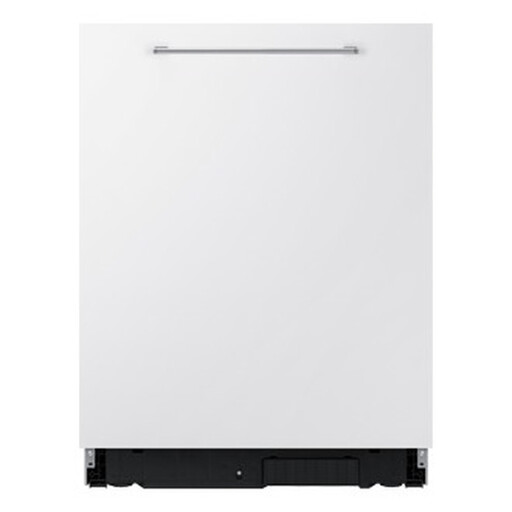 Image unavailable
Samsung DW70H72WCB0U1 — 13 place settings, 60 cm
This built-in model is designed for a fitted kitchen, provided a capacity of 13 place settings suits your loads. The product listing states an energy rating of C. Check the Eco energy label for consumption and programme duration; you can’t infer these figures from the rating alone.
Check the housing dimensions, cabinet door and connections in the instructions before choosing.
View on Joybuy
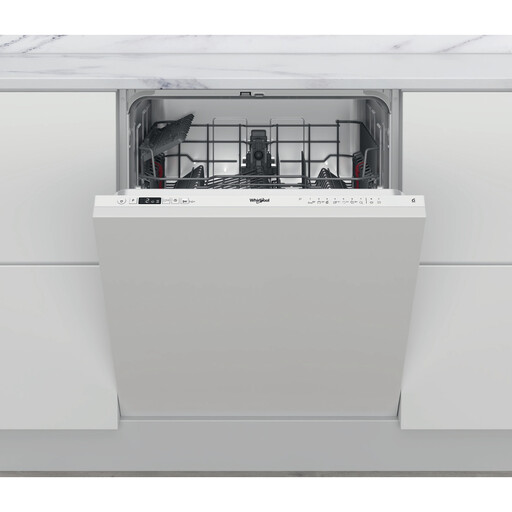 Image unavailable
Whirlpool W2I HD526 A — 14 place settings, 60 cm
Worth considering if you’re looking to fit an appliance with capacity for 14 place settings in a kitchen suited to a 60 cm model. The product listing states an energy rating of E. Use the model’s energy label to compare consumption and Eco programme duration with other appliances suited to your loads.
Check the instructions for the housing dimensions, cabinet door and specified connections.
View on Joybuy
Frequently asked questions
What should you compare on a dishwasher energy label?
Compare the energy rating, kWh per 100 cycles, litres per cycle, capacity in place settings, Eco programme duration and noise level. According to ADEME and the European regulation on dishwasher energy labelling, the consumption figures refer to the Eco programme; they don’t automatically describe a quick or intensive cycle.
Does a compact dishwasher always use less energy than a 60 cm model?
No. Its format tells you about its size and capacity, not how much energy it’s guaranteed to use. Compare the water and electricity figures on the energy labels for the exact models, then consider how many cycles you’d need for your usual amount of washing-up with each one.
What should you check before buying a built-in dishwasher?
Measure the housing and door clearance, then check the cabinet door and connections in the instructions for your chosen model. Bosch Electroménager France points out that installation requires a water supply, drainage and electricity. If you’re unsure about your setup, have the installation checked.
Does the repairability index apply to dishwashers in France?
Yes. According to Légifrance, it applies to mains-powered domestic dishwashers covered by the French decree of 22 April 2022, including integrated and built-in models. You can check the index shown for the model you’re considering as an additional factor, but don’t confuse it with the appliance’s energy use or capacity.
Should you pre-rinse dishes before starting a cycle?
ADEME advises against pre-rinsing dishes and recommends waiting until the dishwasher is full before starting a cycle. Remove any solid food scraps if necessary, and follow the manufacturer’s loading and maintenance instructions.


