If washing-up piles up between meals, first choose a capacity that suits the amount you produce before the next cycle, and a fitting type that works with your kitchen. If you only have a small amount to wash and can do it quickly by hand, buying a dishwasher may not be worthwhile. Then compare washing and drying performance, Eco-cycle consumption, noise, maintenance and installation costs, rather than relying on capacity or the energy rating alone.
Who is a dishwasher for?
Busy household
If you want to load plates, glasses and utensils between cycles without having to run the dishwasher repeatedly, compare capacity and interior layout, as well as washing and drying performance. UFC-Que Choisir covers these criteria in its buying guide.
Kitchen with limited space
If you have to work around a fitted space, a narrow gap or limited room for a full-size appliance, check the dimensions and fitting type first. Model details published by Electrolux France and Daan Tech show narrow and compact formats, but you’ll still need to measure your own space.
Household keeping an eye on running costs
If you’re considering a machine to save time while keeping costs in check, compare consumption and the cycles you’re likely to use, and factor in detergent and installation. UFC-Que Choisir details several costs associated with using a dishwasher.
What should you look for before buying?
Freestanding
Worth considering: if you have a suitable space and don’t want to hide the appliance behind a kitchen cabinet door.
Things to bear in mind: the appliance will be on show, so check its dimensions and the connections it needs.
Integrated
Worth considering: if your kitchen has a suitable space and matching your appliances to your cabinets matters to you.
Things to bear in mind: measure the space and check whether the cabinet door and installation are included. For example, the Electrolux EES42210L is supplied without a door panel.
Compact
Worth considering: if you have smaller loads and there isn’t room for a standard-size appliance.
Things to bear in mind: a smaller capacity may mean running more frequent cycles or washing some items by hand. You’ll also need somewhere to drain the wastewater.
If you’re considering a dishwasher to handle everyday washing-up, start by thinking about how much you produce between cycles. Then consider the space available, consumption, noise and maintenance.
| What matters |
What to check before buying |
Who it matters most to |
| Capacity and performance |
Estimate how much washing-up you produce between cycles, including dishes and pans; check the racks and the model’s washing and drying performance. |
When plates, glasses and dishes pile up between washes, I want a capacity and racks that suit my actual loads. Around 31% of consumers prioritise capacity and washing performance. |
| Space and fitting type |
Measure the width, height, depth and door clearance; check the space, cabinet door and required connections. |
If my kitchen has a narrow space or limited room, I need to check the fitting type before choosing a capacity. Around 25% of consumers put available space first. |
| Water, electricity and cycles |
Compare kWh per 100 Eco cycles, litres per Eco cycle and cycle duration, then factor in how often you’ll use the dishwasher and the consumables required. |
If I want to compare ongoing costs, I look at consumption on a like-for-like basis and the cycles I’ll actually use. Around 19% of consumers prioritise cycle costs. |
| Noise |
Check the decibel level and noise class on the model’s label, and consider when you’ll run the cycles. |
In an open-plan kitchen or when I’m nearby, noise matters more to me. Around 13% of consumers prioritise a quieter appliance. |
| Maintenance and lifespan |
Check the model’s repairability index in France, along with the warranty terms, installation costs and care products required. |
If I want to plan for costs after buying and understand my repair options, I look at maintenance and the model’s repairability. Around 12% of consumers put these criteria first. |
Mistakes to avoid
-
Assuming Eco consumption figures apply to every programme
The label gives consumption figures for a reference cycle, and the cycle duration is also important for everyday use.
Compare models on the same Eco-cycle basis, then check the programmes you’re likely to use.
-
Choosing a fully integrated model without measuring the entire space
The height, depth, clearance and cabinet door also need to fit. For example, the Electrolux EES42210L is supplied without a door panel.
Measure the whole space and ask what’s included in delivery and installation.
Depending on the model and offer you choose, you may need to allow for a door panel or installation service.
-
Assuming a compact tank-fed model needs no installation
Daan Tech’s standard Bob is shown with a built-in tank, but it has limited capacity and the wastewater still needs to be drained.
Check the capacity and dimensions, plan where the water will drain, and confirm exactly what’s included with the model or pack.
You’ll need to fill the tank and find space for the appliance. Accessories vary by version.
-
Budgeting only for the appliance
Installation, use and maintenance can also add to the cost of a dishwasher; how much they matter will depend partly on how you use it.
Ask for a breakdown of the services included and estimate what you’ll need based on how often you expect to run cycles.
Allow for installation, detergent, dishwasher salt, rinse aid and maintenance, depending on how you use it.
Brands to consider by format
Bosch
The SMS4EVW36F is an example of a 60 cm freestanding dishwasher to consider if its dimensions and capacity suit your kitchen and the amount of washing-up you produce.
- Bosch Electroménager France lists an energy rating of B, 9,0 l per Eco cycle, a noise class of B and an automatic door opening function for drying on this model.
- These specifications apply to the SMS4EVW36F. In particular, check its dimensions of 845 × 600 × 600 mm before buying.
Electrolux
The EES42210L is an example of a 45 cm fully integrated dishwasher with space for 9 place settings, for a suitably sized kitchen unit.
- Electrolux France lists 70 kWh per 100 cycles, 9,9 l per cycle and 44 dB for this model.
- It’s supplied without a door panel. The manufacturer’s claims about SatelliteClean are not the same as independent test results.
Beko
The BDFN16431W is an example of a freestanding model advertised as having space for 14 place settings.
- Beko France lists 85 kWh per 100 cycles, 9,9 l per cycle, 44 dB and a half-load function for this model.
- Selfdry door opening and the related drying benefits are claims from the manufacturer, not the result of an independent comparison.
Daan Tech
The standard Bob is an example of a compact, freestanding dishwasher with a water tank, worth considering for small loads when space is limited.
- Daan Tech lists space for 3 place settings, dimensions of 34 × 49 × 49 cm and a 3,9 l tank for this model.
- Its capacity limits its suitability for larger loads. A water tank doesn’t remove the need to plan for drainage; versions with accessories or UV-C are different from the standard model.
Compact dishwashers on Joybuy
This selection features compact countertop dishwashers for small kitchens and lighter loads. Check the capacity and water supply method to make sure they suit the way you plan to use yours.
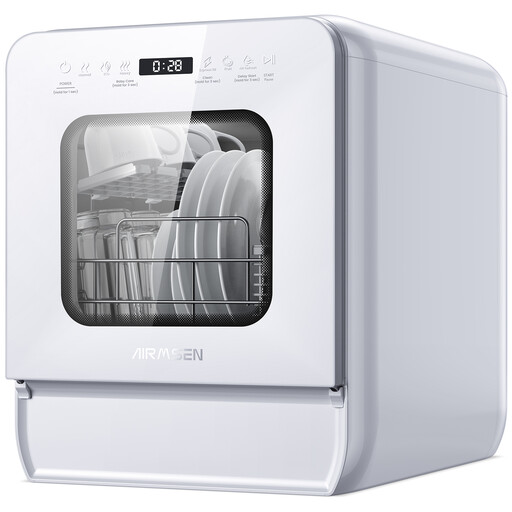 Image unavailable
AIRMSEN — countertop dishwasher, 5 L, 9 programmes
Its countertop format is worth considering if you have limited space for a standard-size appliance.
The title lists a 5 L tank, 9 programmes, dimensions of 37 × 50 cm, a delay start of 1 to 24 h, dual 360° spray arms and an energy rating of D.
View on Joybuy
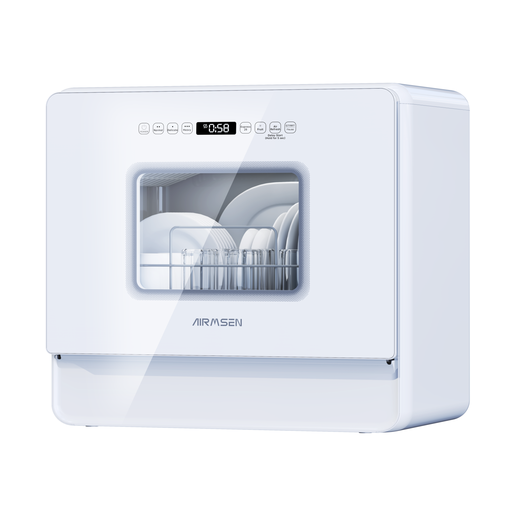 Image unavailable
AIRMSEN A01 — two-tier countertop dishwasher
A countertop model is worth considering if your kitchen has limited room for a standard-size appliance.
The title lists a built-in 5 L tank, a two-tier rack, three spray arms and a 12 h delay start. It also describes the appliance as usable without a fixed water connection.
View on Joybuy
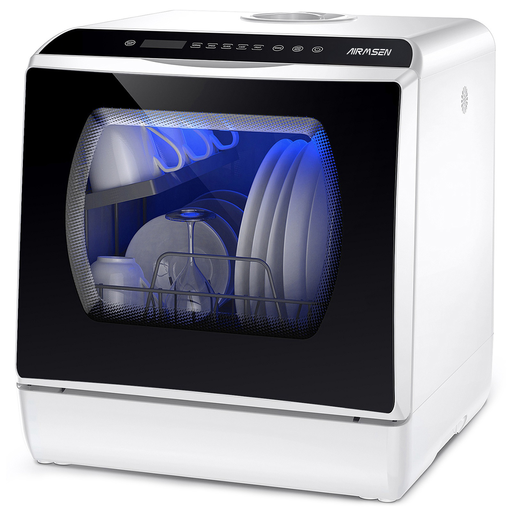 Image unavailable
AIRMSEN — portable dishwasher, 5 L tank
Its portable format is worth considering if installing a standard dishwasher would be difficult.
The title lists a built-in 5 L tank, 5+1 washing cycles, a double-glazed tempered glass door and use without a fixed water connection.
View on Joybuy
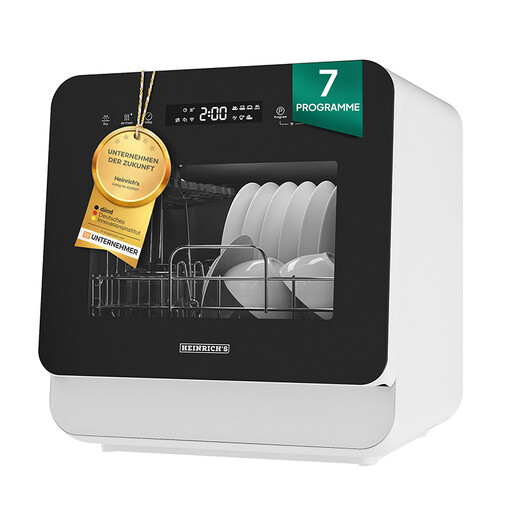 Image unavailable
Heinrich’s HTG 8855 — mini dishwasher, 3 place settings
Its compact size and stated capacity make it worth considering for small loads, if they suit how often you wash up.
The title lists 7 programmes, a 24 h delay start, a water softener, 56,3 dB and an energy rating of C.
View on Joybuy
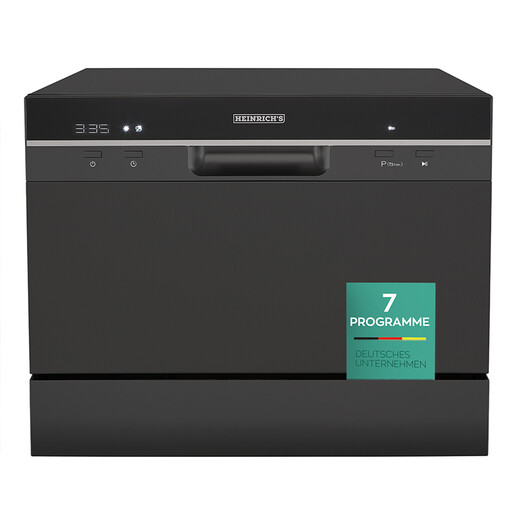 Image unavailable
Heinrich’s HTG 8840 Schwarz — countertop dishwasher, 6 place settings
Compare its stated capacity of 6 place settings with the amount of washing-up you produce and the space available on your worktop.
The title lists 7 programmes, a 24 h delay start, automatic door opening for drying, a water softener, 47 dB and an energy rating of D.
View on Joybuy
Frequently asked questions
Is it always worth buying a dishwasher if you only have a small amount of washing-up after each meal?
No, not necessarily. If everyday items can be washed by hand quickly, compare the time you actually spend, how much washing-up builds up between meals and how much space the machine would take up. Water consumption comparisons depend on how you wash by hand and how you load the appliance.
What should you check before running the first cycle?
Follow the model’s instructions for installation, loading the dishwasher and the products required. ADEME and the European Commission state that the consumption figures on the label refer to the reference Eco programme. Check the figures for quick or intensive cycles before comparing them.
Who should you contact if an appliance bought from a retailer doesn’t match its description?
In France, the legal guarantee of conformity applies through the professional seller for goods sold to a private individual, subject to the conditions for applying it. The Ministry of the Economy distinguishes this right from a commercial warranty. Keep your proof of purchase and a record of the advertised specifications.
Which regulatory information should you compare on a dishwasher sold in France?
For applicable household dishwashers, the European energy label shows information including the A to G energy rating, consumption in kWh per 100 Eco cycles, water consumption per cycle, capacity, duration and noise. In France, the Ministry of the Economy also states that dishwashers are among the product categories covered by the repairability index. This should not be confused with the durability index, which applies to other categories.


