Households where washing up piles up every day
If plates, cutlery, dishes and pans build up after every meal, look at the capacity and basket layout rather than just the external width.


If washing up piles up every day, start by choosing a dishwasher that can fit your dishes and utensils without exceeding the available space and connection points. A 60 cm model suits a regular, substantial load, while a 45 cm or compact model works better when space is limited, although it will hold less per cycle. Before choosing, check the dimensions, connections, noise level and consumption figures on the energy label for the specific model.
If plates, cutlery, dishes and pans build up after every meal, look at the capacity and basket layout rather than just the external width.
A 45 cm or countertop model can cut down on hand washing when space is tight. However, check that it can fit the utensils you use regularly and that it can be connected where you plan to install it.
If you run regular cycles, especially near a living area, compare each model’s consumption, Eco programme duration and noise level. The European Commission lists these details on the energy label for dishwashers.
First, check that the appliance can be installed, then compare its capacity with the washing up you do every day. Consumption and noise levels can then help you choose between models that suit your space.
| Criteria | What to check | Relevant to |
|---|---|---|
| Capacity and layout | Number of place settings stated and the space available for dishes, frying pans and saucepans. | When washing up piles up after meals, I want to load my utensils without running several cycles. Around 29% of consumers would put this capacity at the top of their list. |
| Space and installation | Width, height, depth, door clearance and connections specified in the manual. | If my kitchen has limited width or a specific space for the appliance, I need to be able to install it and use it every day. This would be the priority for around 36% of consumers. |
| Consumption and use | Energy label for the model: kWh per 100 Eco cycles, litres per cycle and programme duration. | If I run frequent cycles, I want to understand how water, electricity and cleaning products add to the running costs. Around 21% of consumers would make this their main concern. |
| Noise | Noise emissions in dB on the label and where the appliance will go in your home. | In an open-plan kitchen, I want to be able to run a cycle without the noise disturbing nearby activities. This would be the top priority for around 14% of consumers. |
A 45 or 60 cm appliance also needs enough clearance for its door and must fit the available height, depth and connections. An integrated model also needs a compatible door panel and cabinet space.
Measure the space, door clearance and route into the kitchen. Compare these measurements and the connections with the model’s manual.
Depending on your home, you may need connection accessories or plumbing alterations.
Two models may not be designed for the same amount of washing up. According to the European Commission, the label also shows energy use per 100 Eco cycles, water use per cycle, programme duration, capacity and noise level.
Compare these figures for models with a format and capacity that suit your household, then factor in cleaning products and installation requirements.
A countertop model saves space, but its capacity may mean running extra cycles if large dishes and saucepans are part of your everyday washing up.
Before choosing this format, check the interior layout against the dimensions of the items you wash most often.
If these items won’t fit together, you’ll need to run more cycles or rearrange your loads.
The consumption figures on the energy label relate to the Eco programme; they don’t automatically describe a quick cycle. The noise you hear also depends on where the appliance is installed.
Check the Eco programme duration and noise emissions for the exact model, then choose other cycles to suit the washing up.
In France, Bosch offers integrated, freestanding and compact dishwashers, giving you several formats to consider for your kitchen.
Miele offers freestanding models and different levels of integration into your kitchen.
Beko offers freestanding, integrated and fully integrated models, including 45 and 60 cm formats.
These models include freestanding and integrated appliances for regular loads, as well as a countertop compact model for smaller loads. First choose a format that fits your kitchen, then check the model’s capacity and documentation.
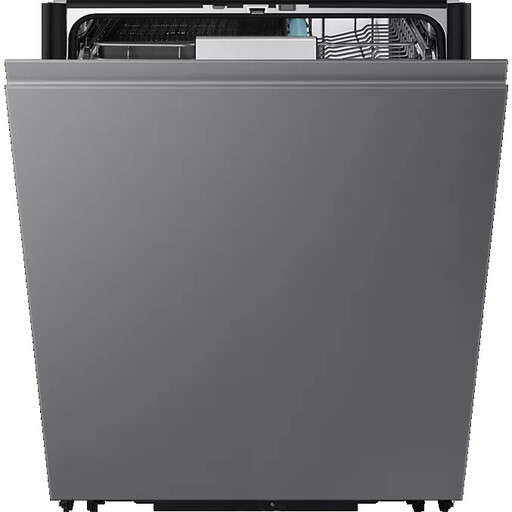 Image unavailable
Worth considering if your kitchen is designed for an integrated appliance and you regularly have a lot of washing up.
The model name lists 60 cm, 14 place settings and an A energy rating. Check the cabinet space, compatible door panel and Eco programme duration in the product documentation.
 Image unavailable
Worth considering for a regular household load if you prefer a freestanding appliance.
The model name lists 14 place settings and 7 cycles. Measure the space where it will go and check the energy label and Eco programme duration to compare running costs.
 Image unavailable
Worth considering if you have enough space for a freestanding appliance designed for regular loads.
The model name lists 60 cm, 14 place settings and an E energy rating. Check the connections, kWh per 100 Eco cycles and the programme duration before comparing it with other models.
 Image unavailable
Worth considering for a fitted kitchen that can accommodate an integrated dishwasher and regular loads.
The model name lists 60 cm, 13 place settings and a C energy rating. Check the cabinet dimensions, door compatibility and Eco programme consumption in the model documentation.
 Image unavailable
Worth considering if a countertop appliance is a better fit for your space and you have a smaller load of washing up.
The model name lists 6 place settings, 7 programmes and 47 dB. Check its dimensions and connections, as well as the space inside for your pans, before choosing this format.
It can make the job easier when plates, cutlery and utensils regularly pile up, and its capacity suits the load. To decide whether it’s right for your household, think about what you wash every day, including dishes that might not fit in the baskets.
Choose a format that fits the available space and connections and can hold the utensils you use regularly. According to Que Choisir, 60 cm dishwashers generally list 12 to 17 place settings, compared with 9 to 10 for 45 cm models. The 55 cm countertop compact models cited by the association hold 6 place settings. However, the number of place settings doesn’t tell you whether your larger saucepans will fit in the baskets.
Measure the appliance and the space where it will go, including the clearance needed to open the door. Then check the water supply, drainage and electrical supply as specified in the manual. For its own pre-installation service, Electrolux specifies a maximum distance of 1.2 m between the appliance and the water supply and drainage points. This requirement doesn’t automatically apply to every model or installer.
As well as the energy rating, compare kWh per 100 Eco cycles, water use per cycle, the Eco programme duration, capacity and noise emissions. The European Commission lists this information on dishwasher energy labels. Where possible, compare appliances that can handle a similar amount of washing up.