First, choose an appliance that fits in your kitchen and can be connected up. Then check that its capacity will handle the amount of washing-up your household usually produces. To compare models, look at the water used per cycle, energy consumption per 100 cycles, Eco programme duration and noise level on the energy label. A slimline or compact model won’t necessarily use less.
Which households is this choice right for?
A household with lots of washing-up every day
If plates, dishes and cutlery pile up between meals, compare the place-setting capacity with what you actually use. Check the basket layout too: the number of place settings on the label doesn’t tell you whether your larger dishes will fit.
A household with limited kitchen space
A narrow alcove, limited clearance under the worktop or a fitted kitchen will all affect which size you need. Measure the space and check the connections. For an integrated appliance, also check the door panel and the model’s installation instructions.
A household mindful of noise and running costs
If the dishwasher will run near a living area or in the evening, check the noise level and Eco programme duration. To compare water and energy use, ADEME recommends looking at the litres per cycle and kWh per 100 cycles shown on the energy label.
Which criteria should you prioritise?
To cut down on handwashing, start by considering the space available and how much washing-up you need to get through. Freestanding, built-in and compact models suit different installation requirements. If none will fit, you can still organise your washing-up differently, although it won’t be automated.
| Criteria | What to check | Who is it for? |
|---|
| Capacity and meals |
Place-setting capacity on the label and room in the baskets for the dishes you use every day. |
When washing-up piles up between meals, I want to be able to load it all together without still having to wash large items by hand. Around 31% of consumers put this capacity at the top of their list. |
| Fitting into your kitchen |
Appliance and alcove dimensions, door clearance, connections and, for an integrated model, the door panel and installation instructions. |
In a fitted kitchen, I first need to know whether the appliance can be installed and used without obstructing the cupboards. Around 25% of consumers would make this their priority. |
| Noise |
Noise level in dB, noise class and Eco programme duration shown on the energy label. |
If the kitchen opens onto the living area or I run a cycle in the evening, I want to keep noise disruption to a minimum. Around 25% of consumers would prioritise this. |
| Water and energy |
Litres per cycle, kWh per 100 cycles and capacity, for the same reference programme. |
To choose an appliance with regular use in mind, I want to compare consumption measured on the same basis rather than relying on the size alone. Around 19% of consumers would put this first. |
Mistakes to avoid
-
Relying on the energy rating alone
The rating alone doesn’t tell you about capacity, water use, Eco programme duration or noise. ADEME and the European Commission show these details separately on dishwasher energy labels.
Compare these figures across models that already suit your available space and the amount of washing-up you have.
-
Assuming a slimline model will always use less
Consumption varies by model and programme, as ADEME points out. So width or the word “compact” isn’t enough to help you choose between two appliances.
Compare the energy label figures with the capacity your household needs.
-
Ordering an integrated model before measuring the alcove
Dimensions, the door panel and installation requirements vary by model. An appliance with the right capacity may still not fit in your kitchen.
Compare your measurements with the installation instructions, and have the connections checked if you’re unsure.
Depending on the installation, you may also need a suitable door panel or modifications to the cupboard.
-
Overlooking cycle noise
In an open-plan kitchen or when running a cycle in the evening, noise levels may matter more than an extra washing feature.
Compare the dB level and noise class on the energy label, then consider when you’ll use the appliance.
Brands to consider
Bosch
Bosch France’s product information covers several installation types, including freestanding, integrated and compact models.
- Its diagrams and dimensions can help you measure an alcove in advance.
- You’ll still need to check the door panel, dimensions and installation requirements for the specific model.
Miele
Miele France offers freestanding and integrated dishwashers, including 45 cm models.
- The model specifications give you details to compare with your capacity and space requirements.
- The specifications for one model, such as the G 5790 SCVi SL, don’t represent the entire range.
Electrolux
Electrolux France’s product specifications let you explore 45 cm and 60 cm freestanding models.
- They include details such as the capacity and noise level for the models listed.
- A difference between two models shouldn’t be taken to apply to every appliance in those widths.
Beko
Beko France offers freestanding models to compare by capacity and programme options.
- The BDFN26431W product information includes details about capacity and connections.
- The width and capacity details on this product page are contradictory. Check the energy label and manual for the model before relying on these specifications.
Dishwashers to explore on Joybuy
These appliances include countertop models, freestanding models and built-in models. First choose an installation type that suits your kitchen, then compare the capacities and energy label details of the models that fit.
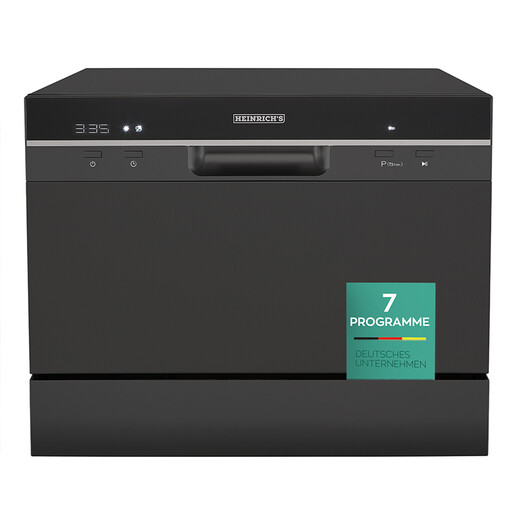 Image unavailable
Heinrich's HTG 8840 Schwarz, countertop dishwasher
Worth considering for a small kitchen if its capacity suits your household’s washing-up.
The title lists 6 place settings, 7 programmes and 47 dB. Measure the space for the appliance and its connections, then compare its energy consumption on the energy label.
View on Joybuy
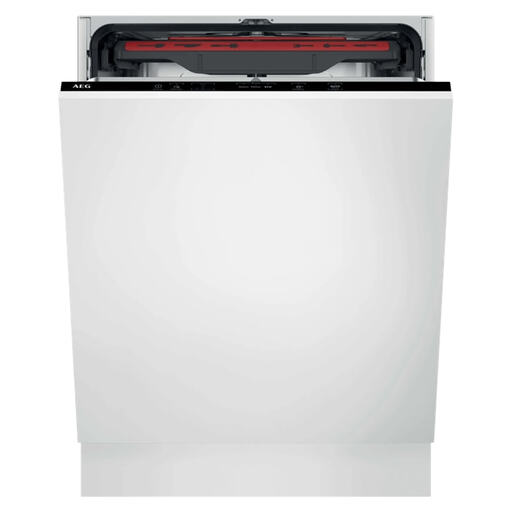 Image unavailable
AEG FSB34707Z, fully integrated 60 cm dishwasher
Worth exploring if you want to fit a large-capacity appliance in a fitted kitchen.
The title lists 14 place settings and a C energy rating. The dimensions in the product information don’t match the width given in the title, so check the installation instructions and alcove before buying.
View on Joybuy
 Image unavailable
Hotpoint H4FD641A, white freestanding dishwasher
Worth considering if you have space for a freestanding model and regularly need to wash a large load.
The title lists 14 place settings, a width of 60 cm, 41 dB and a C energy rating. Check the detailed dimensions and energy label figures, and make sure there’s enough clearance for the door to open automatically.
View on Joybuy
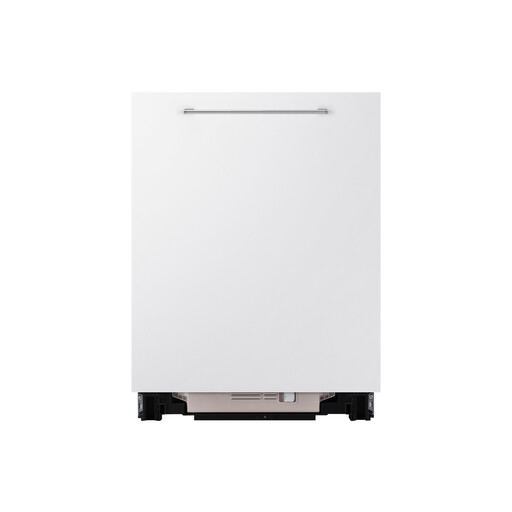 Image unavailable
Samsung DW80H72YBB0U1, 60 cm built-in dishwasher
Worth exploring if the appliance needs to fit into a compatible kitchen alcove.
The title lists 13 place settings and a B energy rating. Before choosing, check the alcove, door panel and connections against the installation instructions, and compare energy consumption with the energy label.
View on Joybuy
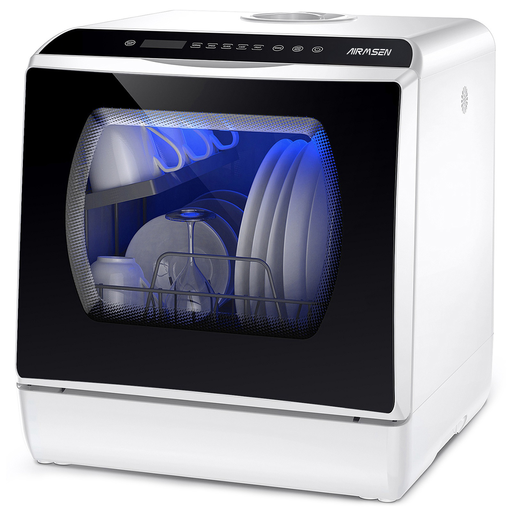 Image unavailable
AIRMSEN, countertop dishwasher with 5 L tank
Worth considering if it’s difficult to install a standard-sized appliance and you have smaller loads to wash.
The title mentions 5+1 cycles and an integrated 5 L tank. Before buying, check the space required, water drainage and the power supply option you plan to use.
View on Joybuy
Frequently asked questions
What should you compare on a dishwasher energy label?
Compare the capacity, kWh per 100 cycles, litres per cycle, Eco programme duration and noise level, as well as the energy rating. ADEME and the European Commission explain that the energy label figures are based on the reference Eco programme.
Does a fitted kitchen mean you need a built-in dishwasher?
No. A freestanding model may work if there’s room for it and the connections are suitable, and you don’t need a matching cupboard door. For an integrated model, check the alcove, door panel and installation instructions. Bosch France mainly distinguishes these appliance types by how they’re installed and how they look.
What should you check before installing a dishwasher?
Measure the available width, height and depth, then compare them with the instructions for the exact model and check the connections. Read the safety warnings in the manual. If the installation or connections are beyond your skills, ask a professional to check them.


