Buying priorities
Start with the installation type and measurements, then compare capacity, noise and consumption with your mealtime routine rather than relying on a single headline specification.
Freestanding
Choose this if: you have a measured space and do not need to hide the appliance behind a kitchen door front.
Bear in mind: you still need to check the overall dimensions, the route into the kitchen and the connections.
Integrated or semi-integrated
Choose this if: a housing unit and seamless integration with your kitchen furniture are priorities.
Bear in mind: the installation diagram, door-front type and installation requirements of the model must match your kitchen.
Compact
Choose this if: the available space rules out a standard appliance and a smaller capacity suits your habits.
Bear in mind: a smaller format may require more frequent cycles when washing up starts to pile up.
| Priority |
What to check |
Your needs |
| Capacity and loading |
Compare the place-setting capacity with your usual meals. Check the basket layout, adjustment options and space for dishes, saucepans and large glasses. |
I want to load everyday washing up without running lots of cycles, while avoiding an unnecessarily large appliance. |
| Consumption in use |
Check the class, kWh per 100 cycles, litres per cycle and the duration of the Eco programme. Compare models on the same basis. |
I want to compare water and electricity use without assuming that a quick programme consumes the same as the Eco programme. |
| Noise |
Compare the noise level in dB and the noise class between models of the same size. ADEME indicates that an additional 3 dB corresponds to an almost doubling of noise. |
In an open-plan kitchen, I want to run a cycle without excessively disturbing meals, work or sleep. |
| Installation |
Measure the width, height and depth. For an integrated model, check the housing-unit diagram, adjustable feet, door front and connections. |
I want to avoid an appliance that fits the width but will not fit beneath the worktop or work with the existing kitchen door. |
Joybuy products
Joybuy options for a household looking for a freestanding or fully integrated dishwasher suited to everyday washing up.
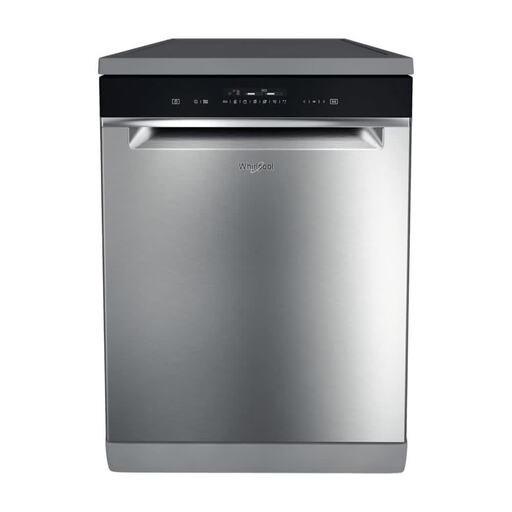 Image unavailable
Whirlpool WFP5O41PLGX freestanding 60 cm, 14 place settings
For mixed everyday loads, with an adjustable upper basket and advertised third cutlery drawer.
Class C, 75 kWh/100 cycles, 9.5 L per Eco cycle and a stated 41 dB(A). Confirm the overall dimensions, connections and access route before buying.
Joybuy
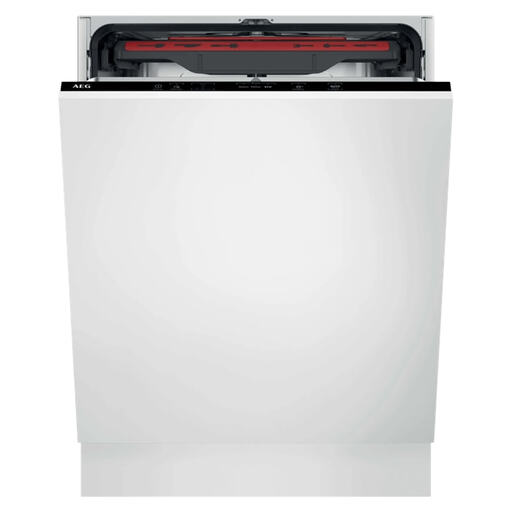 Image unavailable
AEG FSB34707Z fully integrated 60 cm, 14 place settings
An option for a kitchen with an integrated door front, with an advertised cutlery drawer and automatic door opening.
Class C, 10.5 L and 0.75 kWh per Eco cycle, an Eco duration of 240 minutes and a stated noise level of 44 dB. Check the installation diagram, housing unit, door front and connections.
Joybuy
 Image unavailable
Hotpoint H4FD641A freestanding 60 cm, 14 place settings
Suitable for households that switch between Eco, Auto, Intensive and Quick programmes depending on how dirty the dishes are and how quickly they need washing.
14 place settings, approximately 9.5 L on the Eco cycle, 41 dB and stated dimensions of 600 × 590 × 850 mm. Check the space required when opening the door and beneath the worktop.
Joybuy
 Image unavailable
Samsung DW60M6050FS freestanding, 14 place settings
Designed to accommodate large loads of washing up, with an advertised third basket, adjustable basket and fold-down tines.
Stated specifications include 44 dB, 10.5 L per cycle, 95 kWh/100 cycles, class E and dimensions of 59.8 × 60 × 84.5 cm. Compare this consumption with the other models you are considering.
Joybuy
 Image unavailable
Samsung DW80H72YBB0U1 integrated 60 cm, 13 place settings
A fully integrated option for regular loads, with advertised baskets adjustable across three levels and fold-down tines.
Class B, a stated noise level of 44 dB and a minimum housing-unit size of 820–900 × 600 × 555 mm. Check the complete installation diagram, door front, hinge and connections.
Joybuy
Frequently asked questions
Which energy-label figures should you compare when buying a dishwasher in France?
Compare the energy class from A to G, energy consumption in kWh per 100 cycles, water consumption per cycle, the duration of the Eco programme, capacity and noise level. ADEME and the European Commission specify that these indicators are based on the reference Eco programme, so they do not necessarily describe every quick programme.
Is the Eco programme always suitable for everyday use?
The Eco programme is used as the reference cycle, and ADEME describes it as the most economical in terms of water and electricity. Nevertheless, check its duration on the label or model specification sheet, then keep a quicker or more intensive programme for situations where it genuinely matches the level of soiling or the time available.
How can I check that an integrated dishwasher will fit in my kitchen?
Measure the width, height and depth of the housing unit, then check the installation diagram for the exact model. Also check the installation type, foot adjustment, compatibility with the door or front panel and the space required for connections: a stated width of 45 or 60 cm is not enough on its own.
Can a compact dishwasher replace a standard model?
It depends on the number of meals, bulky dishes and washing frequency you are comfortable with. For example, Electrolux states 6 place settings for its ESL2500RO compact integrated model, while Beko states 15 place settings for the DVN05C30W. Compare your actual load with the specific model rather than generalising these figures to every format.


