Households with several meals’ worth of washing-up
If you want to stop plates, glasses and cookware piling up between washes, look at the capacity and basket layout in relation to the dishes you use most often.


Start by checking the available space and installation type, then estimate the capacity you need based on the dishes that actually build up between washes. Next, compare energy use on the Eco programme, noise levels, loading options and installation requirements. The right choice also depends on how often you use it and whether any extra work is needed.
If you want to stop plates, glasses and cookware piling up between washes, look at the capacity and basket layout in relation to the dishes you use most often.
The available width, height beneath the worktop, door panel and position of the connections can all affect which type of appliance will work for you. For an integrated model, check your measurements against the fitting instructions for the exact model.
If the dishwasher runs near your living area or during mealtimes, its stated noise level and the times you run it may matter just as much as energy use over repeated cycles.
Worth considering: if you have a suitable space with connections and don’t want to add a kitchen unit door.
Check: the appliance will be on show, so check its full dimensions and connections, not just its stated width.
Worth considering: if you want the appliance to blend in with your kitchen units and can check the available space and planned door panel.
Check: the control panel type, door panel dimensions and what’s included in the installation. Some models also have specific installation restrictions.
Worth considering: if width is your main constraint; some ranges include models with a nominal width of 45 cm.
Check: that the baskets fit your dishes and cookware, and that the stated capacity suits how often you want to run a cycle.
ADEME highlights capacity, water and energy consumption, and the duration of the Eco cycle as useful information on the energy label. The European Commission states that efficiency and performance requirements apply to the Eco programme.
| Priority | What to check before buying | Who is it most relevant to? |
|---|---|---|
| Dishes between washes | Compare the stated place-setting capacity and basket layout with the plates, glasses and cutlery you use regularly. | When several meals’ worth of dishes build up, I want to load what I actually use rather than rely on the capacity figure alone. Around 25% of consumers prioritise the amount of washing-up the machine can handle. |
| Space and integration | Measure the usable width, height and depth, then check the connections. For an integrated model, also check the door panel and the exact fitting instructions. | In a small kitchen or one with existing units, I need to know whether the appliance and its door panel will fit. Around 25% of consumers prioritise available space and integration. |
| Running costs | Compare energy use per 100 cycles and water use per cycle on a like-for-like basis, then factor in detergent and maintenance. | If I wash dishes frequently, I want to estimate repeated consumption using my own tariffs and routine. Around 20% of consumers put running costs first. |
| Noise comfort | Compare the stated noise level and Eco cycle duration for the exact models, taking their location and your schedule into account. | In an open-plan kitchen, I want to minimise disruption during meals or when I’m relaxing. Around 15% of consumers make low noise their priority. |
| Programmes and maintenance | Check that the programmes suit the loads you wash and that the filters and spray arms are easy to access for cleaning. | For regular use, I want functions that suit my dishes and maintenance I can keep up with easily. Around 15% of consumers prioritise simple programmes and maintenance. |
An installation service may not include fitting the door panel or carrying out carpentry work. Electrolux sets out these exclusions for the service described on its website.
Ask for written confirmation of what’s included and get a separate quote for any changes your kitchen needs.
Depending on the service you choose, you may still need to budget for a door panel, carpentry work or changes to the connections.
The energy label shows figures including energy use per 100 cycles and water use per cycle. Your own usage depends on how often you wash, and the reference figures don’t automatically apply to other programmes.
Compare appliances using the same number of cycles and your own tariffs, then factor in detergent and maintenance.
A manufacturer’s commitment to making spare parts available is not a promise about how long the appliance will last, or a guarantee of free repairs.
Check the stated period of parts availability, warranty terms and after-sales service arrangements separately.
If your issue isn’t covered, the cost of parts, labour or a call-out may also need to be factored into maintaining the appliance.
Bosch’s French range includes freestanding and built-in appliances, giving you different installation options to compare.
The fully integrated EES47300L is an example of a model listed as 60 cm wide with capacity for 13 place settings.
The French range includes the freestanding DVS05030X dishwasher, with a nominal width of 45 cm and stated capacity for 10 place settings.
This selection includes freestanding and integrated dishwashers for household meals, with 60 cm formats specified in the model names.
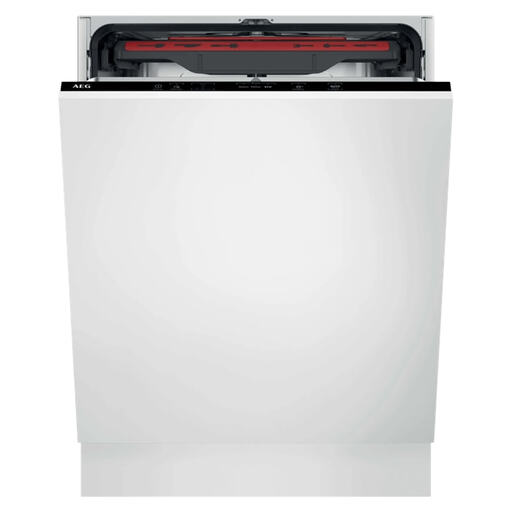 Image unavailable
Worth considering if you’re looking for an integrated model for a fitted kitchen, with a stated capacity of 14 place settings.
C energy rating; 10.5 L and 0.75 kWh per Eco cycle; 44 dB. The product information lists five programmes, AirDry and a cutlery drawer.
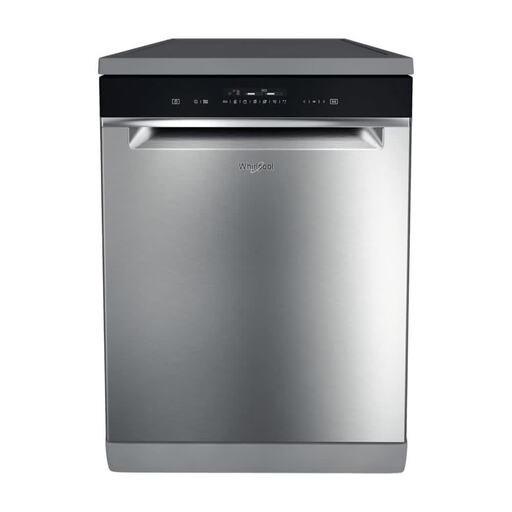 Image unavailable
Worth a look if you’re after a freestanding appliance with a stated capacity of 14 place settings and want to compare stated noise levels.
C energy rating; 9.5 L per Eco cycle and 75 kWh per 100 cycles; 41 dB(A). The product information lists 11 programmes, an adjustable upper basket and a third cutlery basket.
 Image unavailable
Worth considering if you prefer a freestanding model with a stated capacity of 14 place settings.
60 cm format, grey, E energy rating; 9.5 L of water and 46 dB. The product information lists six programmes, including Eco, Intensive and Push&Go.
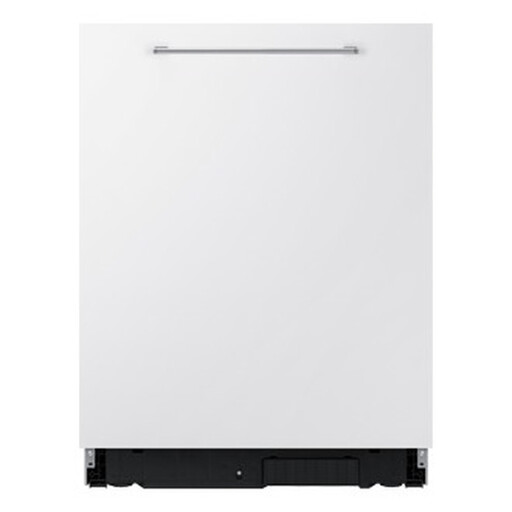 Image unavailable
Worth a look if you’re after an integrated model listed for 13 place settings, with an adjustable middle basket.
60 cm format; 44 dB(A). The product information lists a basket adjustable to three heights, downloadable programmes and AutoRelease.
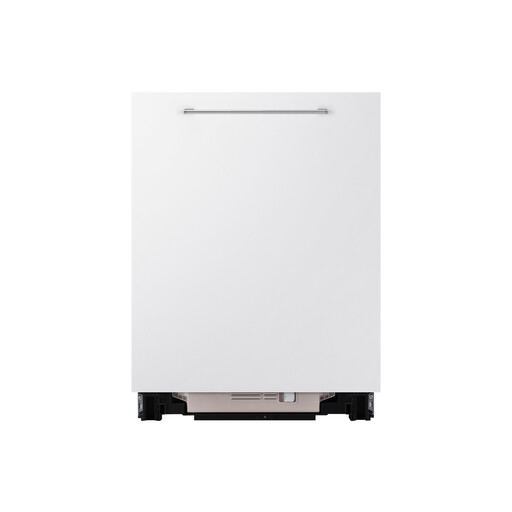 Image unavailable
Worth considering if you want an integrated model listed for 13 place settings and a programme with a stated noise level of 42 dB(A) suits the way you use it.
60 cm format, B energy rating; the product information lists an Extra Silence programme, a basket adjustable to three heights and AutoRelease.
Measure the internal width, available height beneath the worktop and usable depth, then locate the connections. For the door panel, note its dimensions and check the plinth, door clearance and hinge limits in the fitting instructions for the exact model. These checks don’t replace the appliance’s own instructions.
No. Also consider how many meals’ worth of dishes build up, your cookware and how often you want to run a wash. Capacities of 10 or 13 place settings are useful guides, but they don’t guarantee a universal number of meals per cycle.
Compare appliances using the same number of cycles and your own variable water and electricity tariffs. Include detergent, maintenance and any upfront installation or door-panel costs that apply. The results depend on how you actually use the appliance and aren’t a guaranteed bill.
It refers to the reference figures for the Eco programme and doesn’t automatically apply to every programme or option. The European Commission states that efficiency and performance requirements apply to this programme, so compare models on that basis.
No. In France, the legal guarantee of conformity applies under the conditions set out by law. For goods bought from a professional seller, the fault must appear within two years of delivery. Service Public explains these conditions. An extended commercial warranty doesn’t replace this right.