
Same-day & Next-day Delivery

Quality Guaranteed

Unlock Your Welcome Offers: FREE Delivery | Up to 80% OFF | Free 30-day JoyPlus trial
Download the APP
Choosing a new dishwasher can quickly become a headache. Between marketing promises, technical jargon, and a jungle of models, it's easy to feel lost. Our mission at Joybuy is to help you make sense of it all and find the appliance that truly meets your needs by avoiding the most common pitfalls.
The goal isn't to find the "perfect" appliance, but the one that best fits your kitchen, your budget, and your lifestyle. Let's break down the key points to help you make an informed decision.
Marketing departments love to highlight gimmicky features that can sometimes mask more significant flaws. Here are three pitfalls to watch out for.
To get it right, focus on these three criteria that will truly make a difference in your daily life.
This is the very first point to confirm. There are two main types:
For studios or kitchenettes, a mini dishwasher that sits on a countertop is the ideal solution to say goodbye to hand-washing dishes without sacrificing floor space.
Capacity is expressed in the number of place settings. Here are some guidelines to help you:
The interior layout is just as crucial. A height-adjustable upper rack, foldable tines, or a third cutlery drawer are extras that make all the difference in optimising space and fitting in large pots or stemware.
As mentioned, the noise level is a critical factor for your daily comfort.
Finally, scrutinise the energy class on the label. A C-rated appliance today consumes far less than an E or F-rated model, a difference you'll see on your bills over the years.
Rather than an endless list, here are a few standout models that meet specific needs.
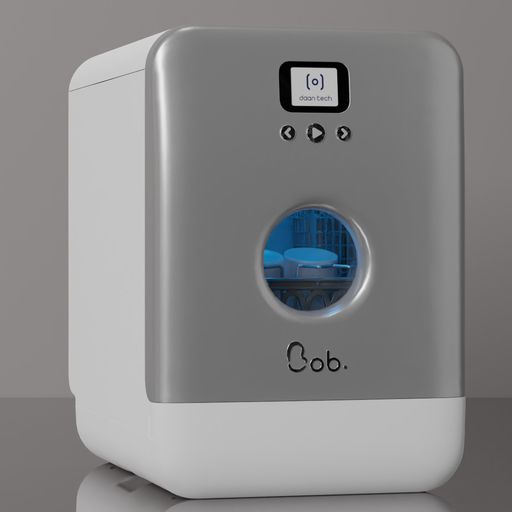
Why it's a match: At just 34 cm wide, it sits on a countertop without needing any plumbing work. Its 3-place-setting capacity is ideal for the daily dishes of one or two people, preventing you from running a large appliance half-empty.
It doesn't pretend to be something it's not. It's an unapologetic mini dishwasher that tackles the pitfall of overstated capacity by offering a perfectly sized solution for small households.
Extremely low water consumption (2.9 L per cycle) and installation without a fixed water inlet connection.
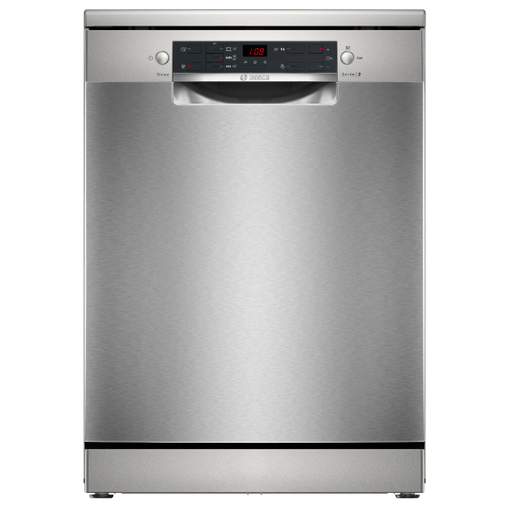
Why it's a match: This Bosch dishwasher is a classic for a good reason: it's reliable and efficient. With its 12 place settings and 5 programmes, it meets a family's essential needs. Its 60 cm freestanding format fits into most kitchens hassle-free.
It avoids the pitfall of a vague energy label. Its consumption figures are clearly displayed (92 kWh/100 cycles, 9.5 L/cycle), allowing for a transparent calculation of long-term running costs.
EcoSilence Drive motor for durable and quiet operation, and the AquaStop safety system, which provides 100% protection against water damage.
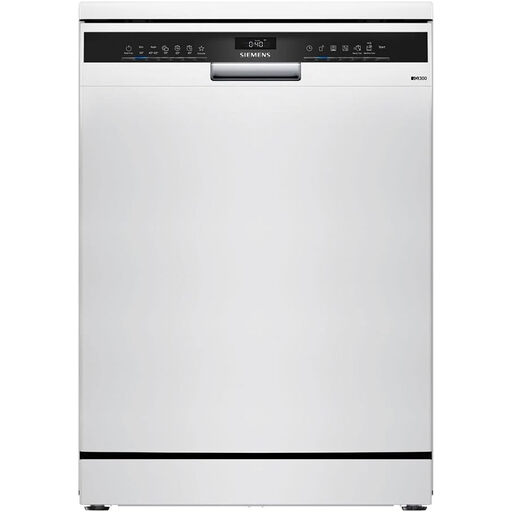
Why it's a match: This freestanding model (which can also be built-in) combines a large 14-place-setting capacity, excellent energy efficiency (Class B), and extremely quiet operation. It's perfect for modern open-plan kitchens and connected users, thanks to the Home Connect app.
It avoids the marketing "silence" trap by stating a noise level of 42 dB, an objective figure that unquestionably ranks it among the quietest appliances on the market.
Optimised drying thanks to the automatic door opening at the end of the cycle (AutoOpen Dry) and storage flexibility with the cutlery drawer.
A good dishwasher is nothing without a high-performance dishwasher detergent. All-in-one dishwasher tablets are convenient, but for delicate dishes or short cycles, separate products (powder, rinse aid, salt) allow for more precise dosing.
For a fast and effective wash, next-generation pods like the GrePower Starry Night Ultra-Clean Dishwasher Pods offer rapid dissolution, ideal for short cycles, while providing antibacterial action without leaving any residue.
We've compiled a complete selection of products that meet our demanding criteria.
What is the average lifespan of a dishwasher? On average, a dishwasher has a lifespan of 10 to 12 years. Regular maintenance, such as cleaning the filter and spray arms and using a machine cleaner every 2-3 months, can extend its longevity and maintain its washing performance.
Does a dishwasher really use less water than washing by hand? Yes, by a long shot! A modern dishwasher uses between 9 and 12 litres of water per cycle. Washing the same amount by hand can consume over 40 litres of water, especially if you leave the tap running. It is therefore a much more economical and ecological choice.
Should you rinse your dishes before putting them in the dishwasher? No, it's actually unnecessary. Today's dishwashers and detergents are designed to tackle food residue directly. Simply scrape off the largest scraps with a piece of cutlery before loading the machine. Pre-rinsing is just a waste of water and time.