For regular cycles in a busy household, first choose a capacity that suits how much washing up you get through, then compare noise levels and energy use on the energy label, as recommended by ADEME. A 60 cm appliance may be suitable if you have the space and enough washing up to justify it; a 45 cm or compact model takes up less room, but its capacity should be large enough to avoid running extra cycles. Before ordering, check the dimensions, any required furniture door and the connections specified in the model’s instructions.
Who are these criteria useful for?
Households disturbed by cycle noise
If your dishwasher runs during meals, while you’re working from home or when you’re trying to relax, compare each model’s decibel rating and noise class rather than relying on its marketing claims. UFC-Que Choisir highlights how important noise levels can be in an open-plan kitchen.
Households looking to run cycles less often
If washing up builds up every day, look for a place-setting capacity that matches your usual loads and check how the baskets are arranged. ADEME recommends waiting until the appliance is full before starting a cycle.
Kitchens where space and installation matter
Whether you’re considering a 60 cm appliance, a slimline model, a compact dishwasher or a built-in option, measure the space and check the connections. Bosch and Electrolux installation guidance shows why it’s important to follow the instructions for the exact model you choose.
What should you compare before buying?
Start with how much washing up you have between cycles. Then compare noise levels and the figures on the energy label, and make sure the appliance will fit in your kitchen.
| Criterion | What to check | Who is it for? |
|---|
| Noise levels |
Compare the decibel ratings and noise classes on each model’s label. Don’t rely on the word ‘quiet’ alone. |
If I run a cycle while working from home, I don’t want it to get in the way of conversations; around 29% of consumers would prioritise low noise levels. |
| Capacity and cycle frequency |
Compare the stated place-setting capacity with your usual loads, and check whether the baskets have enough room for your dishes. |
When washing up builds up, I want to avoid running the appliance too often; capacity would be the top criterion for around 29% of consumers. |
| Water and electricity use |
Check the kWh per 100 cycles and litres per cycle for the Eco programme, taking capacity into account. |
For regular cycles, I want to keep an eye on water and electricity use without assuming that Eco programme figures apply to every programme; around 24% of consumers would put consumption figures first. |
| Space and installation |
Measure the space and check the instructions for installation, connections and, if needed, the furniture door. |
When space is tight or a furniture door is required, I need to be able to install the appliance in my kitchen; around 18% of consumers would put this compatibility first. |
Mistakes to avoid
-
Assuming ‘quiet’ means a specific noise level
In a busy home, cycle noise can influence your choice, especially in an open-plan kitchen, as UFC-Que Choisir points out. A marketing claim is no substitute for a figure you can compare across models.
Check the decibel rating and noise class shown on the label for each model you’re considering.
-
Choosing based on the energy class alone
The energy class doesn’t tell you everything about water use, capacity or noise. According to ADEME, the consumption figures are for the reference programme; they don’t automatically describe every cycle.
Also check the kWh per 100 cycles, litres per cycle, Eco programme duration and capacity, taking your washing frequency into account.
-
Ordering a built-in model before checking your kitchen
An unsuitable housing space, furniture door or connection can prevent the appliance from being installed as planned. Electrolux states that its installation service does not include carpentry, plumbing or electrical work.
Measure the space and access routes, compare them with the model’s instructions, and check exactly what the installation service you’re considering covers.
You may need to arrange a separate visit for work on the furniture door or connections.
-
Choosing a narrower model without reconsidering your loads
A slimline or compact model takes up less space, but if it doesn’t have enough capacity for your washing up, you may end up running more cycles.
Picture how your usual plates, saucepans and glasses will fit before comparing the stated place-setting capacity and basket layout.
Brands to know when comparing sizes
Bosch
In France, Bosch offers 60 cm and 45 cm dishwashers, as well as compact models, in freestanding and built-in designs.
- This range makes it easier to find a size to suit different kitchen layouts.
- Noise and consumption figures still need to be checked for each specific model. For built-in installation, follow the instructions and check which accessories you’ll need.
Beko
Beko’s French range includes freestanding, integrated and fully integrated models, as well as 45 cm slimline options.
- Beko offers some 45 cm models with space for up to 10 place settings, which you can compare with the amount of washing up you have.
- This capacity applies to specific models, so check the place-setting capacity and noise level of the one you choose.
Miele
Miele’s French catalogue includes freestanding dishwashers, along with several built-in and integrated configurations.
- These configurations give you options to suit the available space and the furniture door you have planned.
- Check the capacity, noise and consumption figures for your chosen model rather than assuming they apply across the whole range.
Siemens
In France, Siemens offers built-in and freestanding dishwashers.
- The installation type can help you narrow down your options to suit your kitchen layout.
- Check that the model has the programmes you want and review the energy label for the exact model.
Dishwashers for regular loads
These 13- or 14-place-setting models include both freestanding and built-in appliances. To choose between them, first make sure the installation type suits your kitchen, then compare the capacity, noise level and energy label for each model.
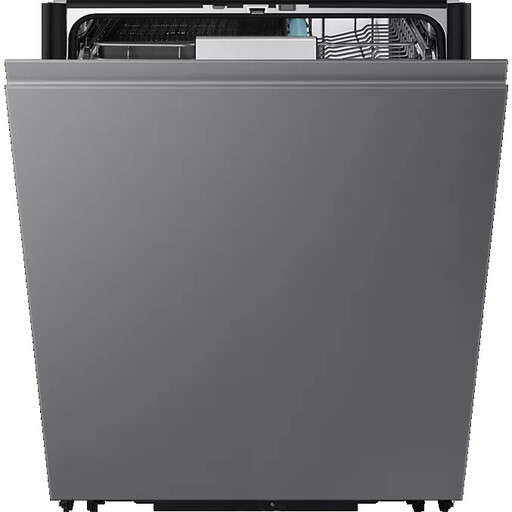 Image unavailable
Samsung DW90H79JAI0U1 Bespoke AI built-in dishwasher, 14 place settings
Worth considering if you regularly have full loads and have space for a built-in model.
The product name states that it is 60 cm wide and has an A energy class. Check the housing dimensions, furniture door and energy label for this model before comparing its consumption figures.
View on Joybuy
 Image unavailable
Samsung DW60M6050FS freestanding dishwasher, grey, 14 place settings
Consider this model if your kitchen can accommodate a freestanding appliance and your usual loads make use of the stated capacity.
The product name lists seven programmes. Check the dimensions and connections, then compare the energy label if cycle duration, noise or consumption are important to you.
View on Joybuy
 Image unavailable
Hotpoint H4FD641A freestanding dishwasher, white, 14 place settings
Worth a look if you need a freestanding model for regular loads in a busy household.
The product name states that it is 60 cm wide, has a noise level of 41 dB and a C energy class. If it needs to fit under a worktop, check its exact height; also check the label to compare water and electricity use.
View on Joybuy
 Image unavailable
Whirlpool WFP5O41PLGX freestanding dishwasher, stainless steel, 14 place settings
Worth considering for regular loads if a freestanding model suits your kitchen.
The product name states that it has a C energy class. It also lists a width of 60 cm, while another width given for this model is 67.5 cm. Confirm the exact dimensions before ordering.
View on Joybuy
 Image unavailable
Samsung DW80H72YBB0U1 built-in dishwasher, 13 place settings
Worth a look if a built-in installation suits your kitchen and 13 place settings will be enough between cycles.
The product name states that it is 60 cm wide. Check the housing space, furniture door fitting and label for the exact model; don’t assume its noise level or consumption from a programme name alone.
View on Joybuy
Frequently asked questions
Which figures on the energy label should you compare for a dishwasher?
Compare the energy class, kWh per 100 cycles, litres per cycle, place-setting capacity, Eco programme duration and noise level in decibels, along with its noise class. ADEME recommends looking at these figures together; where possible, compare appliances with a similar capacity and format.
Do the energy label consumption figures apply to every programme?
No. They relate to the reference programme and don’t automatically describe a quick or intensive cycle. If you plan to run cycles while you’re at home, also check the duration and specifications of the programme you intend to use.
What should you check before choosing a built-in model?
Check the housing dimensions, delivery access, furniture door, fixings and connections specified in the model’s instructions. If you’re planning to use an installation service, ask exactly what work it covers. For example, Electrolux states that its service does not include carpentry, plumbing or electrical work.


