What should you compare before buying?
Start with the dishes you need to wash and the space available, then compare the energy-label figures for the sizes that will fit your kitchen.
| Criteria |
What to check |
Your needs |
| Capacity |
Compare the number of place settings and the basket layout. As examples of manufacturers’ stated figures, Candy lists 6 place settings for the compact CP 6E51LS, while Beko lists 14 for the standard BDFN26460G. Also check there’s room for dishes and saucepans. |
I want to fit the dishes produced between washes without choosing an unnecessarily bulky appliance. |
| Space |
Measure the height, width and depth, then check there’s room for the connections and the door to open. For an integrated model, also check the cabinet space, door panel, hinges and plinth. |
I’m interested in hiding the dishwasher behind a door panel if it’s compatible with my kitchen; otherwise, I’ll need to allow space for a freestanding model. |
| Water and electricity |
According to ADEME and the European Commission, a dishwasher’s label shows electricity use per 100 reference cycles and water use per cycle. Compare these figures alongside capacity, not just the energy-efficiency class. |
I want to compare appliances on a like-for-like basis and factor in how many cycles my load will need. |
| Noise |
Check the noise emissions in dB and the noise class on the label for the exact model. If you’re considering a quiet programme, check its conditions and duration separately. |
In an open-plan kitchen, I want to choose a noise level that suits the times when the room is in use. |
| Cycle duration |
The European Commission says the Eco programme duration is shown on the label. Check the duration of a quick programme separately: its operating conditions aren’t the same as the Eco reference figures. |
I need to know whether a cycle can finish between meals or be run at another time. |
| Repairability |
ADEME lists dishwashers among the appliances covered by the repairability index. Check the chosen model’s index if one is displayed, and find out about spare parts and service options. |
I want to consider future maintenance without assuming that a high index means every repair will be straightforward. |
A few brands to compare
These examples illustrate different formats; the features mentioned apply to the named models, not to every product in a brand’s range.
Bosch
The French range includes freestanding and integrated models, including 60 cm-wide options.
- Bosch lists the freestanding SMS6YCI14E as measuring 845 × 600 × 600 mm, with an energy-efficiency class of A and 9.0 L of water per Eco cycle.
- According to Bosch, the fully integrated SBH4HVX14E measures 865 × 598 × 550 mm. Check the cabinet space for your chosen model rather than assuming that every 60 cm appliance has the same height.
Candy
Candy offers a worktop compact model and a slimline fully integrated model, among other options.
- Candy lists the compact CP 6E51LS as having room for 6 place settings and the fully integrated CI0C7SB0FA as having room for 10.
- If you regularly wash dishes for the whole family, check what fits in the baskets before choosing a compact model.
Beko
The BDFN26460G is an example of the brand’s standard freestanding dishwashers.
- Beko lists this model as 60 cm wide, with room for 14 place settings.
- To compare noise and consumption with another appliance, check the label for the exact model.
Miele
The French catalogue features freestanding appliances in different widths.
- Miele lists noise levels of 43 dB for the freestanding G 7210 SC and 45 dB for the 45 cm freestanding G 5540 SC SL Front Active.
- These figures apply to these models. Check their capacity, dimensions and energy labels too before making your choice.
Dishwashers for regular loads
This selection from Joybuy includes freestanding models with room for 14 place settings and an integrated model with room for 14. Compare their installation requirements and energy labels to find the right fit for your kitchen and washing-up routine.
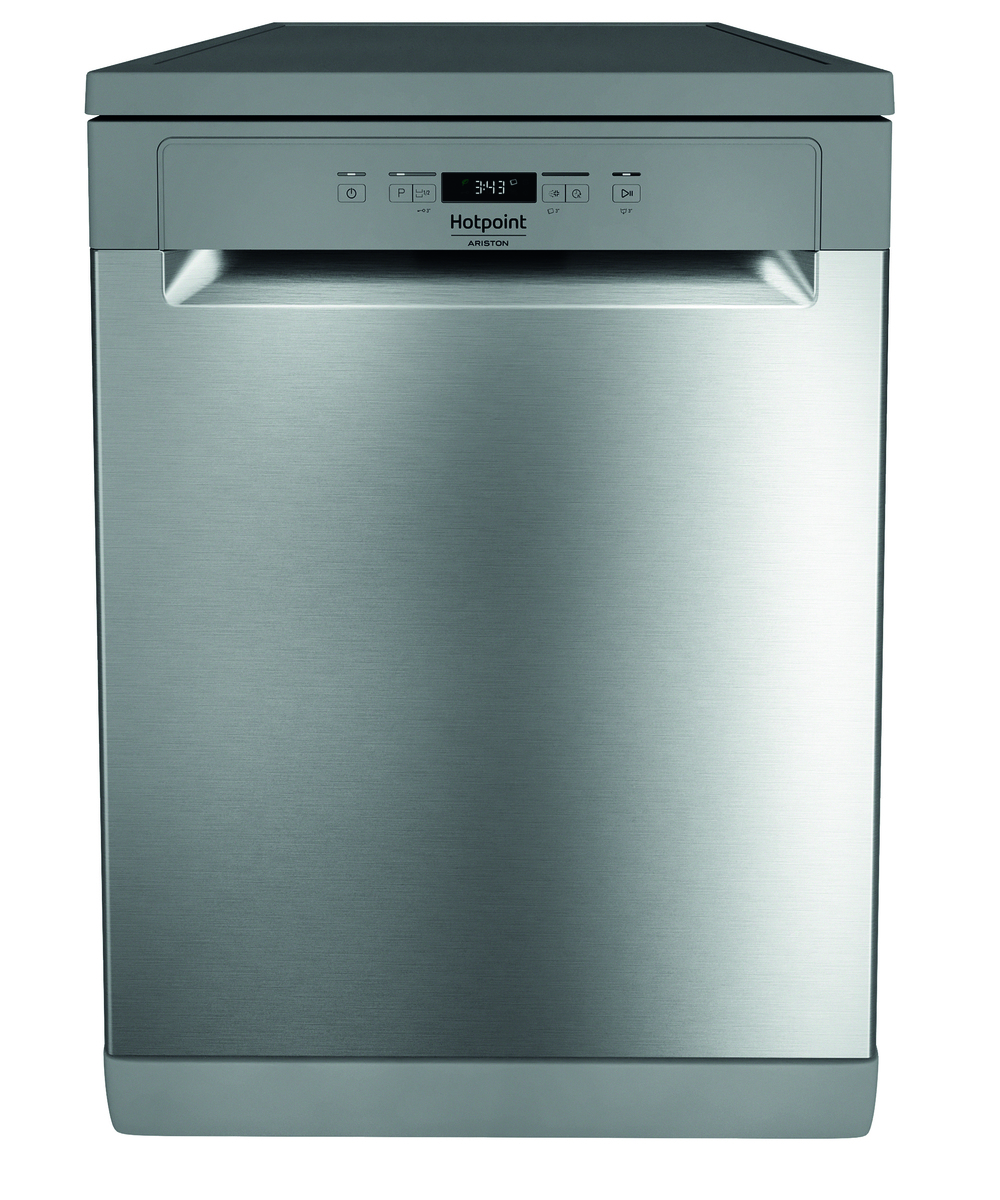 Image unavailable
Hotpoint H3FFD636X, 60 cm, 14 place settings, stainless steel
This freestanding model has room for 14 place settings, making it worth considering if you want to wash a full everyday load at once. The product name indicates an energy-efficiency class of D. Compare the Eco cycle figures too, and check there’s enough room for the connections and the door to open.
View on Joybuy
 Image unavailable
Samsung DW60M6050FS, 14 place settings, grey
This freestanding model has room for 14 place settings and, according to its product title, offers seven cycles. If wash times are important to you, check the Eco programme duration, as well as the dimensions and connections, before comparing it with other models.
View on Joybuy
 Image unavailable
Indesit D2F HK26 S, 60 cm, 14 place settings, grey
Its stated capacity of 14 place settings makes it worth considering for regular household loads, provided this freestanding model fits in your kitchen. The product name indicates an energy-efficiency class of E. Also check the kWh per 100 cycles, Eco cycle duration and installation dimensions.
View on Joybuy
 Image unavailable
Hotpoint H4FD641A, 60 cm, 14 place settings, white
This freestanding model has room for 14 place settings and is an option for everyday loads if you have enough width. Its product title indicates 41 dB and an energy-efficiency class of C. Check the available height and the other Eco cycle figures to see whether it suits your needs.
View on Joybuy
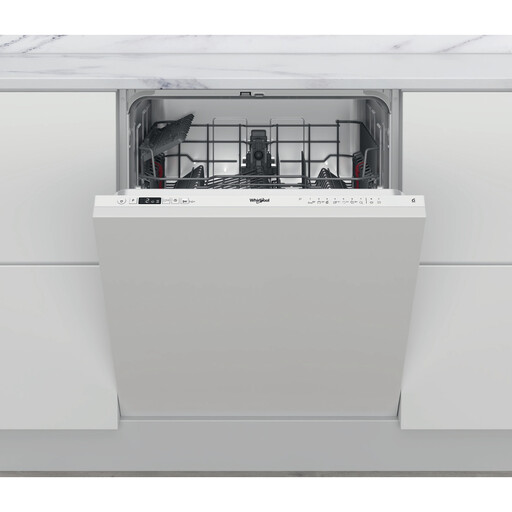 Image unavailable
Whirlpool W2I HD526 A, 60 cm, 14 place settings, white
This integrated model has room for 14 place settings and is worth considering if your kitchen has a suitable cabinet space. The product name indicates an energy-efficiency class of E. Check the installation diagram against the cabinet space, door panel and connections, then look at the consumption figures and Eco cycle duration.
View on Joybuy
Frequently asked questions
Which energy-label figures should I compare?
As well as the energy-efficiency class, compare capacity, electricity use per 100 cycles, water use per cycle, Eco programme duration and noise level. ADEME and the European Commission present these as reference figures on the energy label; they don’t automatically describe a quick programme.
Is a compact dishwasher with room for 6 place settings enough if you cook every day?
It may be suitable if all the dishes produced between washes fit in its baskets, including bulky utensils. Candy lists 6 place settings for its compact CP 6E51LS, compared with 14 listed by Beko for the standard BDFN26460G. Check your usual load before choosing between these sizes.
What should I measure before buying an integrated model?
Measure the height, width and depth of the cabinet space, then check there’s room for the connections and the door to open. Compare the installation diagram for the exact model with the door panel, hinges and plinth planned for your kitchen.
Is the repairability index enough to assess a model?
No. The index is one point of comparison, not a guarantee that a particular repair will be straightforward. For the dishwasher you’re considering, check the index if one is displayed, and also find out about spare parts and service options.


