
Livraison le jour même ou le lendemain

Qualité garantie

Débloquez vos offres de bienvenue: Livraison GRATUITE | Jusqu'à -80 % | 30 jours d'essai gratuits à JoyPlus
Téléchargez l'application
A dish sponge? A trivial purchase, really? How many times have you ended up with a model that falls apart after a week, scratches your brand-new pan, or turns into a foul-smelling nest of bacteria in just a few days? Choosing the right sponge isn't just about cleanliness. It's a matter of hygiene, the longevity of your cookware, and ultimately, economic sense. Before you fill your cart, let's break down the common pitfalls to avoid.
Marketing promises are appealing, but the reality is often less glamorous. Here are the three most common mistakes:
To stop choosing at random, ignore the marketing and focus on three technical criteria that truly make a difference.
Material, scouring surface, durability: here’s what to look for to find the perfect sponge for your dishes, your bathroom, or your spring cleaning.
The core of the sponge. This dictates its absorbency, resilience, and ecological footprint.
This is the most critical part of a scouring sponge. Not all abrasive surfaces are created equal—far from it.
A classic disposable sponge has a limited lifespan: for hygiene reasons, it should be thrown out every one to two weeks. A machine-washable sponge costs more upfront but drastically reduces waste and stays sanitary for much longer, provided it's properly maintained. Some models even include an antibacterial treatment to delay the onset of odours.
No endless catalogue here. We've selected three products that meet specific needs, based on their true technical qualities.
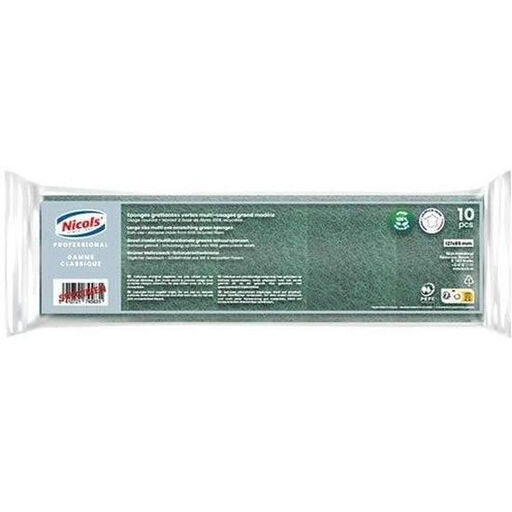
The verdict: A pragmatic solution for daily use. This economical pack allows you to change sponges very regularly for impeccable hygiene, without a second thought.
It sidesteps the "false economy" trap by offering a large volume at a controlled cost, encouraging regular replacement without hurting your wallet.
Excellent quantity-to-price ratio. Its classic dual-sided design (soft foam, green scourer) remains a reliable choice for most common tasks.
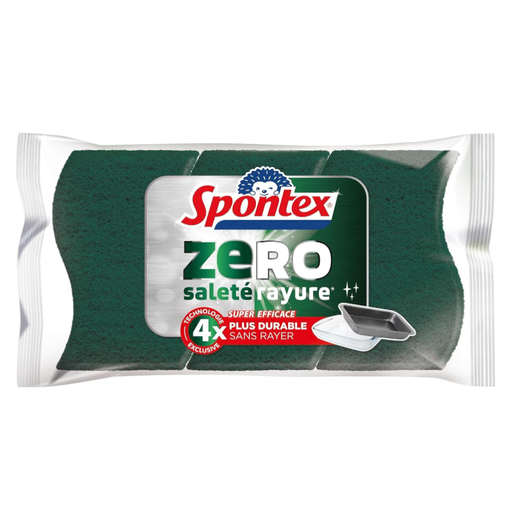
The verdict: The solution for anyone afraid of scratching their non-stick pans, ceramic hobs, or delicate dishware. It lets you scrub effectively, without the stress.
It neutralises the "heavy-duty scourer" trap. Its technology is designed to tackle baked-on grime while respecting the most fragile surfaces.
Effective yet non-abrasive scouring particles. Spontex claims it's 4 times more durable than a classic sponge, a compelling argument that justifies the purchase.
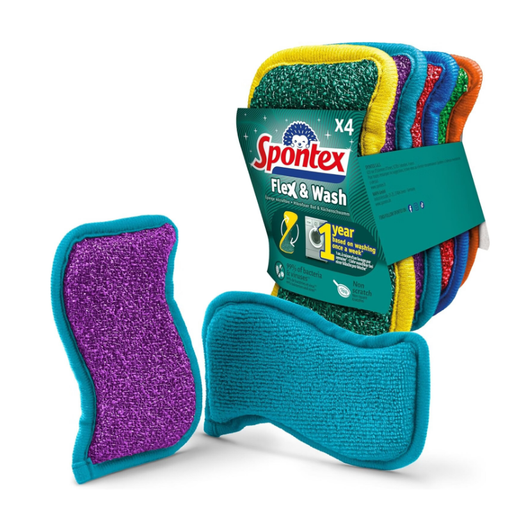
The verdict: The modern, high-performance alternative for those who want to reduce their household waste without compromising on cleanliness.
It ends the endless "throw-and-replace" cycle. Machine washable, it eliminates the risk of bacterial growth and bad odours—the Achilles' heel of disposable sponges.
Washable and reusable (the manufacturer claims up to 52 washes). It combines a cleaning microfibre side with a non-scratch scouring side. Bonus: the packaging is plastic-free.
If you're interested in reusable alternatives, explore our complete collection of products that combine effectiveness with respect for the environment.
For perfect hygiene, a classic sponge should be replaced every one to two weeks. If an odour develops or it starts to degrade, don't wait! For washable models, their lifespan can reach several months with proper care. Follow the manufacturer's instructions.
It's simple: after each use, rinse it well and wring it out completely. Let it air dry (a sponge holder is ideal) to inhibit bacteria. Once a week, put it in the washing machine at the recommended temperature (often 40°C or 60°C).
Even though they are designed to be gentle, caution is advised given the wide variety of coatings that exist. The best practice: always test on a small, inconspicuous area of your pan or hob before you start scrubbing.