
Livraison le jour même ou le lendemain

Qualité garantie

Débloquez vos offres de bienvenue: Livraison GRATUITE | Jusqu'à -80 % | 30 jours d'essai gratuits à JoyPlus
Téléchargez l'application
Choosing a dish soap might seem trivial. Yet, when faced with shelves overflowing with promises, it's easy to feel lost. Between "ultra-degreasing" formulas, eco-friendly labels, and claims of being "gentle on sensitive skin," how can you separate fact from fiction? The wrong choice can quickly lead to wasted money, disappointing results, or skin irritation.
As a product selection expert at Joybuy, my mission is to help you see things more clearly. Here are the most common traps to avoid and the objective criteria to check to find the right product for you.
To stop choosing your dish soap at random, focus on these three essential criteria. They will give you the keys to objectively evaluate each product, beyond the marketing slogans.
The label is your best ally. To ensure you're choosing an eco-friendly dish soap, rely on recognised certifications.
A good degreasing dish soap must be effective without forcing you to empty the bottle in a week.
The sticker price doesn't tell the whole story. To manage your budget, think about the cost per wash. Buying a bulk pack of dish soap is almost always more advantageous. Large formats or multi-packs reduce the cost per litre and save you frequent trips to the supermarket.
To help you apply these criteria, here are a few options suited to different needs, from brands like Maison Verte and Paic.
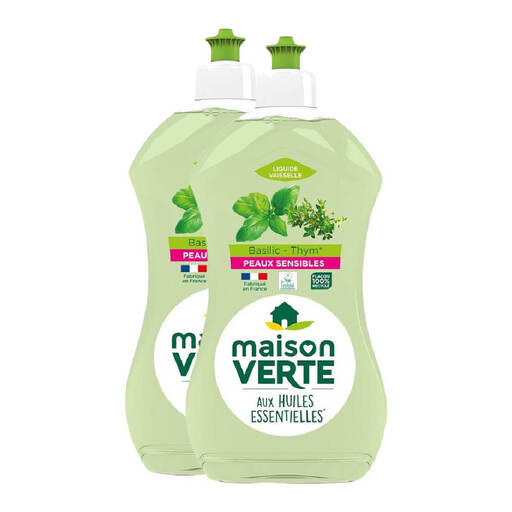
Why we chose it: Ideal for those whose hands react poorly to conventional detergents. It combines skin care with effective cleaning for everyday dishes.
This product goes beyond a simple "gentle" claim. Its formula is specifically hypoallergenic, which counters the trap of unverified promises of softness.
Certified with the European Ecolabel, it combines respect for your skin and the environment. Its cleaning agents are plant-based.
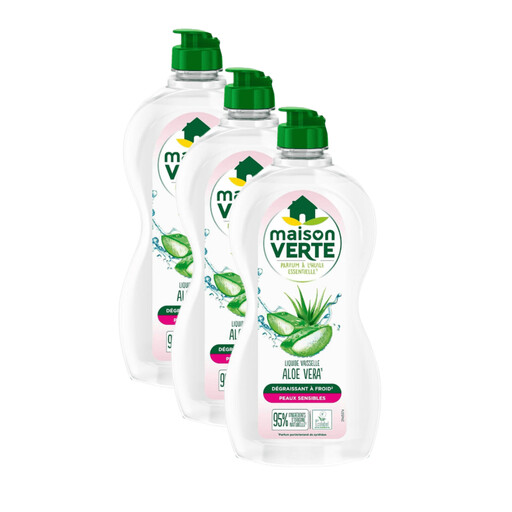
Why we chose it: Perfect for those looking to reduce their ecological footprint without compromising on effectiveness. Its cold-water action is also an excellent way to save energy.
It doesn't just rely on green packaging. Its European Ecolabel certification is an official guarantee of its commitment, thus avoiding the greenwashing trap.
Effective in cold water (from 20°C) and made with 95% naturally derived ingredients (including water). Its bottle is also mostly recyclable.
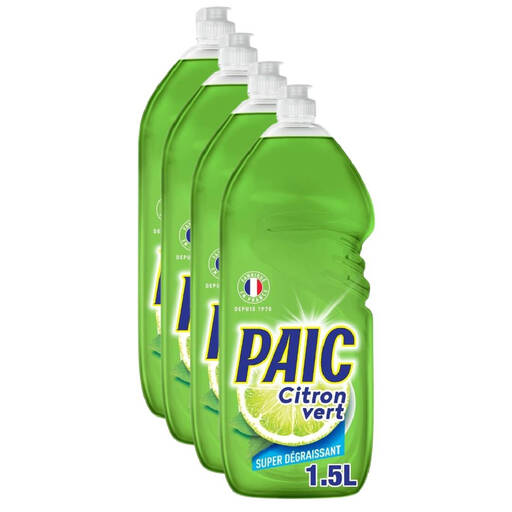
Why we chose it: The solution for large families or anyone looking to optimise their budget. This XXL format offers unbeatable value for money and peace of mind for months to come.
By opting for a large-format bulk pack of dish soap, you bypass the trap of overpriced small bottles. Paic's concentrated formula ensures that every drop counts.
Formidable degreasing power and a formula that's effective even in lukewarm water. The 6-litre format is simply one of the most economical on the market.
We have compiled a complete and up-to-date list of products that meet our demanding selection criteria and all relevant regulations.
To put it simply: a certified eco-friendly product (e.g., with the Ecolabel) guarantees a limited environmental impact throughout its life cycle (from manufacturing to disposal). An organic product (e.g., certified by Ecocert) must contain a minimum percentage of ingredients from organic farming. They are two complementary approaches aimed at better protecting the planet.
Absolutely. Modern cold-water effective formulas contain enzymes and surfactants that activate at low temperatures to dissolve grease. For normally soiled dishes, their performance is entirely comparable to washing in hot water, with the added benefit of energy savings. For heavily baked-on or caked-on grease, a good soak is still the best solution.
Don't just trust the slogans. Look for clear guarantees on the packaging: is the formula hypoallergenic? Has it been "dermatologically tested"? The absence of known allergens (like MIT/CMIT preservatives, synthetic fragrances, etc.) is also an excellent indicator. When in doubt, ranges specifically designed for sensitive skin, like those from Maison Verte, are a safe bet.