
Livraison le jour même ou le lendemain

Qualité garantie

Débloquez vos offres de bienvenue: Livraison GRATUITE | Jusqu'à -80 % | 30 jours d'essai gratuits à JoyPlus
Téléchargez l'application
Doing the dishes every day shouldn't be a chore for your skin. Yet for many of us, it’s the start of a long list of problems: dry hands, tightness, redness, and even full-blown eczema flare-ups. If you're searching for the ideal dish soap for sensitive skin, you've likely noticed that supermarket shelves are overflowing with promises. But how can you tell the difference between a genuinely gentle formula and a mere marketing claim?
As a product expert at Joybuy, I'm here to guide you. Together, let's break down the pitfalls to avoid and the criteria that truly matter, helping you make the right choice—one that combines powerful effectiveness with respect for your skin.
Marketing can often be misleading. Here are three common promises you need to know how to decipher before you head to the checkout.
To find that hidden gem, focus on these three technical points. They are the real deciding factors when evaluating the quality and gentleness of a dish soap.
Surfactants are the molecules that lift grease. Their type and concentration determine both the product's effectiveness and its harshness.
To counteract the potentially drying effect of cleansing agents, manufacturers add "skincare" actives. Look for ingredients like:
In the EU, certain labels are reliable benchmarks that provide real guarantees.
Rather than just a list, we've matched each product to a user profile. The idea? To help you find the one that meets your needs right away.
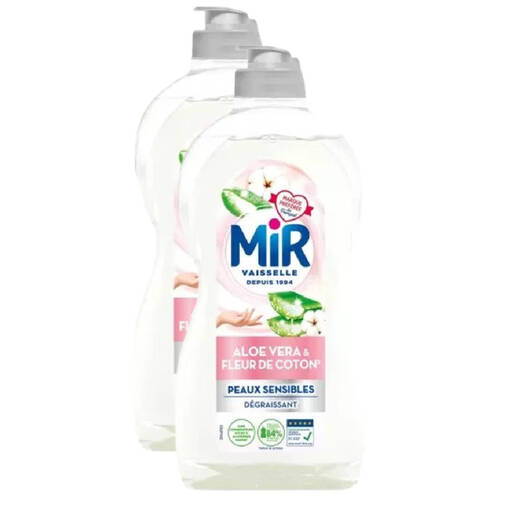
The verdict: This is the smart choice for those who do dishes every day. It checks all the boxes: an accessible price, proven effectiveness, and a gentle formula. A safe bet for the whole family.
This Mir sensitive skin dish soap successfully combines the brand's signature powerful degreasing action with a hypoallergenic formula enriched with aloe vera. Here, there's no compromise between performance and gentleness.
Its concentrated formula makes it economical to use. We also appreciate its subtle cotton flower scent, which is pleasant without ever being overpowering.
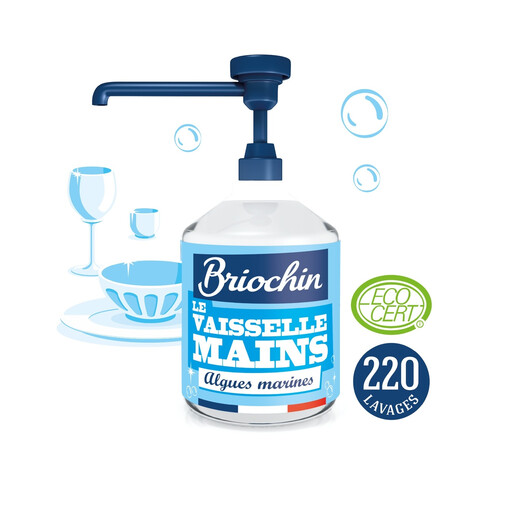
The verdict: Perfect for those who demand maximum degreasing power without harsh chemicals. Black soap, a traditional ingredient, is the star here for its unbeatable effectiveness.
It avoids the "star" ingredient trap by forming a power duo: black soap for ruthless degreasing and marine algae to pamper your hands.
Its pump bottle is incredibly convenient for dispensing without waste. The "Made in France" label is also a real mark of quality.
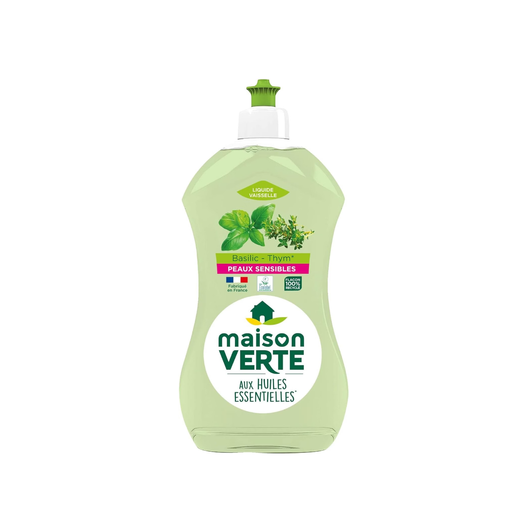
The verdict: For anyone who believes a product's composition and its environmental impact are inseparable. Here, the Ecolabel certification isn't just a detail—it's the number one selling point.
It doesn't just settle for the "hypoallergenic" claim. Its EU Ecolabel certification imposes very strict specifications on its ingredients. This is a real guarantee of transparency.
Its formula, based on plant-derived cleaning agents, is as effective as it is gentle on the skin. Bonus: its bottle is designed to be economical (promising up to 100 washes, according to the manufacturer).
We have curated a complete selection of products that meet our selection criteria and current safety standards.
Yes, without a doubt. The hypoallergenic property relates to the absence (or very low presence) of allergenic substances like certain fragrances or preservatives. This has no impact on the power of the cleaning agents. A hypoallergenic dish soap can therefore be just as tough on grease as a classic version, provided its surfactant formula is well-designed.
That's a seemingly good idea that's actually a bad one. Hand soap is formulated to clean skin, not to dissolve baked-on grease. It doesn't contain the same powerful degreasing agents as a dish soap. You would use a huge amount for a very disappointing result. Conversely, never use dish soap as hand soap: even the gentlest formula isn't designed for such frequent and prolonged contact with the epidermis.
If you've finally found the dish soap that doesn't damage your hands and works perfectly for you, don't change a thing! Sensitive skin hates change. Switching products means exposing it to new ingredients and risking a reaction. Stick with your holy grail product, unless you notice a drop in effectiveness or a return of dryness.