
Livraison le jour même ou le lendemain

Qualité garantie

Débloquez vos offres de bienvenue: Livraison GRATUITE | Jusqu'à -80 % | 30 jours d'essai gratuits à JoyPlus
Téléchargez l'application
Choosing a dish soap can quickly become a daunting task. Faced with digital shelves saturated with promises, it's easy to get lost. Between "ultra-powerful" formulas, claims of gentleness, and pseudo-eco-friendly labels, how do you separate marketing hype from real performance? As the head of product reviews at Joybuy, my job is to arm you with the knowledge to sidestep these traps.
Rather than being swayed by advertising claims, let's break down the most common scams and the objective criteria that will guarantee a smart purchase.
To avoid these disappointments, simply focus on a few key indicators. They will help you objectively evaluate a product before adding it to your cart.
The performance of a dish soap depends on its surfactants, which lift away grime. But their type and the ingredients that accompany them make all the difference.
A good degreasing dish soap must tackle tough grease without forcing you to scrub relentlessly or use half the bottle.
The packaging and the brand's overall approach are increasingly decisive factors for savvy consumers.
To illustrate how these criteria apply in practice, here are a few products suited for different needs.
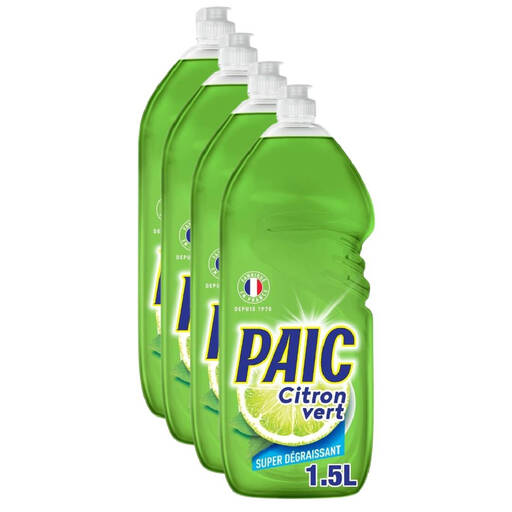
Why we recommend it: For families watching their budget, this 6-litre bulk pack offers an unbeatable price-to-volume ratio. Paic's concentrated formula is a reliable choice, meaning each bottle lasts a very long time, further optimising your spending.
It counters the 'false concentration' scam. The brand promises that a few drops are enough, a claim backed by generations of users. This is a genuinely cost-effective product.
Extra-large volume (6 L): Perfect for fewer shopping trips and a lower cost per litre. Cold-water effective (from 18°C): Allows for energy savings.
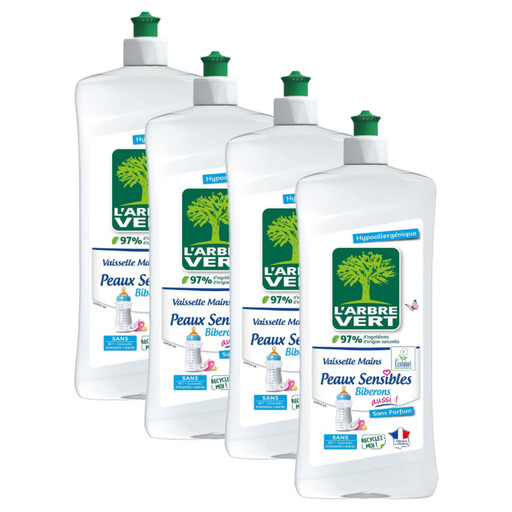
Why we recommend it: Designed to minimise allergy risks, this is the trusted choice for reactive skin and for cleaning baby accessories (bottles, pacifiers). Its clean formula is a guarantee of safety.
It doesn't just settle for a vague 'sensitive skin' claim. The formula is fragrance-free, dye-free, MIT-free, and free from listed skin allergens, offering a level of transparency that goes far beyond marketing.
Certified hypoallergenic formula: Approved to minimise allergy risks. European Ecolabel certified: Guarantees a more environmentally friendly approach.
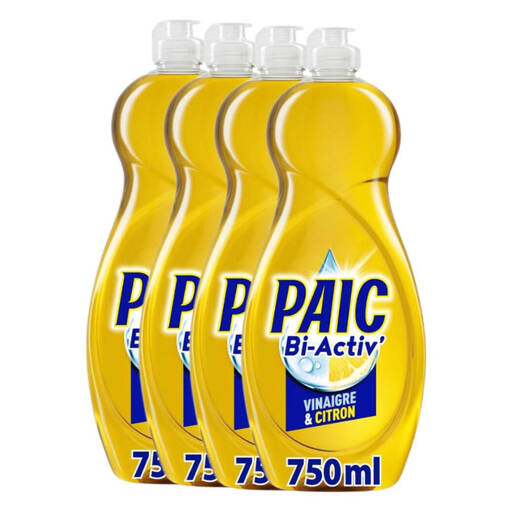
Why we recommend it: For those who battle baked-on casserole dishes and greasy pans, this formula combines Paic's degreasing power with the renowned anti-limescale action of vinegar. It's designed to tackle baked-on and caked-on grease.
It doesn't just rely on a promise of 'power.' It relies on a combination of ingredients (Paic formula + vinegar) whose effectiveness on grease is well-established, offering a targeted solution for tough jobs.
Bi-active formula: The addition of vinegar boosts its action against baked-on grease. 96% natural-origin ingredients: Combines effectiveness with a healthier composition.
In theory, follow the manufacturer's instructions. In practice, for a truly concentrated product, one pump or the equivalent of a teaspoon (2 to 5 ml) is enough for a 5-litre sink of water. If you constantly have to add more product to keep the lather going, it's likely less concentrated than advertised.
Yes, absolutely. The effectiveness of a dish soap depends on the quality of its surfactants, whether they are plant-based or synthetic. Products certified with the Ecolabel, for example, must pass strict performance tests, guaranteeing a washing efficiency comparable to market leaders, all with a reduced environmental impact.
Don't just trust the claim on the front of the bottle. The right move is to turn the bottle over and decode the ingredients list. Look for formulas that are fragrance-free, dye-free, and free from controversial preservatives (like isothiazolinones). Products carrying an "Allergens Controlled" label or those specifically designed for babies, like those in the L'Arbre Vert range, are generally much safer choices.