
Livraison le jour même ou le lendemain

Qualité garantie

Débloquez vos offres de bienvenue: Livraison GRATUITE | Jusqu'à -80 % | 30 jours d'essai gratuits à JoyPlus
Téléchargez l'application
A constantly wet countertop, a precarious pyramid of plates teetering on the brink… Choosing a simple dish rack can quickly become a headache. Far from being a mere gadget, it's a cornerstone of your kitchen's organisation and hygiene. Yet, many models on the market hide flaws that only become apparent with daily use.
Before you make a decision, let's review the most common traps that can turn a purchase into a daily regret:
Spotting these flaws beforehand is the key to finding a truly functional and durable solution.
To avoid making a mistake, a few objective technical characteristics are all you need. They are the true arbiters for evaluating a dish rack's quality and practicality.
The choice of material has a direct impact on your dish rack's durability and maintenance.
A good dish rack must evacuate water efficiently. Two main systems compete:
The capacity should be suited to your daily needs. A 2-tier dish rack is an excellent idea for utilising vertical space, but its stability is non-negotiable. Check for non-slip feet and a solid frame. A good dish rack must handle the weight of the dishes without buckling. Also, consider life-changing accessories, like a cutlery holder or a built-in lid rack, to optimise every inch.
Rather than a soulless catalogue, here is a selection of models that have proven their worth, designed for specific uses and meeting our quality criteria.
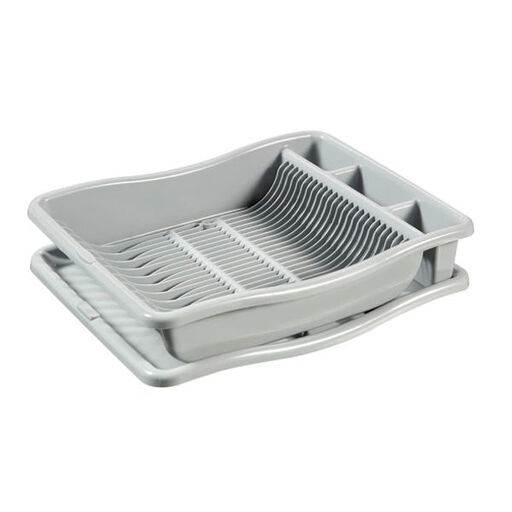
Why we recommend it: Its generous dimensions effortlessly hold the dishes from a family meal. The design is simple, functional, and gets straight to the point: drying a maximum number of dishes, and doing it well.
Made entirely of polypropylene, the risk of rust is simply eliminated. Its integrated tray collects water, keeping the countertop dry, provided you empty it regularly.
Its large capacity for plates, bowls, and glasses. Maintenance is a breeze thanks to its dishwasher-safe compatibility.
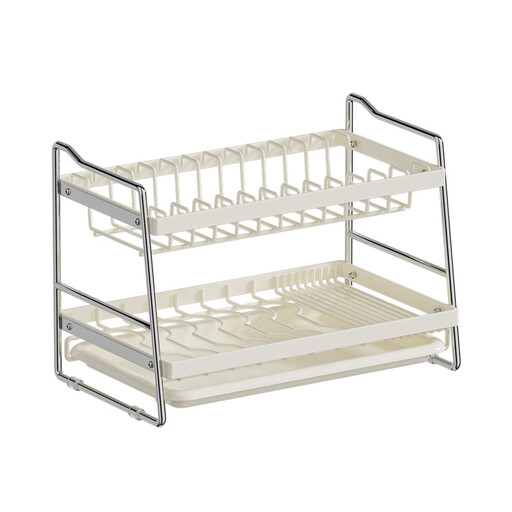
Why we recommend it: Its vertical structure doubles the drying surface without taking up an extra inch of countertop space. The perfect solution for small kitchens where space is at a premium.
The structure was designed for stability, the common weak point of tiered models. The collection trays manage water flow from the upper level, preventing floods on the countertop.
A dramatic space-saver thanks to its vertical structure. It offers ample capacity for dishes, glasses, and cutlery.
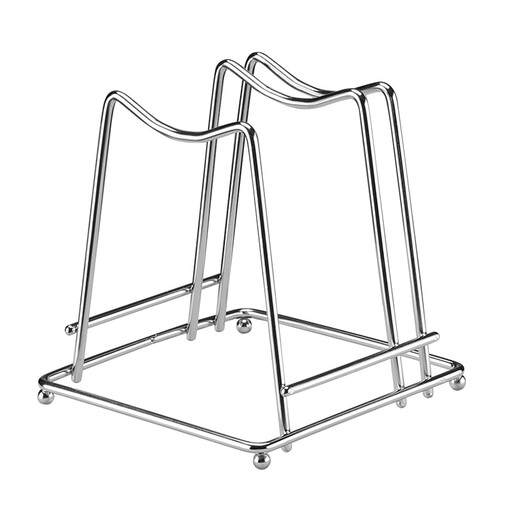
Why we recommend it: This isn't a dish rack in the traditional sense, but a clever accessory that tackles the headache of storing lids, cutting boards, or even baking sheets. Perfect for those who want to optimise every last corner.
Made from food-grade 304 stainless steel, its resistance to rust is guaranteed. Its thick 4 mm structure gives it rock-solid stability, even when holding heavy cast iron lids.
A durable and hygienic material. A versatile storage solution that frees up precious space in cupboards and on the countertop.
We have put together a complete selection of products that meet our quality criteria and current safety standards.
Regular cleaning is key. For a plastic dish rack, a run through the dishwasher once a week is ideal. For metal models, cleaning by hand with soapy water and a soft brush will do the trick. But most importantly, empty and rinse the collection tray every day to ensure water never stagnates.
Absolutely, if the alloy is of poor quality. The term "stainless steel" is a generic label that covers many different grades. For the kitchen, a constantly humid environment, it is imperative to look for the 304 stainless steel (sometimes noted as 18/8) designation. It's the only one that guarantees true resistance to corrosion. Models that do not display this specification will almost always end up rusting.
A 2-tier dish rack simply doubles the drying surface for the same footprint. It's the smart choice for small kitchens or large families. Generally, the upper tier is reserved for plates, while the lower level holds bowls, glasses, and cups. Before buying, just check that the height between the two levels is sufficient for your dishes and, most importantly, that the entire unit is perfectly stable.