
Livraison le jour même ou le lendemain

Qualité garantie

Débloquez vos offres de bienvenue: Livraison GRATUITE | Jusqu'à -80 % | 30 jours d'essai gratuits à JoyPlus
Téléchargez l'application
A soggy countertop, a precariously balanced stack of plates, a dish rack that rusts after just a few months... Let's face it, choosing a simple dish rack can quickly become a headache. This accessory, however modest, is a cornerstone of kitchen organization. Unfortunately, it's easy to fall for common traps that turn a simple purchase into a daily frustration.
As the Head of Product Recommendations at Joybuy, my mission is to help you make an informed decision. Let's cut through the marketing jargon and focus on what's essential. Here are the three most common mistakes to avoid and the criteria that truly matter for making the right choice.
To avoid buyer's remorse, focus on concrete features rather than empty promises.
A good kitchen organizer must be practical, durable, and suited to your space. For a dish rack, this comes down to three key points.
The choice of material has a direct impact on the longevity and hygiene of your dish rack.
A good dish rack must, above all, keep your countertop dry. Several solutions exist:
The size of your kitchen and your daily volume of dishes will determine the most suitable structure.
Every kitchen is unique. Here are a few options that meet specific needs, all selected based on the durability and practicality criteria we've just discussed.
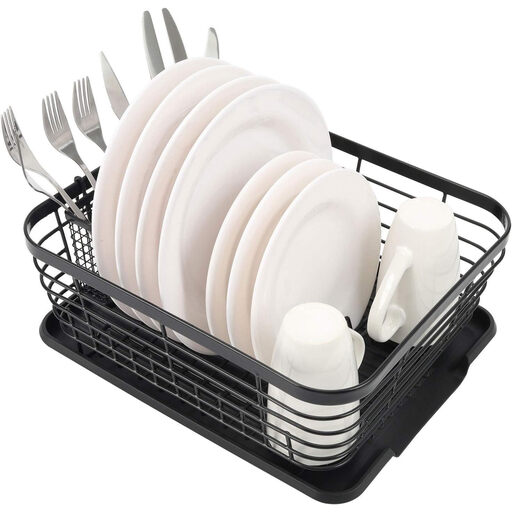
Why it's perfect: With its compact size (36 x 30.7 cm), it nests inside most standard sinks or sits discreetly on a corner of the countertop. It's the dream solution for studios or kitchens where every square inch counts.
By sitting in the sink, it eliminates the problem of stagnant water. Its powder-coated finish protects the metal from rust, and its silicone feet prevent scratching the sink.
A 3-in-1 kit (caddy, tray, cutlery holder) that's ready to use out of the box, with no assembly required. Just unbox it, place it, and you're done.
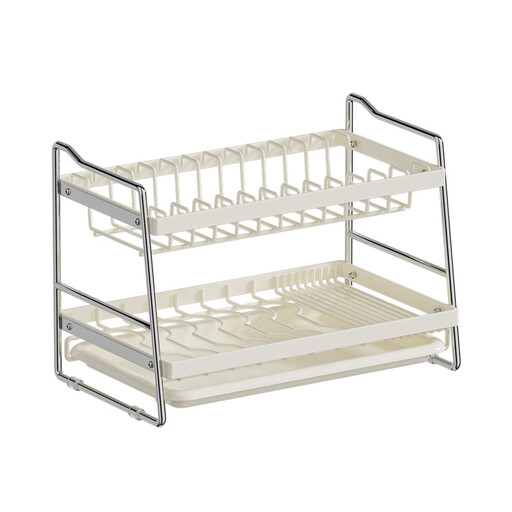
Why it's perfect: Its two-tier structure optimizes drying capacity without taking over the countertop. It's designed to handle the daily dish volume of a family.
It includes a drainboard that channels water away, preventing puddles. Its vertical structure is designed to remain stable, even when heavily loaded on both tiers.
High capacity and vertical organization make it an excellent 2-tier dish rack for optimizing space.
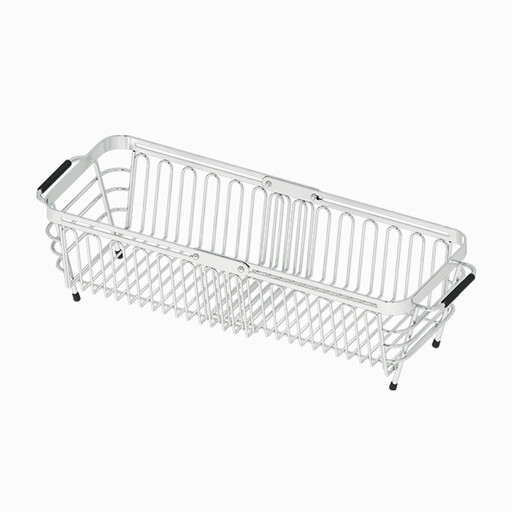
Why it's perfect: For those who make no compromises on quality, this model is made from 304 stainless steel, a material renowned for its superior rust resistance. Its expandable design allows it to be custom-fit to sinks of various sizes.
The use of 304 stainless steel is the ultimate answer to the trap of rusting metals. As an in-sink dish caddy, it ensures perfect drainage and completely frees up your countertop.
A durable and hygienic material, paired with an expandable design (from 29 to 44 cm) that makes it as versatile for drying dishes as it is for rinsing vegetables.
Explore our full selection of products that meet our strictest quality and safety standards.
Regardless of the material, a weekly cleaning with hot water and dish soap is fundamental. For stubborn limescale, especially on stainless steel or plastic, a mixture of water and white vinegar works wonders. Rinse thoroughly and dry completely to prevent buildup. For a stainless steel dish rack, never use abrasive sponges that could scratch its surface.
It all depends on your habits and your kitchen's layout.
Stainless steel is an alloy of iron and carbon, with chromium added to protect it from rust. 304 stainless steel (also known as 18/8) contains approximately 18% chromium and 8% nickel. It's this high nickel content that gives it far superior resistance to corrosion and oxidation compared to low-grade stainless steels (like type 430). For an accessory constantly in contact with water, like a dish rack, this difference is crucial for its longevity.