
Same-day & Next-day Delivery

Quality Guaranteed

Unlock Your Welcome Offers: FREE Delivery | Up to 80% OFF | Free 30-day JoyPlus trial
Download the APP
A constantly soaked countertop, a wobbly pyramid of plates… Choosing a dish rack seems simple, but the wrong model can quickly turn this daily chore into a nightmare. Many products that look appealing at first glance reveal their flaws with use?: rust appearing in just a few weeks, stagnant water, or simply a poorly thought-out design.
To ensure you don't regret your purchase, here are the three most common pitfalls and our tips for avoiding them.
To make the right decision, focus on a few features that make a real difference in daily use.
Water management is the heart of the matter. A good dish drying rack must, above all, keep your countertop dry. Two systems dominate the market?:
The choice of material has a direct impact on your dish rack's lifespan.
Assess your actual needs. If you live alone or as a couple, a compact dish rack will suffice. For a family, a high-capacity dish rack is essential.
Think vertical?! A 2-tier dish rack doubles the drying surface without taking up more countertop space. Be sure to check the height between tiers to fit your glasses or bowls. The presence of dedicated compartments (for cutlery, glasses, cutting boards) is a real bonus for a tidy kitchen.
We have scrutinised several models to present you with options that meet different needs and profiles.
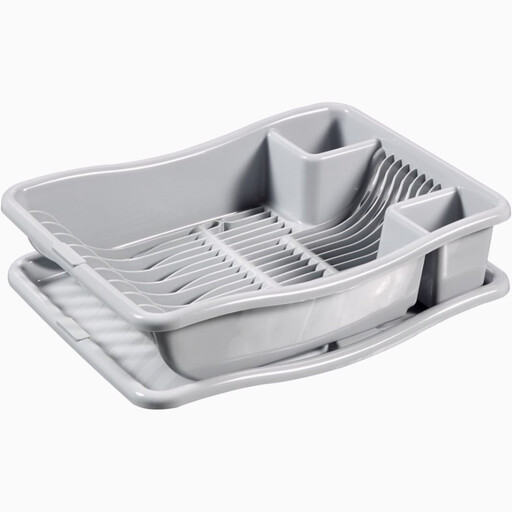
Why you need this model : Perfect for small kitchens, studios, or single-person households. Its compact size accommodates daily dishes without monopolising precious countertop space.
Made of polypropylene, it will never rust. Its removable tray collects water and empties in a flash, solving the problem of stagnant water.
Compact yet sturdy. Ultra-easy maintenance, it's even dishwasher-safe for effortless cleaning.
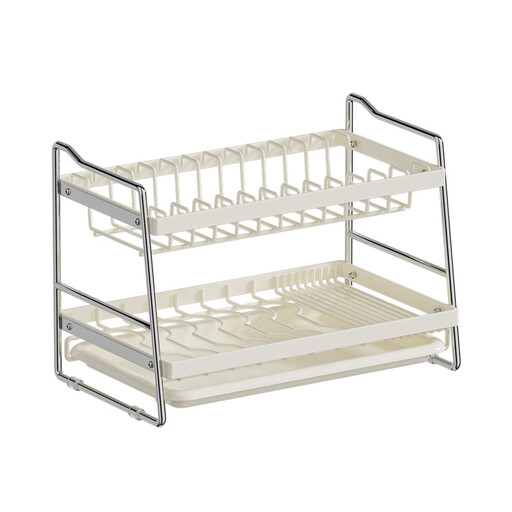
Why you need this model : Essential for families or cooking enthusiasts. Its two-tier structure optimises vertical space and allows you to handle a large volume of dishes after every meal.
Its 2-tier dish rack format solves the lack of space. The integrated drainage tray efficiently removes water to keep the countertop perfectly dry.
High capacity and smart vertical storage. Fully self-contained, it can be placed anywhere you like near the sink.
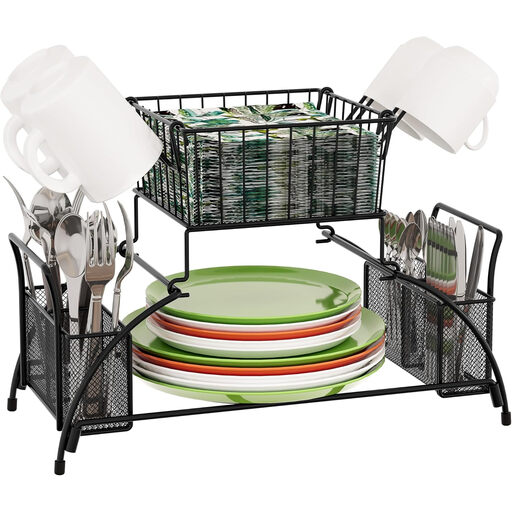
Why you need this model : For those who want to combine function with style. This organiser serves as both a dish rack and a chic display stand for a buffet. A smart and stylish 2-in-1.
Its powder-coated carbon steel structure is treated to resist rust. Its two-level design offers comfortable storage capacity.
Solid construction and multi-use design. Its non-slip feet guarantee rock-solid stability.
Discover our full selection of products that meet our criteria for quality, durability, and design.
Opt for water-resistant materials like stainless steel or steel with a high-quality coating. A good habit?: wipe it down from time to time and never let water stagnate in the drip tray.
Yes, if the model is well-designed. Check that it has a wide base, a sturdy structure, and non-slip feet made of rubber or silicone. When loading it, remember to balance the weight by placing the heaviest items (pots, plates) on the bottom tier.
For a plastic model, warm, soapy water is sufficient. If it's compatible, a run in the dishwasher will make it look like new. For metal, use a soft cloth and a non-abrasive cleaner to avoid damaging the coating. A weekly cleaning is ideal to prevent limescale buildup and residue.