
Livraison le jour même ou le lendemain

Qualité garantie

Débloquez vos offres de bienvenue: Livraison GRATUITE | Jusqu'à -80 % | 30 jours d'essai gratuits à JoyPlus
Téléchargez l'application
Washing dishes by hand is a daily chore for many, whether it's just a few plates or the Sunday roast pan. While the sponge has long been the king of our sinks, it's increasingly coming under fire for hygiene reasons. In response, the dish brush is emerging as the ideal alternative: more durable, more sanitary, and often far more effective.
But with the jungle of available models, how do you find your way? Wood or plastic handle? Soft or stiff bristles? Our mission is simple: to guide you toward the right choice with clear, concrete advice, cutting through the often misleading marketing jargon.
This guide breaks down the essential criteria to consider and presents a selection of tried-and-tested products.
Before you dive in, let's review the few features that separate a truly effective dish brush from a mere gadget.
The choice of material has a direct impact on your brush's durability, maintenance, and aesthetics.
The ergonomics of the brush are crucial for its comfort in use and its versatility.
The stiffness and material of the bristles determine the effectiveness of your kitchen scrubbing brush. Bristles that are too soft will be powerless against caked-on grease, while bristles that are too hard risk scratching delicate surfaces like non-stick pans. Most modern brushes use synthetic fibres (nylon, polyester) that offer a good balance of sturdiness and gentleness. A good indicator of quality? The density of the bristles: the denser and more securely embedded they are, the longer your brush will last.
To help you see things more clearly, here are three models that have caught our attention. Each meets specific needs, with an excellent balance of effectiveness and durability.
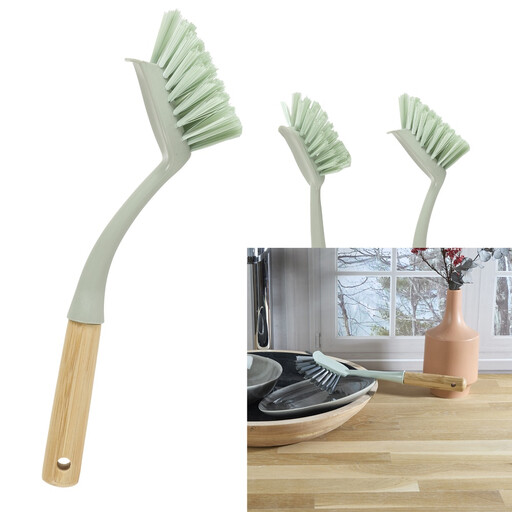
Highlights: This brush stands out with its elegant design, combining a sustainably sourced bamboo handle with highly resistant synthetic bristles. Its long, ergonomic handle provides a comfortable grip and protects your hands, while its dense head is designed for a deep clean without scratching.
Advantages:
Who is it for? Ideal for those who care about aesthetics and environmental impact, and who are looking for a versatile eco-friendly dish brush that is equally at home on delicate dishes and saucepans.
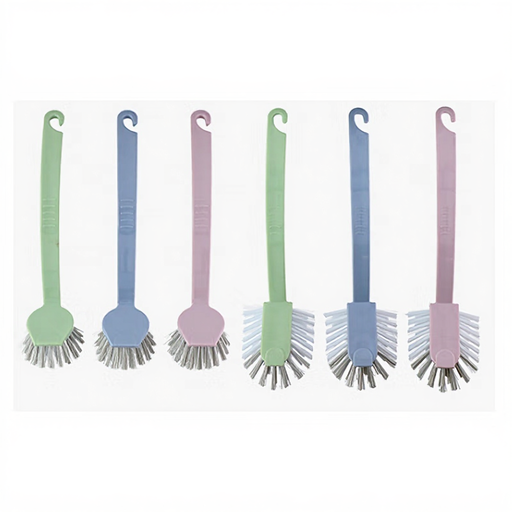
Highlights: This model is all about simplicity and efficiency. With its durable plastic handle and robust bristles, this brush is a reliable tool for everyday use. Its length of approximately 26/27 cm offers a good compromise between reach and manoeuvrability. Delivered in a random colour, it adds a little touch of surprise to your sink.
Advantages:
Who is it for? Perfect for those who prioritise functionality, durability, and a controlled budget. It's a simple, no-frills kitchen cleaning tool, suitable for families, office kitchens, or communal living spaces.
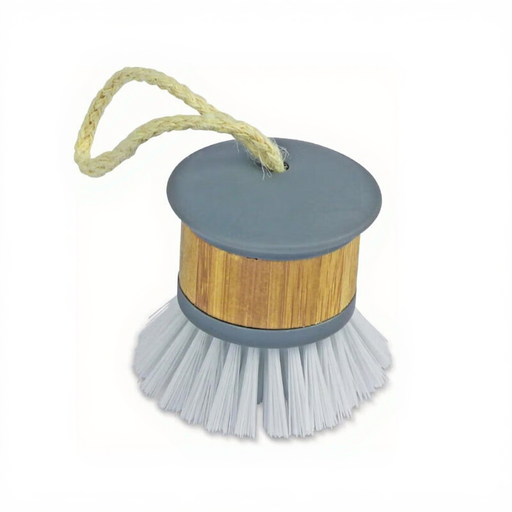
Highlights: This brush's main advantage is its compactness. Its small 6 x 7.8 cm size allows for a direct grip and precise cleaning control. Despite its size, its nylon or polyester bristles are robust enough to effectively tackle residue on cups, bowls, and other small utensils.
Advantages:
Who is it for? An excellent choice for people living in a small apartment, as a complement to a long-handled brush, or for those who prefer a grip closer to the surface being cleaned.
Our selection is just a starting point to help you. If you have more specific needs or are simply curious to discover other models, shapes, and materials, feel free to browse our full catalogue.
? Discover our full range of dish brushes on Joybuy
1. How do I properly maintain my dish brush to keep it hygienic? For impeccable hygiene, rinse your brush thoroughly after each use to remove food particles and soap. Shake it to remove excess water and hang it or place it bristle-side down in a well-ventilated area. Above all, never let your brush soak in water, especially if it has a wooden handle.
2. Will a dish brush scratch my non-stick pans? Most modern brushes are equipped with synthetic bristles (nylon, polyester) designed to be non-abrasive. However, caution is still advised. For very delicate surfaces like new non-stick coatings, we recommend checking the manufacturer's instructions and testing on a small, inconspicuous area if in doubt.
3. When should I replace my dish brush? The lifespan of a brush depends on its quality and how often you use it. It's time to replace it when the bristles are visibly flattened, misshapen, or starting to fall out, as its cleaning effectiveness will be significantly reduced. For bamboo brushes, a replacement is necessary if the handle shows cracks where bacteria could grow.