
Livraison le jour même ou le lendemain

Qualité garantie

Débloquez vos offres de bienvenue: Livraison GRATUITE | Jusqu'à -80 % | 30 jours d'essai gratuits à JoyPlus
Téléchargez l'application
Replacing your dinnerware or outfitting a new kitchen can quickly become a headache. Caught between marketing promises and the reality of daily use, it’s easy to end up with chipped plates after just a few months or a so-called “multi-purpose” dish that cracks in the oven. To help you make a more informed decision, we've broken down the most common traps and the criteria that truly matter.
The first pitfall? The "one-size-fits-all" illusion. An item labelled microwave-safe dinnerware is no guarantee of a trouble-free experience. Some low-quality materials can overheat, release unwanted substances, or develop invisible micro-cracks that lead to premature breakage.
Another classic trap: choosing aesthetics over practicality. Unique shapes or very thin rims may look appealing in the store, but they often prove to be fragile and difficult to stack—a nightmare for proper kitchen storage. The result: cluttered cabinets and dinnerware that visibly deteriorates.
To make an informed choice, ignore the marketing hype and focus on tangible features. Here are the three checkpoints you should never overlook.
The longevity of your dinnerware depends on its resistance to temperature shocks and detergents.
The choice of material directly impacts the lifespan, hygiene, and practicality of your dinnerware.
Practical dinnerware is, above all, a pleasure to use every day. Consider stackability: plates or bowls that nest perfectly optimise space and reduce the risk of breakage. Weight is also a factor not to be underestimated, especially if you handle large stacks of plates.
To illustrate these principles, here are a few options tailored to specific needs, chosen for their design and materials.
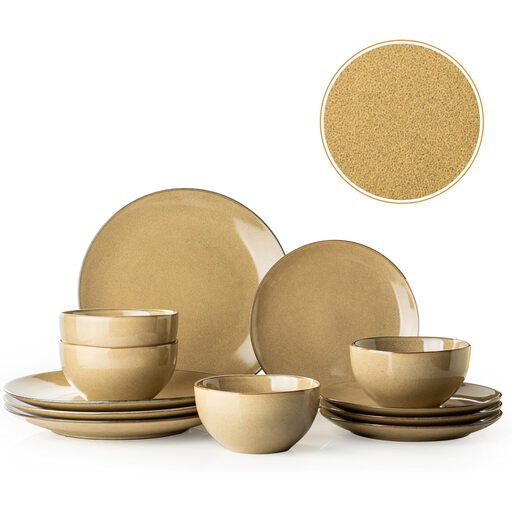
Why we chose it: Perfect for starting out with a solid, complete, and versatile foundation. This set for 4 covers all daily needs (dinner plates, dessert plates, bowls) with a modern, all-purpose design.
It checks all the boxes for a smart and durable starter set. Its vitrified stoneware, fired at high temperatures, ensures low porosity and good scratch resistance, a far cry from the fragility of budget ceramics.
An all-in-one set that is microwave and dishwasher safe, made from non-toxic ceramic (lead and cadmium-free) for complete peace of mind.
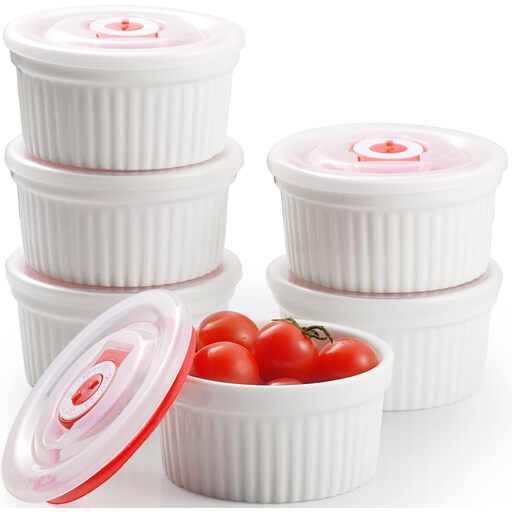
Why we chose it: The essential accessory for fans of individual portions, from crème br?lée to mini gratins. The porcelain ensures perfectly even cooking, and the lids with a date tracker are a game-changing bonus for storage.
No unpleasant surprises here: these ramekins are built for the oven. Unlike simple bowls repurposed for baking, their high-quality porcelain is designed to handle high temperatures without ever cracking.
Absolute versatility: they go from the oven to the freezer, then to the microwave and dishwasher. The lids with a date tracker are the icing on the cake for perfect organisation.
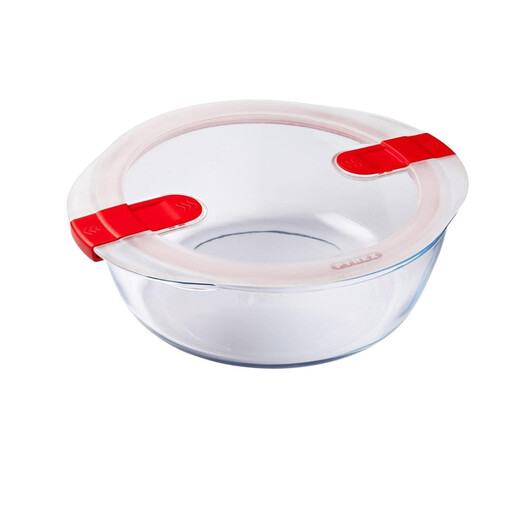
Why we chose it: The ultimate ally for meal prep and storing family-sized dishes. Its large capacity and borosilicate glass allow you to cook, store, transport, and reheat in a single dish. A true all-in-one solution.
It doesn't just make promises; it delivers. The borosilicate glass is a guarantee for oven use, while the airtight lid with a steam valve is proof of a design specifically engineered for safe microwave reheating.
A 4-in-1 solution: oven dish, storage container, transport dish, and serving dish. Its hygienic glass does not retain odours or stains.
Discover our full selection of products that meet our criteria for durability and the strictest safety standards.
These three terms refer to clay-based products, but they differ in their composition and firing temperature. Porcelain is fired at a very high temperature (up to 1,400°C), which makes it very hard, non-porous, and translucent. Stoneware is also fired at a high temperature (around 1,200°C), making it robust and impermeable. Earthenware, another type of ceramic, is fired at a lower temperature and remains porous, which makes it more fragile and requires a glaze to be waterproofed.
Oven-safe compatibility must be explicitly stated by the manufacturer, often via a pictogram on the bottom of the product. The safest materials are borosilicate glass, porcelain, and certain types of stoneware designed for baking. Never use dinnerware in the oven that is not clearly identified as such, as it risks cracking or shattering from the heat. Likewise, avoid extreme thermal shocks (for example, moving a dish directly from the freezer to a preheated oven).
To preserve your dinnerware, avoid abrasive sponges that can scratch the glaze and patterns. In the dishwasher, be careful not to overload the racks, so pieces don't knock against each other. For items with delicate patterns or gold rims, hand washing is still the best option. Finally, careful storage will prevent chips and scratches: stack pieces of the same shape and consider placing felt dividers between your most precious plates.