
Livraison le jour même ou le lendemain

Qualité garantie

Débloquez vos offres de bienvenue: Livraison GRATUITE | Jusqu'à -80 % | 30 jours d'essai gratuits à JoyPlus
Téléchargez l'application
Choosing dinner plates is about more than colour or pattern. Attractive tableware can quickly become a nuisance in everyday use if it stacks poorly, gets scratched after the first wash or is not suitable for your kitchen appliances. At home or in a restaurant, the criteria that really matter are the material, size, care requirements and expected durability.
A glossy finish, decorative texture or artisanal colour is not enough to judge the strength of a ceramic or stoneware plate. The product details should specify the material, weight, thickness and permitted uses. A heavy plate is generally very stable on the table, but it also takes up more space in the dishwasher and cupboards.
A diameter of 27 or 28 cm is generally suitable for a dinner plate intended for a main course. However, you also need to consider the height of the rim and the space available in your storage areas. A soup plate is more practical for soups, pasta or dishes with sauce, while a smaller model is better suited to a starter, dessert or breakfast.
For professionals, a few centimetres can be enough to affect the capacity of a shelf, serving trolley or commercial dishwasher.
Statements such as ‘dishwasher-safe’, ‘microwave-safe’ or ‘oven-safe’ should be clearly shown on the product page or packaging. If they are missing, it is best not to assume that the plate is compatible. Temperature changes can weaken certain items, particularly those made from ceramic, stoneware or slate.
A slate presentation plate may be perfectly suitable for serving appetisers, sushi or charcuterie, without being suitable for the microwave, oven or dishwasher. If in doubt, the manufacturer’s instructions should always take priority over the product’s appearance.
To create a versatile dinner set, a collection of plates can include:
Round plates generally stack more easily. Square or very wide models showcase the presentation more effectively, but they also require more storage space. In a restaurant, choose consistent sizes and check that matching pieces are available before putting together a complete set.
For a dishwasher-safe plate, check the recommended number of cycles and, where stated, the maximum temperature it can withstand. A glazed surface makes cleaning easier, but abrasive products should still be avoided.
For professional tableware, impact resistance, weight and consistent dimensions matter just as much as style. Plates intended for catering should be inspected regularly: cracks, chips and deep scratches can make cleaning more difficult and increase the risk of cuts. In establishments open to the public, the manufacturer’s instructions and the regulations applicable to food-contact materials must be followed.
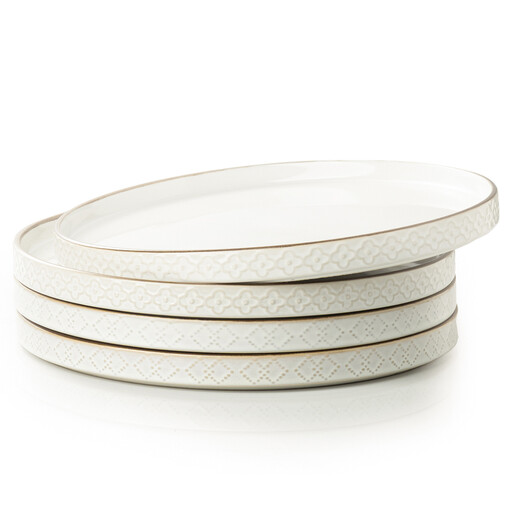
Why this choice suits this profile : This set lets you quickly refresh a family dinner service with four plates measuring approximately 25.9 cm, suitable for main courses and everyday meals.
The product details state that it is suitable for the dishwasher, microwave, oven, refrigerator and freezer. Nevertheless, it is still best to follow the instructions provided on the underside of the plates.
Gloss-glazed ceramic, an integrated raised pattern and a stackable design that helps minimise clutter.
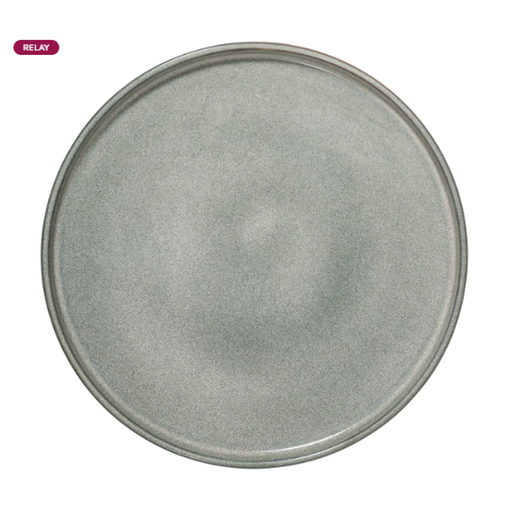
Why this choice suits this profile : With its green colour and generous size, it is designed for tables seeking a natural presentation and a particularly substantial piece weighing 961 g.
The product details specify that this is a heavy 27 cm earthenware plate, suitable for professional use or establishments open to the public. The choice is therefore not based solely on the decoration.
A diameter of 27 cm, a height of 2.3 cm and a high weight that promotes stability during service.
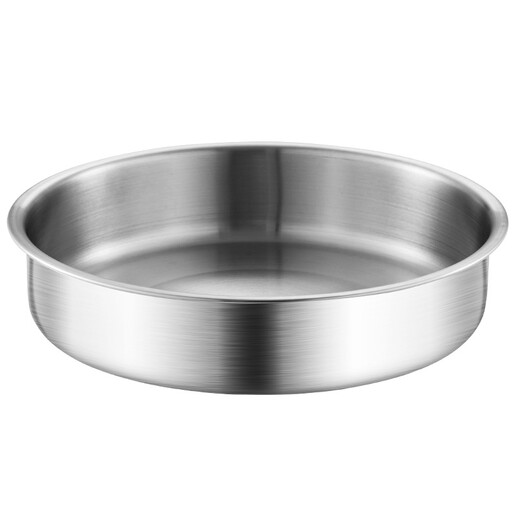
Why this choice suits this profile : This stainless steel plate is suitable for very busy kitchens, outdoor meals and anyone looking for a piece that is unlikely to break.
The 304 material and reinforced construction are explicitly stated. Dishwasher compatibility is also mentioned, unlike models whose care requirements are unclear.
Stainless steel, good impact resistance, easy cleaning and possible use in the oven, steam oven and on induction hobs, in accordance with the safety instructions.
We have put together a complete, regularly updated list of products that meet these demanding selection criteria as well as European safety regulations.
A diameter of between 25 and 28 cm is suitable for most main courses. However, remember to measure your cupboards and check the maximum size accepted by your dishwasher. For professional use, also compare the diameter of the plates with that of the trays and the space available in your storage areas.
Stainless steel withstands drops and does not shatter like ceramic. It is therefore well suited to intensive use. Ceramic and stoneware offer a more traditional presentation, but remain susceptible to chips and knocks against hard surfaces. Even a plate described as shatterproof should be replaced if it becomes deformed or heavily scratched.
There is no universal lifespan. Frequency of use, impacts, washing cycles and cleaning products all directly affect its longevity. Replace any item with a crack, sharp chip, deformation or a surface that has become difficult to clean. To keep costs under control, choose dinner sets whose pieces can be replaced individually, where this information is available.