
Livraison le jour même ou le lendemain

Qualité garantie

Débloquez vos offres de bienvenue: Livraison GRATUITE | Jusqu'à -80 % | 30 jours d'essai gratuits à JoyPlus
Téléchargez l'application
Choosing dinner plates isn’t just about finding a colour you like. Tableware that’s a pleasure to use every day also needs to suit your meals, the space in your cupboards and your cleaning habits. Between dinner plates that are too small, decorative designs that aren’t microwave-safe and sets that are too stingy for entertaining, a wrong decision can quickly become a nuisance.
Here are the criteria to consider before buying a dinner set, whether it’s for everyday meals, large gatherings or picnics.
A glossy finish, a raised pattern or a gold rim all have implications for care. Metallic decoration usually rules out microwave use. Meanwhile, thick ceramic can be heavier to handle and take up more space in a cupboard.
Before you order, check the pictograms and the manufacturer’s recommendations for the dishwasher, oven, freezer and microwave.
A dinner plate is fine for main courses, but it doesn’t hold soup, sauce or pasta well. A soup plate, on the other hand, can be bulkier and isn’t necessarily suitable for every presentation.
To cover most meals, a set made up of dinner plates, dessert plates and bowls or soup plates offers much better versatility.
A set of four plates might be enough for a couple or a small family, but it leaves no margin when one piece is in the dishwasher or a guest joins you at the table. For a family or regular entertaining, a 12-piece dinner set will often be more practical, especially if it includes several sizes.
A diameter of around 21 to 23 cm is generally suitable for individual portions and versatile plates. Models of 25 to 28 cm offer more space for a main course, but they need a shelf that’s wide enough.
For soup, saucy dishes and pasta, don’t just look at the diameter – also check the depth and the usable surface area. A 20 cm soup plate can prove more practical at the table than a large, very flat model.
The label “dishwasher-safe” makes daily life easier, but it doesn’t mean you can ignore the manufacturer’s recommendations. In particular, avoid thermal shock – don’t put a cold plate straight into a hot oven unless this use is explicitly allowed.
Inspect the edges regularly. A chipped or cracked plate has no place near food. For disposable models, also check the limits of use with very hot, greasy or liquid preparations.
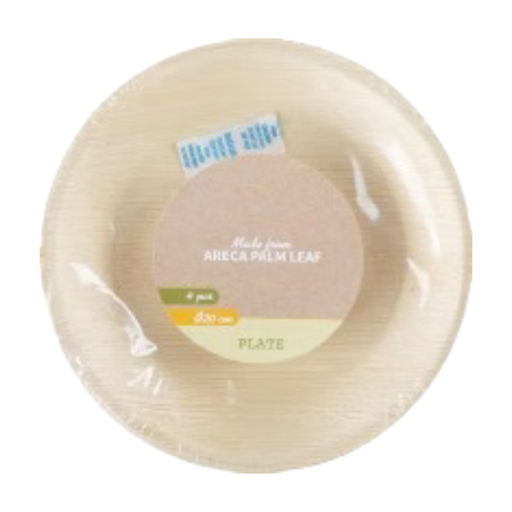
Why this choice suits this profile: This set of four deep palm-leaf plates is ideal for impromptu meals, picnics and barbecues, without needing to buy a full dinner set.
The size and quantity are clearly stated: 20.5 × 3 cm and 4 pieces. However, this solution does not replace reusable tableware for everyday use.
Palm leaves, beige colour, single-use and biodegradable according to the product sheet. These plates are not compatible with the oven, microwave or dishwasher.
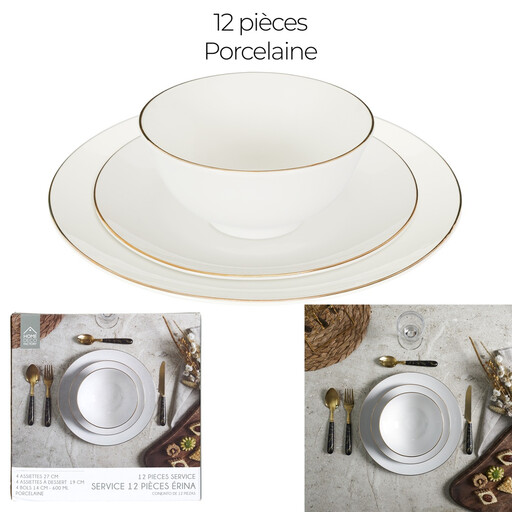
Why this choice suits this profile: This 12-piece dinner set brings together dinner plates, dessert plates and bowls to create a harmonious table for family meals or entertaining.
The detailed composition leaves no ambiguity about what’s in the set. The gold rim means hand washing only and no microwave use.
White porcelain, 4 dinner plates, 4 dessert plates and 4 bowls. The metallic decoration requires careful handling and maintenance.
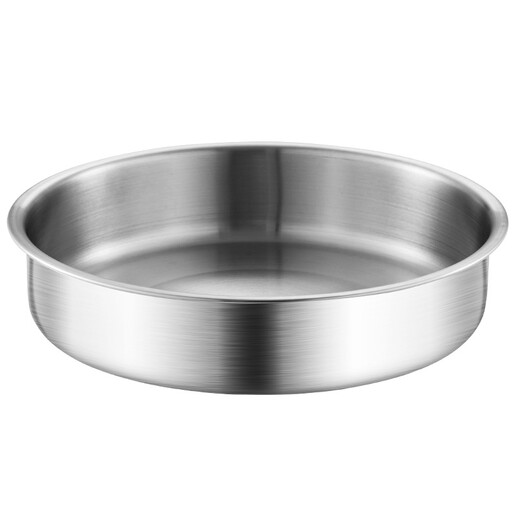
Why this choice suits this profile: Stainless steel is ideal for busy kitchens, outdoor meals and anyone looking for an unbreakable, easy-to-clean plate.
The material and stated compatibility are clearly specified. Use moderate heat and gloves to handle the plate after heating.
304 stainless steel, stated corrosion resistance, easy cleaning and unbreakable design. Diameter stated: 24 cm.
We’ve put together a comprehensive, real-time updated selection of products that meet these selection criteria as well as European safety requirements.
For everyday use, allow two to three plates per person: one dinner plate, one dessert plate and, depending on the menu, a soup plate or bowl. Add a few spare pieces if you don’t run the dishwasher very often or if you entertain regularly.
Not always. Ceramic can be microwave-safe, but gilding, a metallic element or a particular finish may rule it out. Check the product sheet and the markings on the underside of the plate.
The term “compostable” needs to be considered alongside the product’s certification and local guidelines. Some models require an industrial composting facility and must not be put in a garden compost bin. Check the packaging and your local authority’s rules before sorting them.