
Livraison le jour même ou le lendemain

Qualité garantie

Débloquez vos offres de bienvenue: Livraison GRATUITE | Jusqu'à -80 % | 30 jours d'essai gratuits à JoyPlus
Téléchargez l'application
A dimmable LED ceiling light promises custom lighting, able to shift from bright task lighting to a soft, subdued atmosphere for a relaxing evening. Yet, disappointment is common, and many buyers end up with a product that doesn't live up to its promise. Before you decide, it's crucial to know the few pitfalls that can turn a good investment into a source of daily frustration.
The most common issues are rarely visible on the product page. Here are three you absolutely need to know:
This guide is here to arm you against these setbacks and help you choose a model that will truly meet your expectations, both functionally and stylistically.
To avoid making a mistake, three technical characteristics must be scrutinised. They will determine not only the ambiance of your room but also the ease of use and longevity of your installation.
Behind the word "dimmable" lie two very different technologies. Understanding this difference is the first step to avoiding compatibility issues.
Colour temperature, measured in Kelvin (K), defines the hue of the white light. This is the criterion that will define the entire atmosphere of your room, whether it's a ceiling light for the bedroom or the living room.
A ceiling light with adjustable colour temperature (sometimes called "Tunable White" or CCT) offers incredible versatility, allowing you to adapt the light to any moment of the day.
The Ingress Protection (IP) rating indicates a light fixture's level of resistance to dust (first digit) and water (second digit). This is a non-negotiable point for certain rooms.
Here are a few models that meet distinct needs, taking into account the criteria we've just discussed.
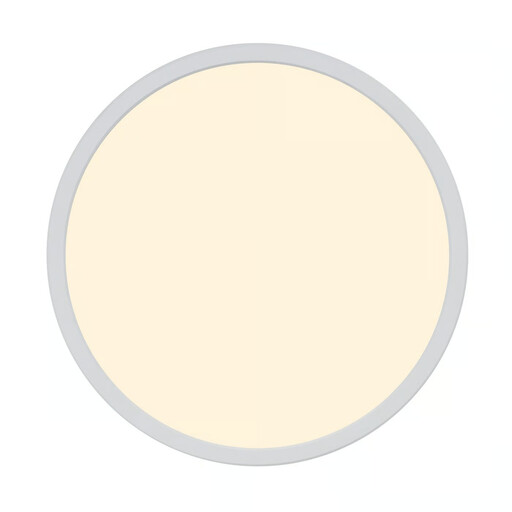
Why it's the right choice for this profile: The perfect solution for anyone who wants a light fixture that is both discreet and intelligent. Its ultra-slim ceiling light design blends into the decor, while its Bluetooth connectivity allows for total control of the lighting ambiance from a smartphone, effortlessly.
The dimming and colour adjustment system is fully integrated and controlled by the Nordlux Smart app. This completely eliminates the risk of incompatibility with a wall dimmer (pitfall #1) and provides full control over the colour temperature (pitfall #2).
Total control via Bluetooth Mesh (stable and responsive). Very wide colour temperature range (2700K-6500K) to adapt to any situation.
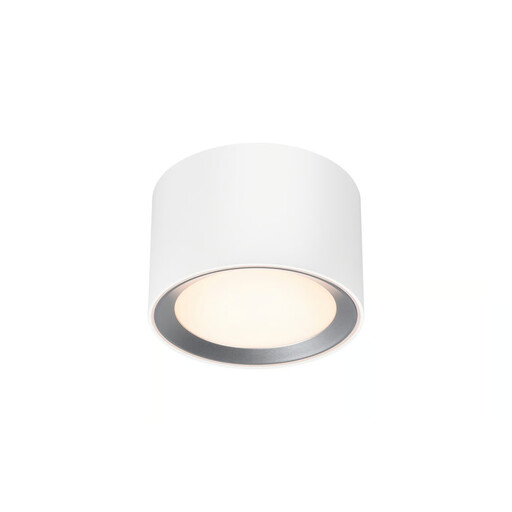
Why it's the right choice for this profile: Designed specifically for humid rooms, this smart ceiling light combines safety and technology. It allows you to create a custom ambiance, whether for an energetic start to the day with bright light or a relaxing bath under a warm glow.
Its IP44 protection rating unambiguously qualifies it for bathroom use, thus avoiding pitfall #3. Like the Oja model, its integrated smart system prevents any dimmer compatibility or temperature control issues.
Designed for bathrooms (IP44). Smart control via the Nordlux Smart app for intensity and colour temperature (2700K-6500K).
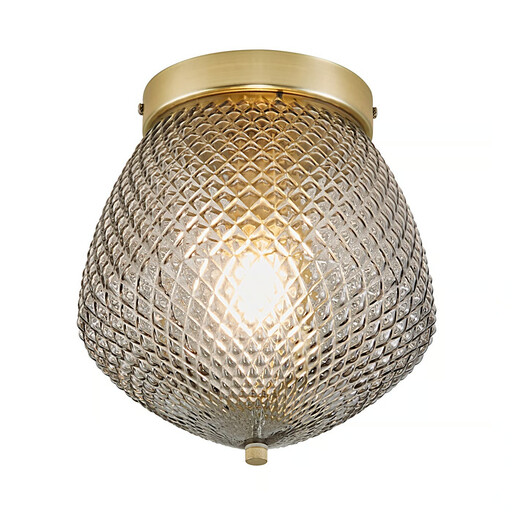
Why it's the right choice for this profile: For those who consider the light fixture the centrepiece of their decor. This brass ceiling light with an Art Deco design, featuring smoked, patterned glass, creates a unique lighting effect. It's perfect for an entryway or hallway where aesthetics are paramount.
This model uses a standard E27 bulb (not included), giving you full control over the colour temperature (goodbye, pitfall #2). It is dimmable provided you pair it with a dimmable E27 bulb and a compatible wall dimmer: a detail that now holds no more secrets for you (pitfall #1).
Bold Art Deco design with mouth-blown glass. Total flexibility thanks to the E27 socket, which lets you choose your own bulb and, therefore, the quality of light.
Discover our full selection of products that meet these strict quality criteria and current regulations.
A standard "dimmable" model requires a compatible wall dimmer switch to adjust the light. In contrast, a ceiling light with an integrated dimmer (often a smart light) manages everything itself via a remote or an app, without needing a special switch. The second option is easier to install and guarantees perfect compatibility.
Absolutely. When you lower the brightness of an LED ceiling light, its energy consumption decreases proportionally. Using the dimming function not only allows you to shape the ambiance but also helps you save energy and extend the lifespan of the LED diodes.
An IP44 rating guarantees protection against water splashes. In accordance with the NF C 15-100 standard, you can therefore safely install it in "zone 2" (up to 60 cm around the bath or shower) and in the area "outside the zones" of the bathroom. However, it is not designed to be placed directly in the shower or above the bathtub ("zones 0 and 1"), which require much higher protection ratings (IP65 or even IP67).