
Livraison le jour même ou le lendemain

Qualité garantie

Débloquez vos offres de bienvenue: Livraison GRATUITE | Jusqu'à -80 % | 30 jours d'essai gratuits à JoyPlus
Téléchargez l'application
When tightening a cylinder head, a wheel, a stem or a mechanical component, a few newton-metres can make all the difference. Under-tightening can leave an assembly unstable, while over-tightening risks damaging a thread, an aluminium part or a carbon fibre bike component.
The digital torque wrench simplifies control with its instant display and alerts. However, not every model is suited to the same tasks. Before you buy, it’s worth avoiding three common pitfalls:
The measurement range should match the torque values you actually use. On a bike, the figures are generally in a low range, while a torque wrench intended for a car needs to handle more demanding operations.
Here are the main formats to distinguish:
A stated accuracy of ±2 % should be taken as data provided by the manufacturer, not as a guarantee valid in every situation. In particular, check whether it applies to tightening clockwise, loosening, or both.
The 1/4-inch square is suitable for small bits. The 3/8-inch format offers a good compromise for motorcycles, bikes and routine car jobs. The 1/2-inch square is more suited to automotive sockets and high torque.
A model supplied with adaptors can increase its uses, but you need to be careful about stacking accessories. A digital torque adaptor is typically placed between a ratchet and a socket. It must not be used with an impact driver if the instructions forbid it: the impulses could damage the sensor.
A torque wrench with audible and visual alarm is particularly useful in a noisy garage or a poorly lit space. Some models add vibration, which lets you follow the tightening without keeping your eyes fixed on the screen.
Here are the features worth comparing:
These features make the tool more pleasant to use, but they don’t replace the need to apply slow, steady pressure with a properly engaged socket.
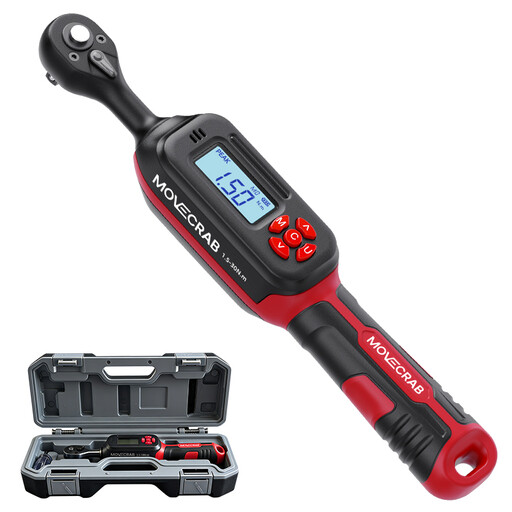
Why this choice suits this profile: Its range covers many household jobs, bike or motorcycle maintenance, and routine car work, without immediately jumping to a tool designed for high torque.
The 4.2 to 85 Nm range is clearly stated. The vibration alerts, audible signal and indicator light reduce the risk of continuing to tighten once the set threshold is reached.
Stated accuracy of ±2 % clockwise, four measurement units, ten preset values and track or peak modes.
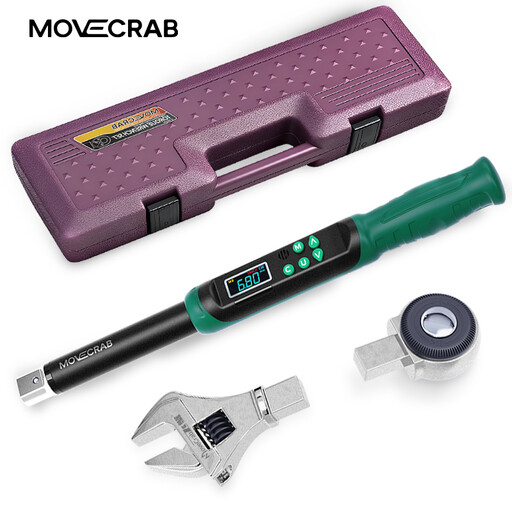
Why this choice suits this profile: The two supplied heads – ratchet and adjustable fork – offer greater flexibility for users who regularly switch between car, motorcycle and mechanical maintenance.
The interchangeable heads avoid buying multiple tools, while the track, peak and preset modes make torque control clearer.
Range of 6.8 to 135 Nm, stated accuracy of ±2 %, storage for up to 500 values and conversion between four units.
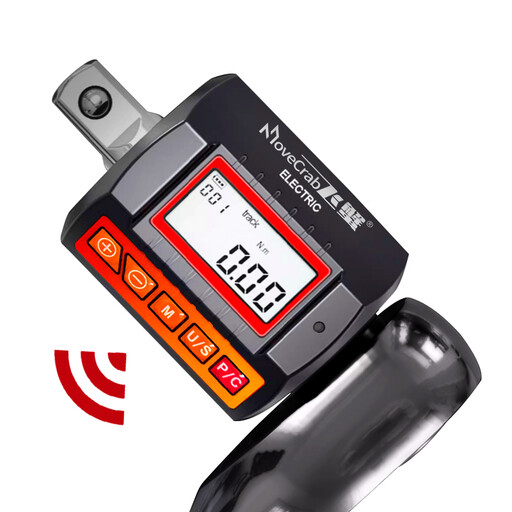
Why this choice suits this profile: This adaptor is aimed at workshops that want to keep their existing ratchets while covering a high torque range for cars, motorcycles or equipment maintenance.
The 3/8 and 1/4-inch adaptors broaden compatibility. However, you must use a suitable manual ratchet and respect the stated limits.
Bidirectional measurement stated at ±2 % clockwise and ±2.5 % anticlockwise, with real-time, peak and preset modes.
We’ve put together a comprehensive list, updated in real time, of products that fully meet these strict selection criteria and European safety regulations.
To get a reliable measurement, place the socket squarely in line with the fixing and apply gradual pressure. As soon as the alert triggers, stop applying force immediately. A digital wrench should not be used to loosen a fixing unless the instructions allow it.
After use:
Yes, provided you choose a low range and a drive square compatible with the bits you use. For small fixings, a 2 to 24 Nm or 2 to 26 Nm wrench will often be more suitable than a 1/2-inch car model. Always consult the recommended torque settings from the bike or component manufacturer.
The electronic wrench displays the measured value and can offer alerts, presets or memory. The mechanical wrench typically signals the threshold has been reached with a click. The choice depends on your needs for readability, operation tracking, battery life and simplicity. In both cases, storage conditions and maintenance affect accuracy over time.
There is no universal lifespan. Longevity depends on frequency of use, shocks, storage conditions and staying within the torque range. Replace batteries when needed, avoid overloads and consider periodic checks at a specialist workshop if the tool is used for sensitive assemblies or is used intensively.