
Livraison le jour même ou le lendemain

Qualité garantie

Débloquez vos offres de bienvenue: Livraison GRATUITE | Jusqu'à -80 % | 30 jours d'essai gratuits à JoyPlus
Téléchargez l'application
A digital torque wrench lets you control the force applied to a nut or bolt, rather than tightening "by feel". It's ideal for fitting wheels, replacing spark plugs, working on the engine, maintaining a motorbike, adjusting a bicycle or carrying out mechanical assemblies. The challenge is choosing a model that suits your needs, because not all options cover the same requirements.
Before you order, three common pitfalls keep cropping up:
In the UK, torque is primarily measured in N·m. To choose a precision torque wrench, start by checking the values specified by the manufacturer of your vehicle, bicycle or component.
A 3/8-inch torque wrench is generally better suited to compact sockets and moderate torque levels. A 1/2-inch torque wrench is more appropriate for automotive sockets and high torque. Also check whether the necessary sockets are included or whether you'll need to buy an adaptor separately.
Spec sheets sometimes quote an accuracy of ±2% for certain digital models, compared to ±3% for mechanical ones. This figure should be interpreted in light of the usage conditions stated by the manufacturer. It doesn't remove the need to follow the tightening direction, hand position and tool limits.
A torque wrench with LED alarm can display the torque reached while combining an audible signal and vibration. This triple warning is particularly useful in a noisy garage or when the screen is hard to monitor. As soon as the target value is indicated, release the pressure immediately.
The Track and Peak modes serve different purposes:
An electronic wrench typically has a screen and runs on one or more batteries. Check whether these are included. The screen should remain readable in the workshop, while the handle should provide a stable grip, even with gloves on.
To preserve the accuracy of a digital torque wrench:
A mechanical torque wrench remains a good choice for occasional use, as it doesn't rely on any batteries. Conversely, a torque wrench kit that includes extensions and sockets can save you from having to buy additional items separately.
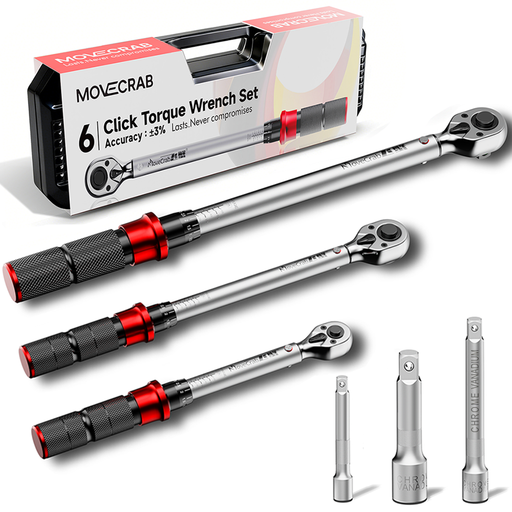
Why this choice suits this profile: this set covers a wide range of work on bicycles, motorbikes, cars and mechanical equipment, without needing batteries.
The three tools included cover a range of 5 to 220 N·m and come with 1/4, 3/8 and 1/2-inch extensions.
Stated Cr-V steel construction, engraved graduations and an indicated tolerance of ±3%.
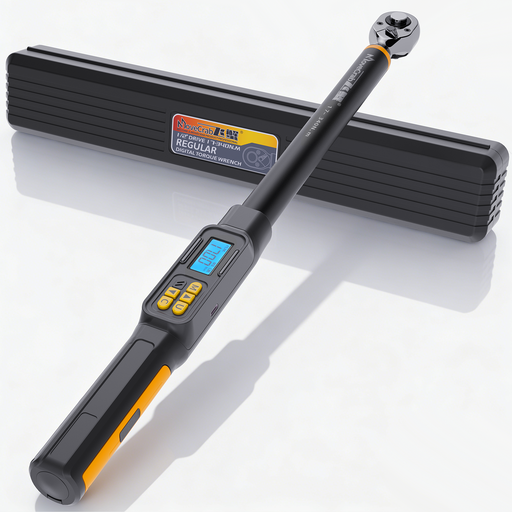
Why this choice suits this profile: its wide range suits car owners and workshops that switch between work on wheels, chassis and mechanical assemblies.
The 17 to 340 N·m range reduces the risk of choosing a tool that's too limited for high torque levels.
Stated accuracy of ±2%, display in four units and alerts via vibration, audible signal and LED.
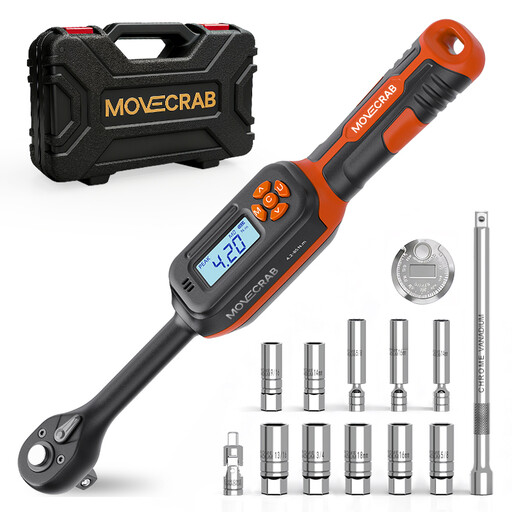
Why this choice suits this profile: this kit targets work on spark plugs, cars, motorbikes and components that require specific sockets.
The set combines a range of 4.2 to 85 N·m, a 3/8-inch drive and accessories designed to minimise compatibility issues.
Ten presets, Peak mode with stated storage of 500 measurements and magnetic spark plug sockets.
We've put together a comprehensive, real-time updated selection of products that meet these demanding criteria and European safety standards.
Not necessarily. Accuracy depends on the design, calibration, the range used and following the instructions. Digital models do make reading easier and can provide visual, audible or vibrating alerts.
For wheels and routine jobs, a torque wrench for cars with a 1/2-inch drive and a range that matches the manufacturer's recommendations is generally a sound choice. For spark plugs or small parts, a 3/8-inch model covering 4.2 to 85 N·m will often be more suitable.
Remove the batteries during long-term storage if the manual recommends it, keep the tool dry and never exceed its maximum torque. After each use, wipe the handle and metal surfaces with a dry cloth, then store the wrench in its case if one is provided.