
Livraison le jour même ou le lendemain

Qualité garantie

Débloquez vos offres de bienvenue: Livraison GRATUITE | Jusqu'à -80 % | 30 jours d'essai gratuits à JoyPlus
Téléchargez l'application
When tightening a wheel, spark plug, crankset or mechanical component, hand-applied force is not always enough. A digital torque wrench displays torque in real time and alerts you when the set value has been reached. It is suitable for mechanics and garage professionals, as well as maintenance technicians, cyclists and DIY enthusiasts who want to avoid under- or over-tightening.
There is plenty of choice, but the specifications provided by manufacturers are not always directly comparable. Before buying an electronic torque wrench or digital torque adapter, here are the key points to consider.
A range of 10.2 to 340 N·m does not cover the same applications as a range of 4.2 to 85 N·m. A tool designed for high torque may lack the precision needed for smaller assemblies on a bicycle or motorbike. Conversely, a torque wrench intended for bicycles may not be suitable for automotive work when used close to its maximum limit.
The range should therefore cover your usual requirements, with a reasonable margin. For common car repairs, a 1/2-inch torque wrench is generally used with large sockets. In tighter spaces and for smaller fasteners, the 3/8-inch format is often easier to handle.
A ±2% torque wrench may appear highly accurate on paper. However, you should check the tightening direction covered, the measurement conditions and the testing method used. The specifications for some of the adapters featured here state an error of ±2% in the clockwise direction and ±2.5% in the anticlockwise direction.
This stated accuracy does not replace the recommendations provided by the component or vehicle manufacturer. Stay within the measurement range, avoid overloading the tool and consult the manual for storage and maintenance instructions.
In a noisy workshop or underneath a poorly lit car, keeping your eyes fixed on the display is not always easy. A LED and audible alert, combined with vibration, makes it easier to recognise when the target torque has been reached. You should also prioritise a clear display, accessible buttons and a handle that remains secure, even when wearing gloves.
Start by checking the torque values specified in the manuals for your car, motorbike, bicycle or machine. Compare them with the wrench’s range, expressed in N·m. A precision torque wrench should be used within its specified range and must never exceed its maximum value.
Digital models sometimes offer several units: N·m, kgf·cm, lbf·ft and lbf·in. This feature eliminates the need for manual conversions, particularly when vehicle or component specifications are given in a different measurement system.
The drive square must be compatible with your socket set. The 1/2-inch format is suitable for common automotive sockets and some mechanical applications. The 3/8-inch format offers a good compromise for motorbikes, bicycles, spark plugs and medium-sized assemblies.
A digital torque adapter can be a practical choice if you already own a manual ratchet. It fits between the ratchet and socket, with 1/4-inch or 3/8-inch adapters available depending on the version. According to the information provided for the MoveCrab models, these adapters must be used with a ratchet or manual bar, not with an impact wrench.
The real-time, peak and preset modes are suited to different tasks: monitoring the torque as it increases, recording the maximum value reached or quickly accessing several commonly used settings. Memory can make repetitive maintenance work easier, but it does not replace a properly completed job sheet.
Also check the power supply, automatic shut-off, casing strength and storage conditions. The product specifications particularly recommend avoiding water, high humidity, organic solvents, sand and salt water. If the tool is accidentally exposed to moisture, dry it thoroughly and store it in its case, when one is supplied.
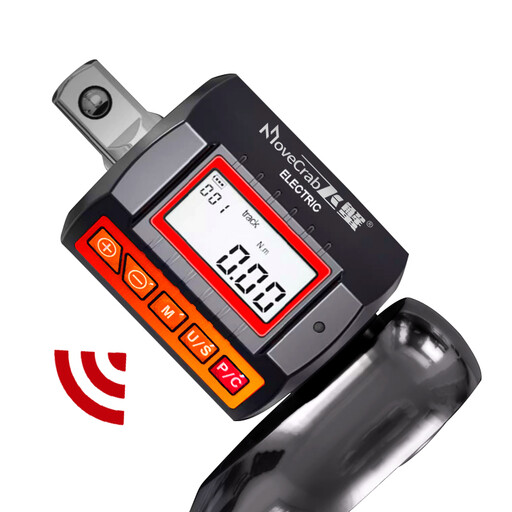
Why this choice suits this profile : This adapter lets you keep using a manual ratchet you already own and covers a range of 6 to 200 N·m, with 3/8 and 1/4 inch adapters supplied.
Its measurement range and multiple units make adjustment easier, while the visual and audible alerts signal that you are approaching the set torque.
Three operating modes, automatic shut-off after 10 minutes of inactivity and advertised memory for 1,000 values.
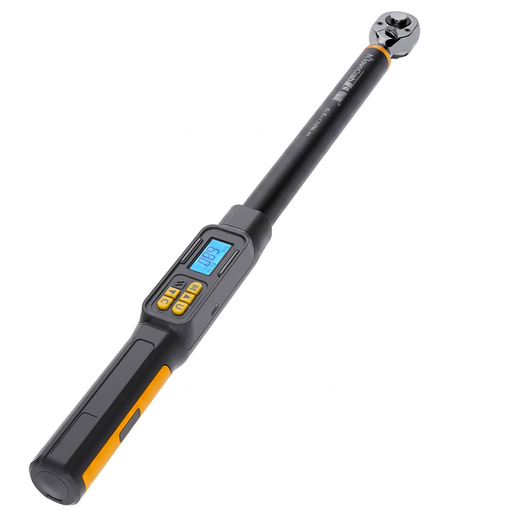
Why this choice suits this profile : This adjustable wrench combines a digital display, reversible ratchet head and preset settings for work on cars, motorbikes or bicycles.
Vibration, audible and LED alerts mean you do not have to rely solely on the display in a dark or noisy workshop.
Advertised accuracy of ±2 %, four measurement units, real-time and peak modes, and advertised memory for 500 measurements.
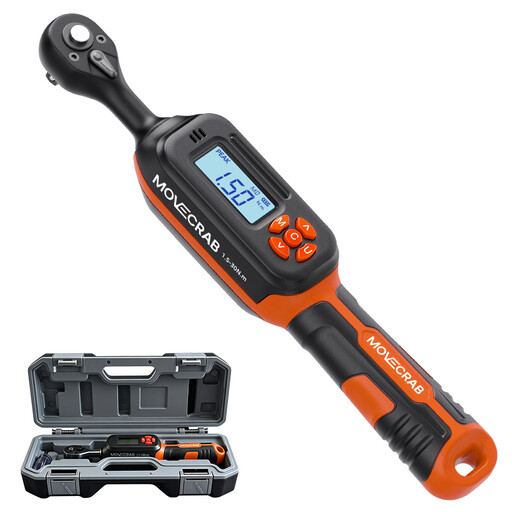
Why this choice suits this profile : Its 3/8-inch format and lower range are suitable for motorbike, bicycle, spark plug and mechanical component assemblies requiring finer control.
Its more compact drive means you do not need to bring out an oversized tool for small fasteners and reduces the need for additional adapters.
Ten presets, peak and tracking modes, triple alert system and advertised capacity for 500 records.
We have put together a complete, real-time updated list of products that meet these demanding selection criteria and European safety regulations.
Before every job, check the condition of the drive square, socket and display. Select the required unit, choose the appropriate mode and make sure the target value matches the recommendations in the component manual. Apply force gradually and smoothly, without jerking.
A few simple precautions will help your tool last longer:
For frequent professional use, arrange regular accuracy checks in line with your workshop’s procedures. An advertised accuracy of ±2 % does not remove the need for periodic verification when torque traceability is essential.
Yes, provided its torque range and drive square match the work you intend to carry out. A 1/2-inch wrench is generally suitable for large automotive sockets, while a 3/8-inch model is better suited to smaller fasteners on bicycles, motorbikes or engines.
An adapter is practical if you already own a compatible manual ratchet. However, a complete wrench offers a more consistent grip and avoids the need for multiple connections. In both cases, check the dimensions, measurement range and whether use with an impact tool is prohibited.
Its service life depends on how often it is used, storage conditions, knocks, moisture and whether the torque range is respected. Automatic shut-off helps limit consumption on some models, but batteries remain consumable items. Dry storage and regular checks help preserve measurement reliability.