
Livraison le jour même ou le lendemain

Qualité garantie

Débloquez vos offres de bienvenue: Livraison GRATUITE | Jusqu'à -80 % | 30 jours d'essai gratuits à JoyPlus
Téléchargez l'application
In mechanics, whether you're working on a car, motorcycle, or bicycle, precision isn't an option?— it's a necessity. Incorrect tightening, whether too loose or too tight, can lead to vibrations, leaks, or worse, the failure of a critical component. This is precisely where the digital torque wrench comes in as your greatest asset.
Unlike traditional mechanical models, an electronic torque wrench offers superior accuracy, an instant readout, and advanced features that simplify your work and secure every single job. This guide is designed to help you understand the technology and choose the perfect tool for your needs.
Before you take the plunge, let's review the key technical criteria that will make all the difference in the effectiveness and versatility of your future tool.
The torque range, expressed in Newton-metres (N.m), is the number one criterion. It defines the minimum and maximum tightening force the wrench can apply.
Accuracy, usually expressed as a percentage (e.g., ±2?%), ensures that the applied force matches the displayed value. The smaller the margin of error, the better, especially for critical tightening jobs.
The drive square is the male part of the wrench where the sockets fit. The most common sizes are 1/4", 3/8", and 1/2".
A smart alternative is the digital torque adapter. This small accessory attaches to a standard ratchet, transforming it into a torque measurement tool—a flexible solution to expand your equipment's capabilities without breaking the bank.
Digital models stand out with options that make a real difference?—
To guide you, we have scrutinised several models, evaluating their features and value, whether you're a weekend mechanic or a seasoned professional.
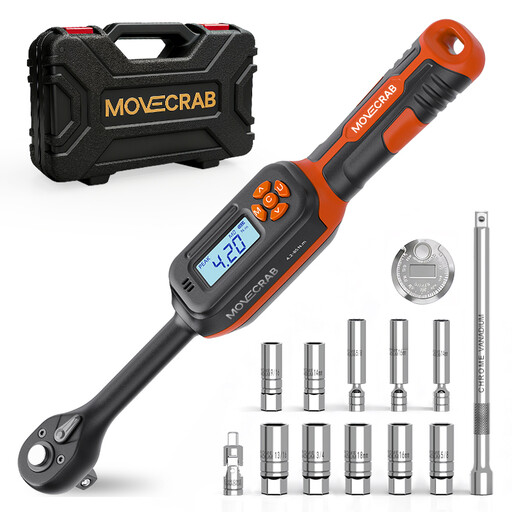
Why it stands out?: This torque wrench kit is a complete, all-in-one solution. More than just a wrench, it includes a set of essential accessories for common jobs like replacing spark plugs.
Advantages?:
Who is it for? Ideal for the DIY or advanced mechanic looking for a complete solution for car or motorcycle maintenance, without having to hunt for the right accessories. Its torque range of 4.2 to 85 N.m makes it highly versatile.
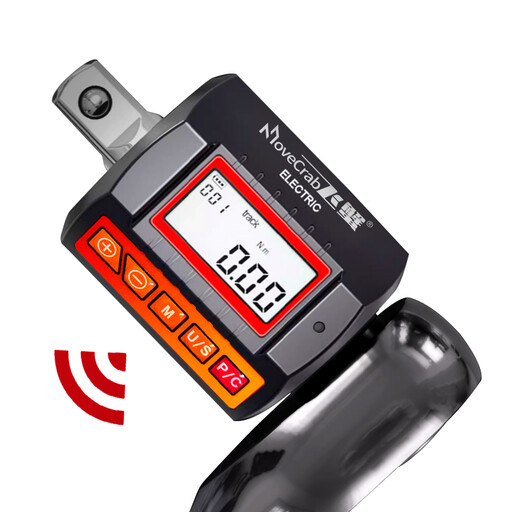
Why it stands out?: This adapter is the ultimate flexible tool. It transforms any standard ratchet (1/2", 3/8", or 1/4" thanks to the included adapters) into a high-precision torque wrench.
Advantages?:
Who is it for? Perfect for those who already have a well-stocked toolbox and want to add the precision of torque-specific tightening cost-effectively.
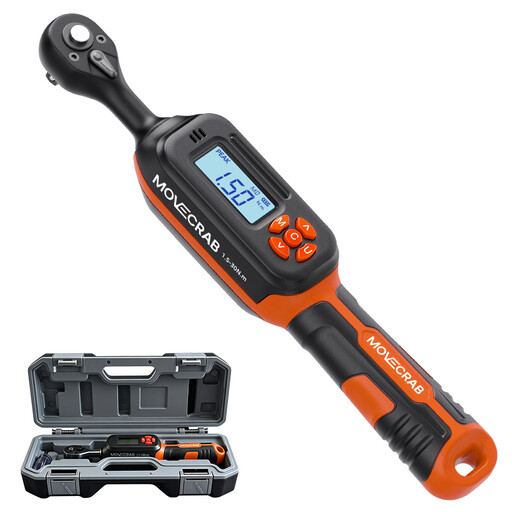
Why it stands out?: This tool focuses entirely on safety and certainty with its triple-alert system. In a noisy workshop or a poorly lit garage, you'll never miss the signal.
Advantages?:
Who is it for? Aimed at professionals or demanding enthusiasts who work in varied conditions and for whom the certainty of achieving the correct torque is an absolute priority. Its ergonomic handle makes it comfortable even during intensive use.
Our selection focuses on versatile and reliable tools, but every job is unique. If you need a different torque range, another drive size, or simply want to compare other models, we have what you need.
Explore our complete collection to find the digital torque wrench that's made for you.
? Discover the full range of digital torque wrenches
The main difference lies in the measurement mechanism and the display. A mechanical (or "click-type") wrench uses an internal spring and signals with a characteristic "click" when the torque is reached. A digital wrench, on the other hand, uses an electronic strain gauge for a more precise measurement, displays the value in real-time on an LCD screen, and provides audible, visual, or vibrating alerts.
For modern bicycles, especially those with carbon fibre or lightweight alloy components, using a bicycle torque wrench is more than recommended—it's almost essential. These materials are unforgiving of over-tightening, which can lead to cracks or even complete failure. A digital wrench with a low-torque range (e.g., 2-20 N.m) is a smart investment for the safety and longevity of your equipment.
Most digital wrenches are calibrated at the factory and remain reliable over time (often for thousands of cycles). To maintain this accuracy, a few common-sense rules apply: handle it with care, avoid dropping it, and store it in its case. For professional use, consider having it recalibrated periodically (every one to two years) by a specialised service.