
Livraison le jour même ou le lendemain

Qualité garantie

Débloquez vos offres de bienvenue: Livraison GRATUITE | Jusqu'à -80 % | 30 jours d'essai gratuits à JoyPlus
Téléchargez l'application
In mechanics—whether for a car, motorcycle, or bicycle—precision isn't an option; it's a necessity. An improperly calibrated fastening, whether too loose or too tight, can ruin expensive parts, compromise your equipment's performance, and, most importantly, put your safety at risk. In a world where guesswork has no place, the digital torque wrench has established itself as the gold standard for adhering strictly to the torque specifications recommended by manufacturers.
This guide is designed to break down the essential criteria for finding the perfect model for your needs and to present our selection of the best precision tools for 2026.
The market is flooded with models offering a wide range of features. To make the right choice, focus on a few fundamental technical points.
The very first question to ask yourself is simple: what will you use it for? Your answer will determine the necessary torque range (expressed in Newton-metres, N.m) and the drive size of your future wrench.
Pro Tip: Choose a wrench where your most frequently used torque settings fall in the middle of its measurement range. This is where it will deliver the highest accuracy.
The true advantage of an electronic torque wrench is its surgical precision and the clarity of its feedback. An accuracy rating of ±2% or ±3% is now the quality standard for any mechanical precision tool worthy of the name.
Modern alert systems are also a game-changer. The top-performing models combine several signals as you approach and then reach the target torque:
This trio of alerts is a real lifesaver in a noisy or poorly lit workshop. It's impossible to miss the perfect torque!
Modern digital wrenches typically offer two highly practical measurement modes:
The ability to preset multiple torque values and save hundreds of measurements is a huge advantage for professionals or enthusiasts who perform repetitive tasks. It's a significant time-saver and ensures rigorous quality control.
Let's get to the specifics. Here are a few models that caught our attention for their performance and suitability for different uses.
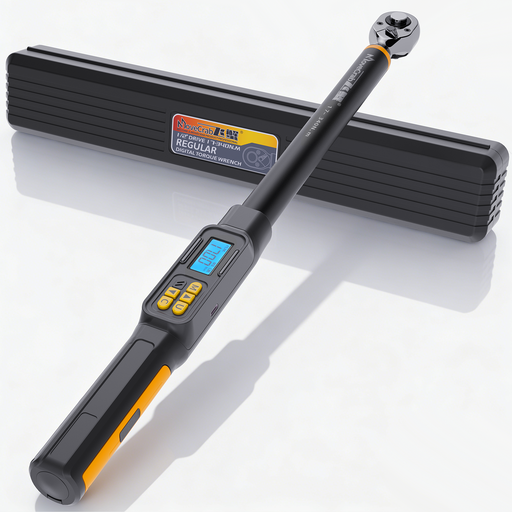
Why we love it: With its massive torque range of 17 to 340?N.m, this wrench is built for heavy-duty automotive and motorcycle work. Its triple alert system (vibration, sound, light) is a foolproof safeguard to ensure you never exceed the required torque, even in a busy garage.
Key Features:
Best for? Professional mechanics and advanced DIYers tackling automotive/motorcycle work who need a robust and reliable torque wrench for high-torque applications.
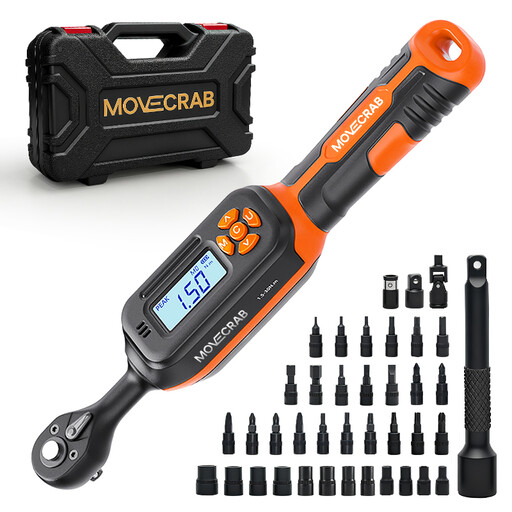
Why we love it: More than just a wrench, this is a true portable precision workshop. The 1/4" model with its 1.5 to 30?N.m range is ideal for bicycles, motorcycles, and light automotive mechanics. The ultra-comprehensive 40-piece kit makes it ready to use right out of the box for a myriad of tasks.
Key Features:
Best for? Cycling enthusiasts, motorcycle mechanics, and demanding DIYers who want a versatile kit to cover a maximum number of low- to medium-torque tasks, all in a well-designed case.
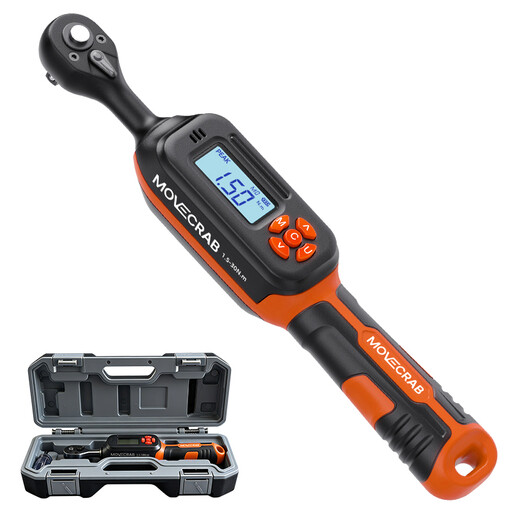
Why we love it: This is where we enter the realm of high precision. Designed for ultra-low torque applications, this 1/4" wrench with its 0.6 to 12?N.m range is the indispensable surgical instrument for handling the most delicate components, like carbon stems and seatposts on racing bikes.
Key Features:
Best for? Meticulous cyclists, bike shop mechanics, and anyone working with fragile materials that require micrometer-perfect tightening in the lowest torque ranges.
Our selection is just a glimpse of what's available. Every project has its own constraints, and if you need a different torque range, another drive size, or specific functions, the choices are vast.
To explore a wider range of measurement and tightening tools, browse our complete category of digital display tools.
It's all in the measurement and alert technology. A mechanical wrench produces the famous "click" from a spring when the torque is reached. It's effective, but you can easily miss it in a noisy environment. A digital wrench, on the other hand, uses a much more reliable electronic strain gauge. It displays the exact value on an LCD screen and notifies you with LEDs, a beep, and even vibrations. It's a night-and-day difference in terms of accuracy and peace of mind.
Absolutely. It's a measuring instrument, so you need to ensure it remains accurate. The frequency of calibration depends on your usage. For intensive professional use, an annual check is a wise precaution. Rest assured, all wrenches are delivered pre-calibrated from the factory.
That's a very bad idea. A torque wrench is a precision instrument designed to apply a specific tightening torque, not to apply force for loosening. Using your wrench to break a seized bolt can damage its internal calibration mechanism and throw off all your future measurements. To loosen, use an impact wrench, a lug wrench, or a simple breaker bar.