
Livraison le jour même ou le lendemain

Qualité garantie

Débloquez vos offres de bienvenue: Livraison GRATUITE | Jusqu'à -80 % | 30 jours d'essai gratuits à JoyPlus
Téléchargez l'application
Incorrect torque, whether on a carbon fibre bike part, an engine cylinder head, or sensitive industrial equipment, can have disastrous consequences. Cracking a component from over-tightening or having a part come loose during use is the nightmare of every skilled mechanic and DIY enthusiast. Faced with these challenges, the digital torque wrench stands out as the benchmark tool for guaranteeing surgically precise tightening, where mechanical click-type models show their limitations.
Our mission? To bring you clarity. This guide is designed to give you all the keys (no pun intended) to choosing the precision tightening tool that will perfectly meet your requirements, all without the unnecessary marketing jargon.
Before jumping on the first model you see, let's review the essential criteria that will truly make a difference in your workshop. Here are the points you shouldn't overlook to make an informed choice.
The first and most important question: what jobs is this wrench intended for? The answer will determine the torque range (in Newton-metres, N.m) and the drive size you need.
The main advantage of a digital torque wrench is its accuracy. Aim for models offering a low tolerance, ideally ±2% or ±3%, which guarantees rock-solid reliability.
Modern features also significantly enhance the user experience. A torque wrench with multiple alarms is a major plus, especially in a noisy or poorly lit workshop. The most advanced systems combine three types of alerts when the target torque is reached:
This triple-alert system ensures you never exceed the set value, thereby protecting your most valuable parts.
A good electronic torque wrench offers at least two measurement modes:
Some models go even further by allowing you to preset multiple torque values. This feature is a phenomenal time-saver if you work on complex assemblies, saving you from reconfiguring the wrench for every single bolt.
To move from theory to practice, here is our selection of three models that stand out for their performance and suitability for specific uses.
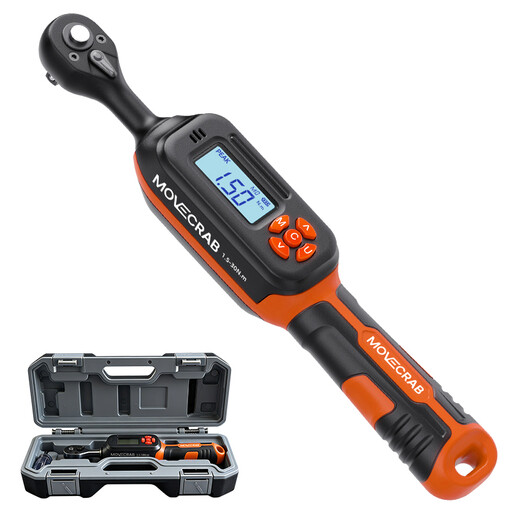
Why It Stands Out
This model is built for high-precision work at very low torques. Its range of 0.6 to 12?N.m makes it the tool of choice for delicate jobs where there is no room for error. Its triple-alert system (sound, light, vibration) is a real convenience, allowing you to confirm you've reached the target torque without taking your eyes off the workpiece.
Key Features
Who Is It For?
Meticulous cyclists who pamper their carbon gear, motorcycle mechanics working on small engine casings, and also professionals in electronics or model making.
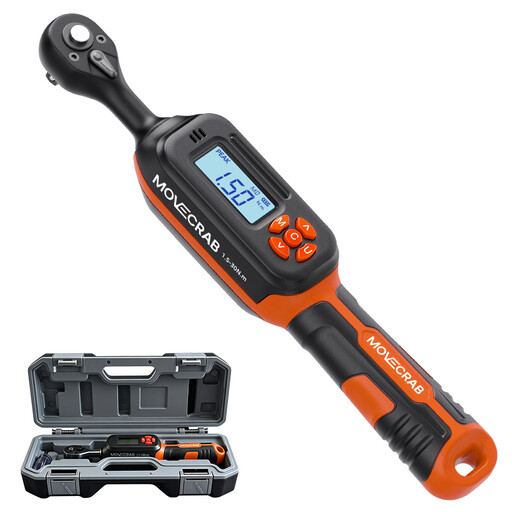
Why It Stands Out
This is the Swiss Army knife of our selection. Its torque range of 4.2 to 85?N.m covers the vast majority of common automotive and motorcycle mechanic needs. It packs all the advanced features of the range (triple alert, measurement modes...) into a robust and easy-to-handle format.
Key Features
Who Is It For?
Expert DIYers and mechanics looking for THE all-in-one precision torque wrench for their work on cars and motorcycles.
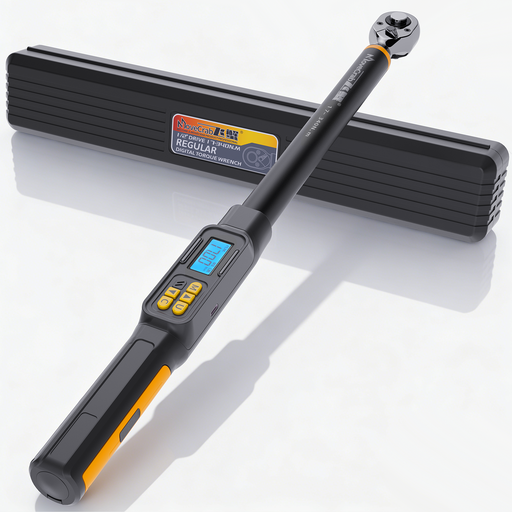
Why It Stands Out
Built for brute force, this 1/2?inch drive wrench with its massive torque range (up to 340?N.m) is the weapon for heavy-duty jobs. It allows you to apply colossal tightening forces with the same finesse and control as its smaller siblings, thanks to its readable screen and infallible alert system.
Key Features
Who Is It For?
Automotive and heavy-goods vehicle mechanics for tightening wheels, chassis elements, suspension, and engine components that require high torque settings.
Our selection was designed to cover the most common needs. However, every project is unique. If you haven't found what you're looking for or simply want to explore other avenues, feel free to browse our complete catalogue.
Discover our full range of professional tools
1. What is the difference between a digital torque wrench and a mechanical click-type wrench?
The fundamental difference lies in the measurement and indication of torque. A classic mechanical wrench "clicks" when the target torque is reached, a signal that can sometimes be hard to perceive in a noisy workshop. In contrast, a digital torque wrench displays the value in real-time on an LCD screen and uses multiple alarms (audible, visual, haptic) for a notification that's impossible to miss. It also offers advanced features like measurement memory and a choice of several units.
2. How do you maintain an electronic torque wrench?
To preserve its accuracy, an electronic wrench is an instrument that must be handled with care. Avoid dropping it or using it as a hammer at all costs. After each use, clean it with a dry cloth and always store it in its case, away from moisture and extreme temperatures. The good news: unlike a mechanical wrench, you don't need to "wind it down" by setting it to its lowest value before storage. Periodic professional calibration (usually every year or after a certain number of thousands of cycles) is still recommended to ensure its long-term reliability.
3. Can you use a torque wrench to loosen bolts?
The answer is an absolute no. You should never use a torque wrench, whether digital or mechanical, for loosening. This tool is a precision measurement instrument designed exclusively for tightening. Applying loosening force, especially on a seized nut, risks permanently damaging its calibration mechanism and skewing all future measurements. For loosening, use a breaker bar, an impact wrench, or a simple, sturdy ratchet.