
Livraison le jour même ou le lendemain

Qualité garantie

Débloquez vos offres de bienvenue: Livraison GRATUITE | Jusqu'à -80 % | 30 jours d'essai gratuits à JoyPlus
Téléchargez l'application
In mechanics, whether for a car, motorcycle, or high-end bicycle, adhering to torque specifications isn't just an option: it's an absolute necessity. Insufficient tightening can cause a critical part to come loose, while over-tightening risks stripping a thread or warping an expensive component. The digital torque wrench is the essential ally for guaranteeing this surgical precision.
Yet, the market is flooded with models making tempting promises that often hide nasty surprises. Before you invest, it's crucial to know how to avoid the common traps that turn a promising purchase into a source of frustration and unnecessary expense.
This guide gives you the keys to decoding spec sheets and finding the tool that truly meets your requirements.
To choose a reliable electronic torque wrench, ignore the marketing fluff and focus on what matters: the spec sheet. Here are three non-negotiable checkpoints.
The torque range, expressed in Newton-metres (N·m), defines what you can do with your wrench.
But the range isn't everything: accuracy is crucial. Look for certified accuracy, usually expressed as a percentage. A tolerance of ±2?% or ±3?% clockwise is a hallmark of quality and reliability. Any product that is silent on this point should be avoided.
A torque wrench with sound and vibration alerts is a game-changer. In a workshop, ambient noise can easily drown out a simple audio signal. A comprehensive alert system combines multiple indicators to ensure you never exceed the target setting:
This triple-sensory confirmation is a true safeguard against over-tightening.
Modern digital models offer features that are a workshop game-changer.
Rather than a generic list, we've selected tools for specific profiles to help you find the perfect fit.
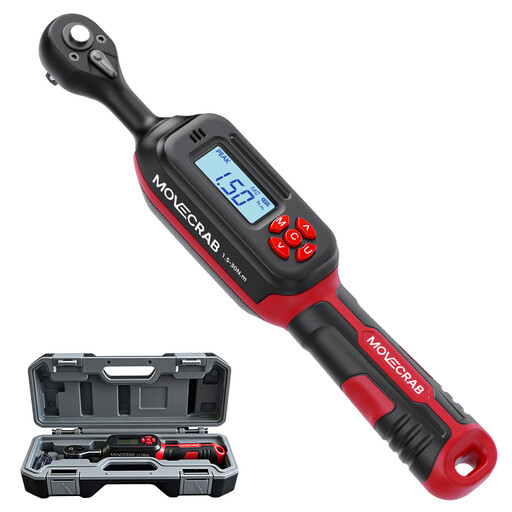
Why it's the right choice: Designed for pros and demanding amateurs, this wrench makes no compromises on accuracy. Its very wide range of 4.2 to 85 N·m covers almost all automotive, motorcycle, and bicycle needs. One tool to do it all, or nearly.
It overcomes the inaudible alert trap! Its triple system of vibration, beep, and LED ensures you never exceed the target torque, even in a noisy garage.
Its certified accuracy of ±2% and 10 preset memories make it a top-tier ally that is both reliable and ultra-fast for recurring tasks.
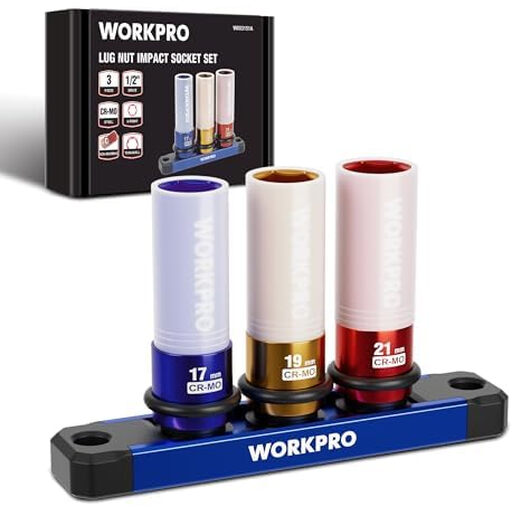
Why it's the right choice: When doing your own car maintenance, scratching beautiful alloy wheels is the ultimate nightmare. This socket set is the essential companion to any torque wrench for a flawless tyre change.
It prevents the classic, costly disaster: a scratched rim. Its external protective sleeve and internal insert protect both the wheel and the lug nuts from impacts and friction.
Made from heat-treated CR-MO steel, these sockets are built to withstand heavy use with an impact or torque wrench. The colour-coding is the icing on the cake for finding the right size at a glance.
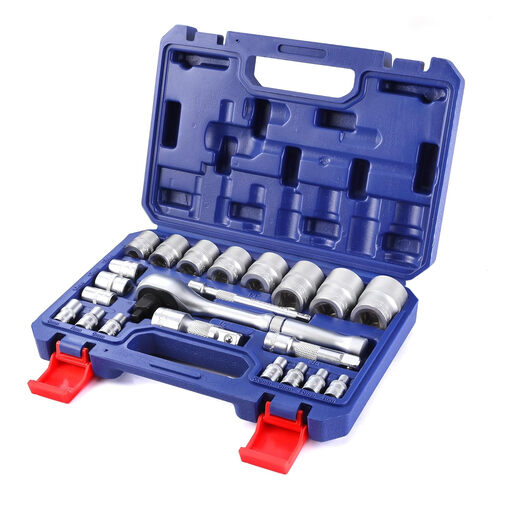
Why it's the right choice: Ideal for building your first toolbox or replacing ageing equipment, this set provides an ultra-versatile foundation for a myriad of jobs, from general DIY to light auto mechanics.
It saves you the headache of mismatched or missing tools. This complete set provides a sturdy ratchet and an assortment of metric sockets in Cr-V steel, all neatly organised in a convenient case.
Its strong point is versatility. With sockets for all three standard drive sizes (1/4", 3/8", and 1/2"), it adapts to almost any situation. It's the perfect starting point before investing in more specialised tools.
Explore our full selection of products that meet our quality criteria and industry standards.
Yes, periodic calibration is essential to maintain the tool's accuracy. For intensive professional use, annual calibration by a specialised service is highly recommended. For a knowledgeable DIYer, a check every two or three years, or after a significant impact, is sufficient. On a daily basis, always store your wrench set to its lowest torque value to preserve the internal mechanism.
The lifespan depends on the manufacturing quality, frequency of use, and the care taken. A high-quality model, used and stored correctly (away from moisture, impacts, and extreme temperatures), can serve you faithfully for years. Battery life is also a factor: remember to remove them during long-term storage to prevent corrosive leaks.
For a bicycle, especially one with carbon components, a low-torque wrench (e.g., 2-24 N·m) is essential. For a motorcycle, the spectrum is wider. A wrench covering approximately 10 to 100 N·m will be very versatile, allowing you to tighten fairing elements and controls, as well as engine and chassis parts. For wheel axle nuts, a wrench capable of going higher will often be necessary.