
Livraison le jour même ou le lendemain

Qualité garantie

Débloquez vos offres de bienvenue: Livraison GRATUITE | Jusqu'à -80 % | 30 jours d'essai gratuits à JoyPlus
Téléchargez l'application
Insufficient tightening can cause a fastener to come loose, while over-tightening can damage a thread, screw or fragile component. That is why the digital electronic torque wrench appeals to cyclists, motorcyclists, motorists and DIY enthusiasts who prefer to apply a measurable torque rather than relying solely on how it feels in the wrist.
However, not every model is suitable for the same applications. An unsuitable torque range, an incompatible head or an alert that is difficult to notice can quickly make the tool impractical. Here are the criteria to consider before buying, followed by a selection suited to different types of user.
A wrench with a high maximum torque is not necessarily suitable for low-torque applications. On a bicycle, common torque settings are often within a limited range, particularly for aluminium or carbon components. A precision torque wrench covering 0,6 to 12 N·m may therefore be more suitable than a model designed for automotive nuts.
Conversely, a 1/2-inch torque wrench covering 17 to 340 N·m will be considerably more cumbersome when working on a stem or derailleur. Compare the value you need with the measurement range instead of focusing solely on the highest figure.
The drive square determines which sockets and accessories are compatible:
An adaptor can broaden the range of uses, but it will not turn a small wrench into a tool suitable for high torque settings. Check compatibility with the sockets you intend to use before placing your order.
A torque wrench with audible and visual alarms can be convenient, but the sound may go unnoticed in a noisy workshop. A vibration alert can then be a valuable addition. Conversely, a highly visible light is not enough if the LED screen is poorly positioned or the buttons are difficult to operate while wearing gloves.
The technical specifications should state which modes are available, which units are displayed and the conditions of use. Figures given by the manufacturer, such as an accuracy of ±2 %, should be regarded as a declared product characteristic, not as a universal guarantee in every situation.
Start by checking the torque settings specified in the manuals for your bicycle, motorbike or vehicle. Then choose a wrench whose range covers these values without constantly operating at either end of its scale.
For precise adjustments, also check the increment size. A bicycle wrench covering 2 to 24 N·m in 0,25 N·m increments will not offer the same adjustment precision as an electronic model with preset memories.
A digital torque wrench may display several units: N·m, in·lb, ft·lb or kgf·cm. This feature saves you from manually converting figures from a foreign manual. The « Track » and « Peak » modes serve different purposes:
In a workshop or for repetitive tasks, measurement memory can also prove useful. However, check the manual to find out how many readings can be stored and how they can be viewed.
A torque wrench with vibration, an audible signal and an LED indicator offers several ways to detect when the programmed torque has been reached. As soon as the alert is triggered, stop tightening immediately to avoid exceeding the desired value.
Before first use, check which type of battery is required and make sure it is included. After each use, clean the tool with a dry cloth, avoid salt water and organic solvents, then store it in a clean, dry place. Never use it as a hammer and do not exceed the limit stated in its manual.
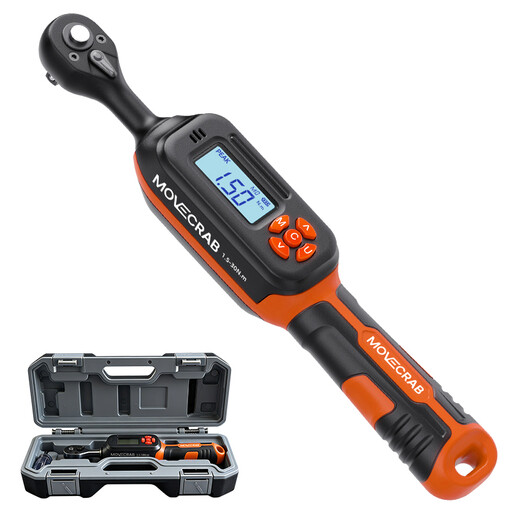
Why this choice suits this type of user : Its limited range is ideal for fine adjustments on a bicycle and small mechanical jobs. Its 1/4-inch size remains practical in confined spaces.
Its measurement range prevents you from choosing a tool that is oversized for bicycle torque settings. Vibration, audible and visual alerts reduce the risk of missing the point at which the target torque is reached.
LED display, N·m, in·lb, ft·lb and kgf·cm units, Track and Peak modes, plus ten advertised preset values.
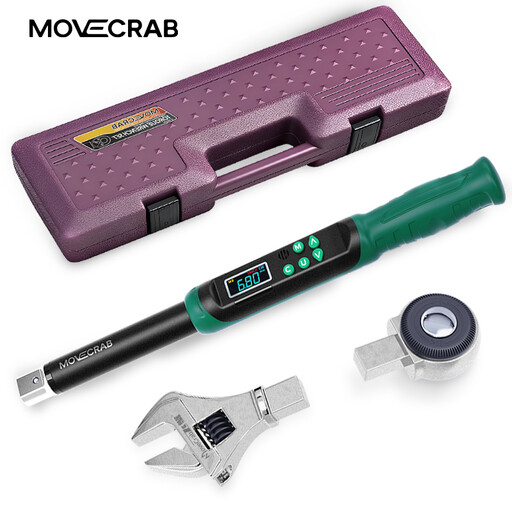
Why this choice suits this type of user : Users who switch between bicycles, motorbikes and cars will appreciate the versatility of the advertised ratchet and adjustable open-ended heads.
Its mid-range and Track, Peak and Preset modes allow you to vary the way readings are taken. However, head compatibility must be confirmed with the intended fittings.
Advertised accuracy of ±2 %, conversion between four units, storage for up to 500 readings and LED and audible alerts.
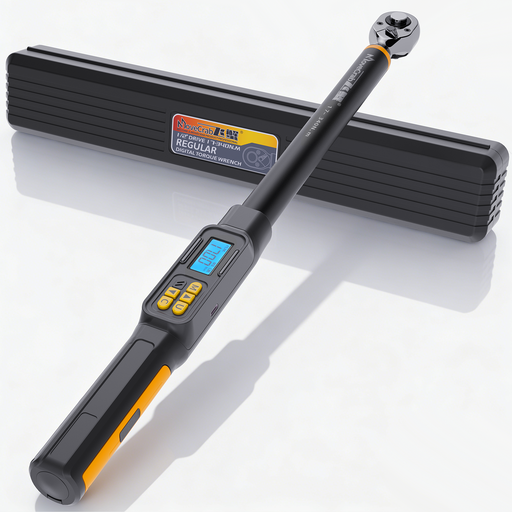
Why this choice suits this type of user : Its high range is intended for automotive repairs, motorbike work and certain maintenance tasks requiring a 1/2-inch drive square.
Its size and measurement range are suited to high torque settings, rather than pushing a small model beyond its intended operating range. Observe the overload limit stated in the manual.
LED display, advertised two-way rotation, four measurement units and triple alerts by vibration, sound and light.
We have put together a complete, real-time updated list of products that meet these strict selection criteria and European safety regulations.
To obtain consistent measurements, always follow the same method:
An electronic wrench should be protected from moisture, excessive heat, dust and impacts. If recommended in the manual, remove the batteries before storing it for a prolonged period. Resetting the tool or using the storage position recommended by the manufacturer will also help preserve the instrument’s proper operation.
For a bicycle, a limited range and a 1/4-inch drive square are generally preferable. A range of 2 to 24 N·m or 0,6 to 12 N·m may be suitable, depending on the torque settings specified for the different components. Always consult the manufacturer’s recommendations for the frame, stem, handlebars and seatpost.
It can make readings easier thanks to its display, unit conversion and various alerts. However, a mechanical model remains a sensible choice for occasional use: it works without batteries and provides a more direct reading. It all depends on how often you intend to use it, the level of precision you need and your budget.
Its service life depends on build quality, whether the torque range is respected, maintenance and storage conditions. Overloading, moisture or an impact can damage the mechanism and make the readings inaccurate. Before buying, check the warranty terms, manual and seller information, particularly to find out which batteries are compatible and what inspection recommendations apply.