
Livraison le jour même ou le lendemain

Qualité garantie

Débloquez vos offres de bienvenue: Livraison GRATUITE | Jusqu'à -80 % | 30 jours d'essai gratuits à JoyPlus
Téléchargez l'application
By our Joybuy product experts, 5 July 2026
As indispensable as our smartphones are, their limitations quickly become apparent when you demand a little more from them. A zoom that pixelates, a battery that drains in the blink of an eye, and a fragile build that’s ill-suited to the rigours of travel… Sound familiar?
If you're looking for a more serious alternative for your photography, you've come to the right place. This guide is designed to help you navigate the complex world of digital cameras without drowning you in technical jargon. Our goal is to help you find the camera that truly matches your ambitions, whether you're capturing distant landscapes, family moments, or your next great adventure.
Before diving into our selection, let's review a few essential criteria to ensure you make the right choice.
What's the main advantage of a true digital camera over a smartphone? Its zoom. Unlike your phone's digital zoom, which merely crops the image and degrades its quality, optical zoom uses a system of lenses to physically get closer to your subject with zero loss of sharpness. Whether you're capturing the gaze of an animal on a hike, an architectural detail, or your children playing in the distance, a powerful optical zoom is a complete game-changer.
The camera's form factor is a crucial choice, as each type meets a specific need:
Today, a good camera is also judged on its video performance. The ability to shoot in high quality (Full HD 1080p at a minimum) has become the standard. This is a key criterion if you love capturing memories in motion, from a baby's first steps to waves crashing on the shore.
Here are three models that have caught our eye, each perfectly suited to the needs of amateur photographers, families, and travellers.
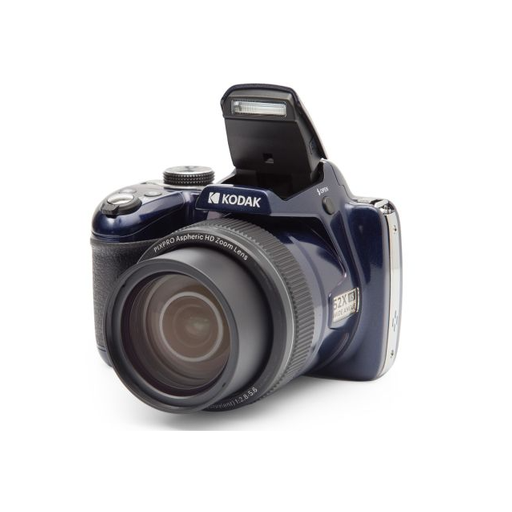
Why it stands out This Kodak bridge camera is for those who want to be at the heart of the action without taking a single step. Its killer feature: a phenomenal 52x optical zoom, capable of capturing details from an incredible distance with stunning clarity. Paired with a 24mm wide-angle lens, it offers formidable versatility for framing everything from a wide panorama to a very distant subject.
Key features:
Who is it for? This bridge camera is ideal for nature lovers, architecture-obsessed travellers, or parents wanting to capture the football match or the end-of-year school play. It offers unbeatable versatility without the complexity (or cost) of interchangeable lenses.
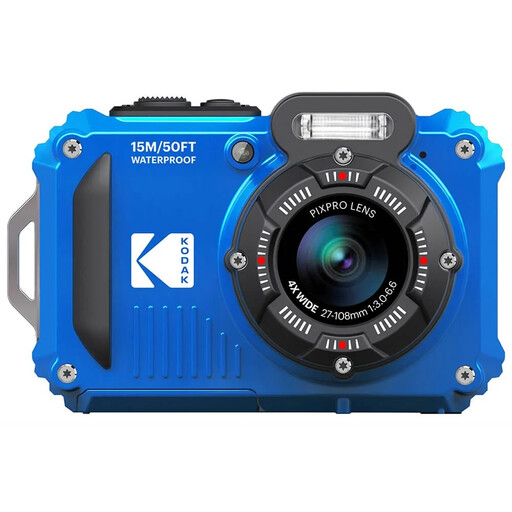
Why it stands out The Kodak PIXPRO WPZ2 is the adventurer of our selection. Built for the wild, this waterproof camera can dive up to 15 metres and withstands drops of 2 metres without flinching. It's the kind of camera you can take to the beach, the pool, or the slopes without a second thought.
Key features:
Who is it for? Perfect for active families, water sports fans (snorkelling, kayaking), skiers, and hikers. Its robustness makes it the worry-free choice for any outing where a smartphone would be far too vulnerable.
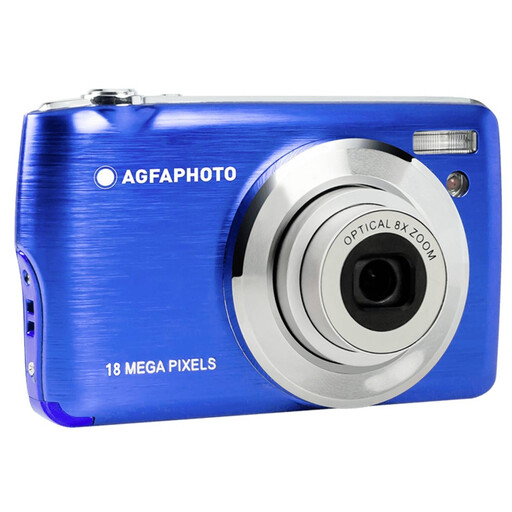
Why it stands out This AgfaPhoto compact camera focuses on simplicity and portability. Weighing just 120 grams, you'll forget it's in your pocket, yet it delivers image quality far superior to a smartphone in the same price range. Its 8x optical zoom is a real bonus for such a compact body.
Key features:
Who is it for? This is the quintessential first camera for beginners, or for anyone looking for a simple, effective, and discreet travel companion. It's perfect for capturing everyday moments, family parties, or weekend getaways on the fly.
Our selection highlights some versatile cameras, but the choice is vast. If you have a soft spot for blue or simply want to explore other options, we've got you covered.
Discover our range of blue digital cameras
Absolutely, and for several concrete reasons. A dedicated camera will always give you a true optical zoom that doesn't degrade the image, a larger sensor that captures more light (goodbye to dark, noisy evening shots!), much better ergonomics for more stable shots, and battery life designed for photography. Not to mention rugged models, whose durability leaves any smartphone in the dust.
Yes, it's an excellent entry point for a beginner who wants to improve. A bridge camera offers far more creative control than a simple compact (with manual and semi-automatic modes to practice with) and a super-powerful zoom, all without the complexity and cost of interchangeable lenses. It's the perfect tool to practice and hone your photography skills.
It's a night-and-day difference! Optical zoom works like a real pair of binoculars: the lenses in the objective move to magnify the subject. The result: the image retains 100% of its quality. Digital zoom, on the other hand, simply crops the image and stretches the existing pixels. It's a software-based enlargement that always results in a loss of sharpness and a pixelated mess. The verdict is clear: for quality photos, only optical zoom matters.