
Livraison le jour même ou le lendemain

Qualité garantie

Débloquez vos offres de bienvenue: Livraison GRATUITE | Jusqu'à -80 % | 30 jours d'essai gratuits à JoyPlus
Téléchargez l'application
Choosing a new digital camera can quickly become overwhelming. Between the endless spec sheets, marketing jargon, and the jungle of available models, it's easy to feel lost and make a purchase you'll later regret. The goal isn't to find the camera with the most features, but the one that perfectly fits your specific needs.
As a product expert at Joybuy, my mission is to help you see things more clearly. Let's cut through the marketing fluff and focus on what's essential. We'll review the common pitfalls to avoid and the criteria that really matter for making a smart purchase.
To avoid being misled, focus on the few technical specifications that truly make a difference in the field.
The sensor is the heart of your camera. The larger it is, the more light it gathers. The payoff: sharper images, richer colours, and much better performance when light is scarce. A 1-inch sensor, found in expert compact cameras, represents an excellent compromise between quality and size, far ahead of the standard sensors in smartphones or entry-level cameras.
Stabilisation is the key to sharp, professional-looking videos, especially if you're filming while walking or in the middle of the action. There are several different technologies:
Be careful not to confuse "splash-resistant" with "waterproof." A waterproof camera is designed to be fully submerged up to a specified depth (e.g., 10 or 15 metres). This is a game-changer for beach holidays, water sports, or simply to stop worrying about the rain. Non-waterproof models require an external housing, which adds significant weight and bulk.
The right camera for every use case. Here are a few models we've selected for their suitability, keeping in mind the criteria we've just discussed.
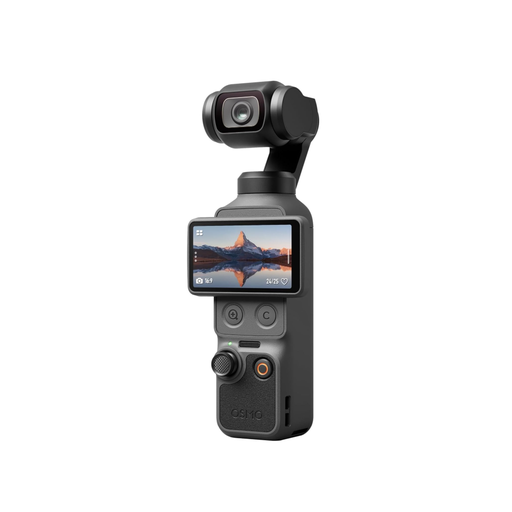
Why we chose it : Perfect for vlogging and travel, the DJI Osmo Pocket is a pocket-sized camera that doesn't sacrifice on quality. Ultra-portable, it slips into any pocket to capture moments on the fly with stunningly smooth and high-quality footage.
It combines a large 1-inch CMOS sensor with 3-axis mechanical stabilisation. The focus here is on raw image quality and smoothness, not on flashy marketing numbers.
Gimbal-style mechanical stabilisation for perfectly smooth videos. 1-inch sensor for excellent low-light performance. Spectacular slow-motion in 4K at up to 240 fps.
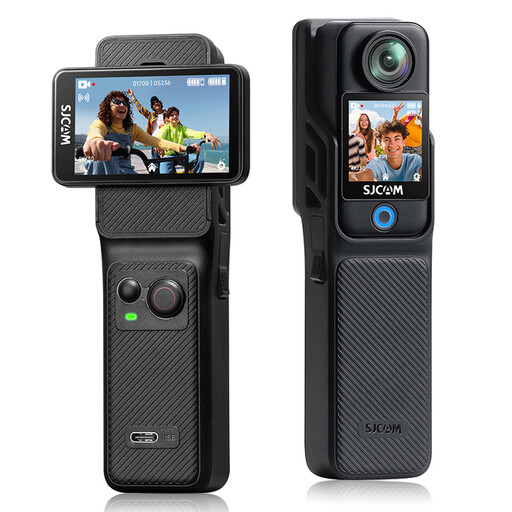
Why we chose it : This action camera is built for adventure. Compact, rugged, and delivered with its waterproof case, it's ready to follow you on mountain bike trails, ski slopes, or during your underwater explorations. Its 154° wide-angle lens ensures you won't miss a thing.
It doesn't just slap "4K" on the box. It pairs this resolution with 6-axis gyroscopic stabilisation (essential for action videos that aren't nauseating) and true waterproofing down to 30 metres with its case.
6-axis gyroscopic stabilisation for ultra-smooth footage. Waterproof down to 30 m with the included case. Dual touchscreens for easy framing. Extended battery life thanks to the battery grip.
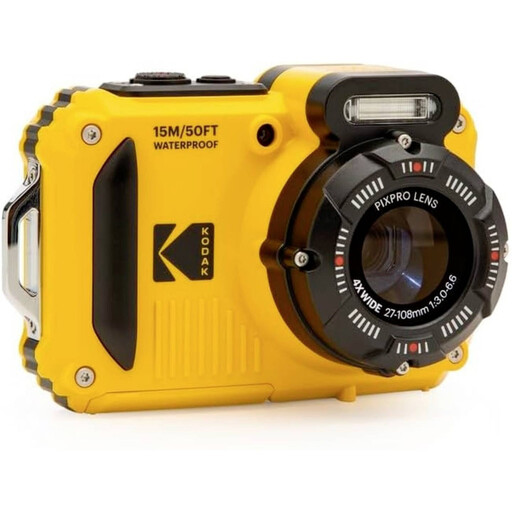
Why we chose it : This rugged compact from Kodak is the ideal companion for family outings. It's tough, withstanding drops of up to 2 metres and diving down to 15 metres without a case. Its incredible ease of use makes it accessible to everyone, including kids, making it far more versatile than a simple kids' camera.
It doesn't try to impress with an overloaded spec sheet. It gets straight to the point : to be a simple, reliable, and tough camera for capturing memories at the beach, by the pool, or on a hike, without a second thought.
Fully waterproof down to 15 m without a case. Shockproof and dustproof. Intuitive handling with automatic scene modes. 16 MP sensor for good quality photos.
Explore our full selection of products that meet our demanding selection criteria and current safety standards.
Optical zoom uses the lens elements to physically get closer to the subject, with no loss of quality. Digital zoom, on the other hand, simply crops into the image and artificially enlarges it, causing a very noticeable loss of sharpness. For a beginner's camera, always prioritise a model with true optical zoom, even if it's a modest one.
Not necessarily. If your goal is to share photos and short videos on social media, good quality 1080p is more than enough. 4K is much more demanding on storage space and requires a more powerful computer for editing. However, it's a good way to future-proof your purchase if you plan to create more advanced content (like with a vlogging camera for YouTube) or if you want your gear to not become obsolete too quickly.
After every dip in the sea or a swimming pool, rinsing it with fresh water is a mandatory step. Rinse the outside of the camera, then dry it meticulously with a soft cloth before opening any compartments (battery, memory card). This simple habit will prevent salt or chlorine from damaging the waterproof seals and metal contacts.