To enjoy with coffee, choose a classic Digestive if you’re looking for a crisp, grain-based biscuit; opt for a shortbread biscuit if flavour and format matter more to you. If you need to avoid gluten or lactose, start with a recipe labelled accordingly, then check the ingredients and allergen information for the variant you’ve chosen. The name “Digestive” alone tells you nothing about sugar or fat content.
Who are these biscuits for?
Fans of classic Digestives
If you want a crisp, grain-based biscuit with your coffee and don’t need to avoid gluten, McVitie’s Digestive Original is worth considering. Carrefour France’s product listing includes wheat flour and wholemeal wheat flour among its ingredients.
People looking for a gluten-free and lactose-free recipe
Auchan France describes Gerblé Happy Digest Céréales as gluten-free and lactose-free. It also states that the biscuits are made in a facility that handles other allergens, so check the information relevant to your dietary restriction.
People who share their coffee breaks
If you’d rather have a coconut shortbread biscuit than a classic Digestive, St Michel offers its Sablés de Retz in a 450 g family pack, with five biscuits per pack. This packaging applies to this specific size only.
What should you check before choosing?
First decide whether you want the flavour and texture of a Digestive, whether a dietary restriction determines your choice, or whether you’d prefer a shortbread biscuit to share. Then compare the labels of the variants that meet your needs.
| Criterion |
What to check |
Who is it for? |
| Crunchy, grain-based texture |
The flour list and nutritional information per 100 g. |
With my coffee, I’m looking first and foremost for the crunch of a classic Digestive rather than a filling; around 39% of consumers are said to favour this profile. |
| Gluten-free and lactose-free |
Both claims on the variant you’ve chosen, followed by the ingredients list and any facility warnings. |
If I need to avoid gluten and lactose, the recipe matters more than how closely it resembles a traditional Digestive; around 23% of consumers are said to make avoiding both their top priority. |
| Ingredients and allergens |
Declared allergens, plus sugar, fat and fibre per 100 g. |
Before choosing a biscuit for a snack, I want to compare its ingredients with my criteria; around 23% of consumers are said to put this check first. |
| Flavour and sharing |
The stated flavour, pack weight and inner packaging. |
For several coffee breaks, I prefer a shortbread biscuit with a distinctive flavour and practical packaging; around 15% of consumers are said to prioritise this more indulgent choice. |
Things to bear in mind
-
Assuming the name “Digestive” means it’s a healthier choice
The name doesn’t tell you how much sugar, fat or energy a biscuit contains. For example, Carrefour France lists McVitie’s Digestive Original as having 483 kcal and 21.3 g of fat per 100 g.
To compare two recipes, check their nutritional information per 100 g, then consider the portion you plan to serve.
-
Assuming “gluten-free and lactose-free” means “free from all allergens”
Auchan France’s listing for Gerblé Happy Digest Céréales states that the biscuits are made in a facility that handles, among other things, tree nuts, eggs, milk proteins, sesame and soya.
Check the ingredients list, declared allergens and any warnings on the pack of the variant you’re buying.
-
Choosing a large pack without thinking about storage
A pack suited to several snacks still needs to be stored according to the instructions after opening.
If you don’t open the pack often, check whether it contains individually wrapped portions and reseal the biscuits as instructed on the packaging.
Brands to know
McVitie’s
Listed by Carrefour France, Digestive Original is a classic grain-based biscuit to enjoy with coffee.
- Its product listing states that it contains 16% wholemeal wheat flour and comes in a 360 g pack.
- It contains wheat, so it isn’t suitable if you’re looking for a gluten-free biscuit.
Gerblé
Auchan France describes Happy Digest Céréales as a gluten-free and lactose-free biscuit.
- The recipe listed includes gluten-free wholegrain oat, maize, rice and quinoa flours.
- The product listing mentions a facility that handles other allergens; check the warnings relevant to your dietary restriction.
Schär
Described by Carrefour France, Schär Digestive Biscuits are for anyone looking for a gluten-free, Digestive-style biscuit.
- The product listed is a 150 g pack described as gluten-free.
- If you have any other dietary restrictions, check the pack for other ingredients and allergens.
St Michel
Sablés de Retz are a coconut shortbread option, rather than a classic Digestive.
- For its 450 g family pack, St Michel states that the biscuits are packaged in groups of five.
- The listing for this size declares gluten, milk and soya; don’t assume the same information applies to another pack without checking.
A shortbread biscuit to enjoy with coffee on Joybuy
This selection features a St Michel shortbread biscuit for your coffee break. It’s a shortbread option, not a classic Digestive or a recipe selected to meet a dietary restriction.
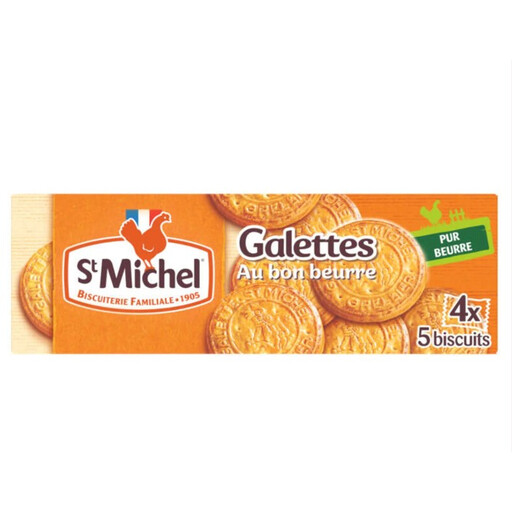 Image unavailable
St Michel Sablés de Retz 120 g
Worth considering if you’d rather have a shortbread biscuit than a Digestive with your coffee. This pack contains 120 g; check the ingredients and allergen information for this variant before buying.
View on Joybuy
Frequently asked questions
Does “Digestive” mean the biscuit is low in sugar?
No. The name doesn’t tell you how much sugar it contains. Check the nutritional information per 100 g for each recipe. For example, Auchan France’s listing for Gerblé Happy Digest Céréales states that it contains 18 g of sugar per 100 g.
Is a gluten-free and lactose-free biscuit also free from other allergens?
Not necessarily. Auchan France states that Gerblé Happy Digest Céréales is made in a facility that handles, among other things, tree nuts, eggs, milk proteins, sesame and soya. Check the information on the pack of the biscuit you’re thinking of buying.
Which pack size should you choose for several coffee breaks?
Choose a pack size and packaging that suit how often you’ll open it, then follow the storage instructions. St Michel states that its 450 g family pack of Sablés de Retz contains packs of five biscuits; check the packaging if you choose another variant.
What should you compare on two packs of biscuits?
First compare the ingredients and allergens for your needs, then compare the nutritional information per 100 g rather than portions of different sizes. The Directorate General for Competition Policy, Consumer Affairs and Fraud Control (DGCCRF) explains that this per-100 g or per-100 ml format is the basis for nutrition declarations on the relevant food products.


