Students sharing dessert
If the pack is for several people, check its net weight and how many portions you’re planning to serve. A biscuit or wafer can round out dinner without becoming the main course.


To round out a student dinner, choose Digestive biscuits if you prefer a dry, cereal-based biscuit, or thin wafers if you’re after a buttery recipe. Either way, serve them as a dessert or an accompaniment rather than making them the main part of the meal. Then check the pack size and ingredients of the product you choose.
If the pack is for several people, check its net weight and how many portions you’re planning to serve. A biscuit or wafer can round out dinner without becoming the main course.
If you’re looking to make a meal rather than just have a sweet treat, save the biscuits or wafers for dessert. Manger Bouger recommends eating a variety of foods at mealtimes.
Check the packaging of the exact product before sharing it. For example, the thin wafer recipes featured by Carrefour contain wheat, butter and eggs. Other ingredients and allergen information vary by product.
First decide how the biscuit or wafer will fit into dinner. Pack size and recipe can then help you choose the right product for the occasion.
| What to consider | What to check | Who it’s for |
|---|---|---|
| Pack size for sharing | The net weight and the number of portions you plan to serve. | If I’m sharing dessert with my flatmates, I want to know whether one pack will be enough for everyone. Around 40% of consumers put sharing pack size first. |
| Its place in dinner | A dessert or accompaniment, rather than the only part of the meal. | If I come home with only biscuits for dinner, I still need to plan the rest of the meal. Around 30% of consumers make this distinction their top priority. |
| Recipe and allergens | The ingredients list and allergens for the exact product variant. | Before offering wafers to someone who avoids certain ingredients, I check the pack I’ve bought. This is the main concern for around 30% of consumers. |
Here, Digestive refers to a type of biscuit; it’s not a reason to assume it has a digestive benefit. The name also doesn’t tell you how the product should fit into dinner.
Choose it for its recipe and how you plan to serve it, for example as a dessert biscuit.
A chocolate-coated recipe and a plain Digestive are two different products. The nutritional information for one doesn’t describe the other.
Compare the ingredients and nutrition information per 100 g on the specific packs you’re thinking of buying.
Ingredients vary by recipe. For example, Carrefour lists wheat, butter, eggs and soya in its Carrefour Original thin wafers, while its product information for La Dunkerquoise wafers also mentions a facility that handles almonds.
Read the ingredients list and allergen information on the packaging of the product you buy.
These brands offer useful points of comparison between Digestive biscuits, thin wafers and other types of biscuit. Check each recipe individually.
Carrefour features a 360 g pack of cereal Digestive biscuits, while Auchan also features a chocolate-coated McVitie’s product.
The range includes all-butter thin wafer biscuits.
Carrefour features a 400 g tin of La Dunkerquoise all-butter wafer biscuits.
E.Leclerc features Grainea multigrain breakfast biscuits in a 400 g pack.
Carrefour features several Gerblé biscuits with different recipes.
This selection features a wafer to serve as a dessert or snack. A caramel wafer is different from plain Digestive biscuits and the all-butter thin wafers mentioned above.
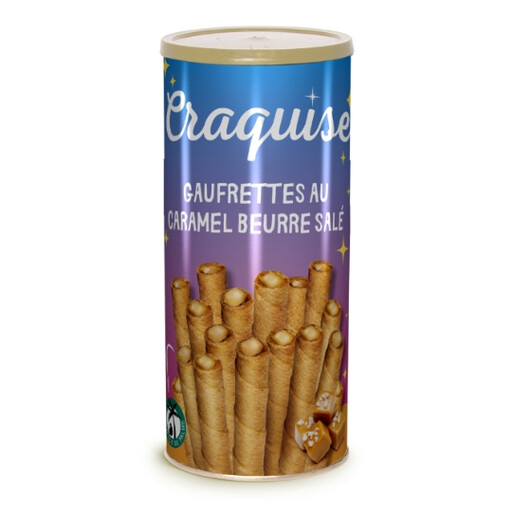 Image unavailable
Worth considering as a dessert or snack, rather than as dinner. The pack contains 135 g of salted butter caramel-flavoured wafers. Check the ingredients and allergen information on the packaging before sharing them.
No. Treat Digestive as the name of a type of biscuit, without assuming it has a digestive benefit. To choose between these biscuits and a wafer, consider the recipe and how you plan to serve it with your meal.
Compare the net weight, ingredients, allergens and nutrition information per 100 g for the specific products. The DGCCRF states that nutrition declarations for the foods covered are given per 100 g or 100 ml, providing a common basis for comparing labels.
They’re better served as a dessert or an addition to your meal, with other foods making up the rest. Manger Bouger recommends eating a variety of foods at mealtimes.
Follow the instructions on the packaging you’ve bought. For the chocolate-coated McVitie’s product featured by Auchan, the storage advice is to keep it away from heat and moisture.