Hosts looking for a classic Digestive
You want to put a cereal biscuit on the table during the match. Compare the net weight of each pack, and check whether it contains wheat and for any other allergen information.


To enjoy the taste of a classic Digestive biscuit during the match, choose this type of biscuit and check that the pack size is right for your group. If you’d rather share shortbread, a family-sized pack offers a different flavour. And if a guest needs to avoid gluten, choose a product explicitly labelled gluten-free and check for any other allergens too.
You want to put a cereal biscuit on the table during the match. Compare the net weight of each pack, and check whether it contains wheat and for any other allergen information.
You’re mainly looking for shortbread to share, rather than the taste of a traditional Digestive. In that case, the pack size and ingredients matter just as much as the size of the individual packet.
A guest needs to avoid gluten, so you’ll need to choose a pack that’s explicitly labelled gluten-free. Check separately for other allergens and manufacturing information relevant to their specific needs.
For match night, start with the type of biscuit your guests want, then check any dietary requirements and how much there is to share. If several packs fit the bill, their nutritional information per 100 g gives you a consistent basis for comparison.
| Criteria | What to check | Who is this for? |
|---|---|---|
| Digestive flavour and pack size | The type of biscuit, the cereals listed and the pack’s net weight. | If I want the taste of a classic Digestive and enough to put out during the match, the flavour and quantity are what matter most. Around 45% of consumers prioritise this. |
| Gluten and other allergens | Look for a gluten-free label if needed, then check the ingredients and any other allergens listed. | If a guest has a dietary restriction, I need to find a biscuit that suits them rather than relying on the shared pack. This is the top priority for around 33% of consumers. |
| Nutritional composition | The nutritional information per 100 g, particularly sugars, fat and salt. | If several biscuits are suitable for the group, I want to compare their nutritional composition on the same basis before choosing. Around 22% of consumers put this comparison first. |
A biscuit’s name doesn’t mean it can treat a digestive problem. Anses distinguishes between health claims and therapeutic claims.
Choose based on the type of biscuit, its ingredients and your guests’ needs, without assuming its name implies any medical benefits.
Carrefour’s listing for Gerblé Happy Digest Céréales describes it as gluten-free, but also mentions a facility that uses, among other things, tree nuts, eggs, milk proteins, sesame and soya.
Ask which restriction applies to your guest, then check the ingredients and allergen information on the pack you choose.
The 150 g packs and the 450 g St Michel family pack described in the product listings don’t contain the same amount of biscuits to share.
Check the net weight and pack size to suit your group. Set aside a separate option if a guest can’t eat the biscuits in the shared pack.
A product range name or Nutri-Score doesn’t replace checking the ingredients and nutritional values. The DGCCRF states that nutritional declarations show values per 100 g or 100 ml.
To compare these biscuits, check the values per 100 g, then consider the pack size and allergens.
A useful reference when comparing classic Digestive biscuits with shortbread. Auchan’s listing for Digestive Original describes a 400 g pack containing wheat flour, including 16% wholemeal wheat flour.
Carrefour’s listing describes Happy Digest Céréales in a 150 g pack as a gluten-free biscuit made with gluten-free whole oat, maize, rice and quinoa flours.
St Michel describes its Sablés de Retz as a 450 g family pack, divided into packets of five biscuits. Their coconut flavour sets them apart from a classic Digestive.
Carrefour presents Schär Digestive Biscuits, 150 g, as another gluten-free option in the Digestive style.
If you’re serving shortbread during the match, this St Michel option comes in a 120 g pack. It’s not the same as the 450 g family pack mentioned above.
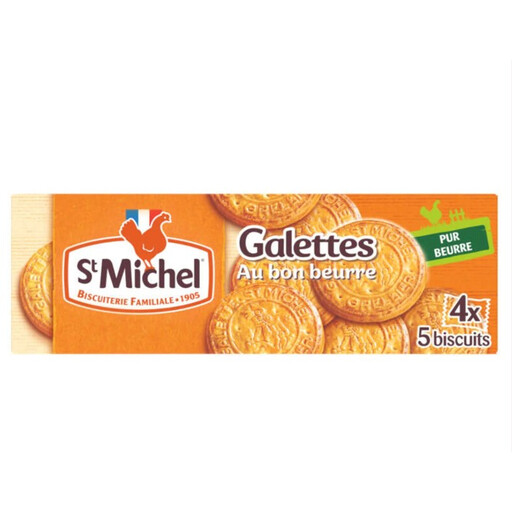 Image unavailable
A shortbread biscuit to put on the table if your guests prefer this type of biscuit to a classic Digestive.
The pack contains 120 g, so check whether that’s enough for your group. The product listing mentions wheat, milk and soya; if anyone has an allergy, check the information on the packaging too.
Compare their nutritional information per 100 g, then check the net weight of each pack to work out how much you’ll have to share. The DGCCRF states that values in nutritional declarations are given per 100 g or 100 ml.
No. The name doesn’t promise a treatment. Anses explains that a claim cannot present a nutrient as preventing or curing a disease. Choose a biscuit based on its dietary characteristics, not as a way to treat a health problem.
No. If they need to avoid gluten, look for a product explicitly labelled gluten-free. Check the pack’s other allergen and manufacturing information too, as this label doesn’t cover every dietary restriction.