Those organising sweet breaks
If the biscuit is to be served without any preparation or toppings, a classic digestive is a good fit. However, check the recipe and pack size before choosing it for your canteen.


Choose a classic digestive biscuit for a sweet break served without toppings, and crispbread if you also need something to serve with sweet or savoury toppings. Offering both caters for these two distinct uses. For a canteen, check the recipe, allergens and serving arrangements, and include a product explicitly labelled gluten-free and lactose-free if you need to cater for these dietary requirements.
If the biscuit is to be served without any preparation or toppings, a classic digestive is a good fit. However, check the recipe and pack size before choosing it for your canteen.
If you need one base to serve with sweet or savoury toppings, crispbread and toast serve a different purpose from a digestive biscuit.
If you need to provide a gluten-free and lactose-free option, look for these claims on the product you intend to serve. A wholemeal wheat or rye recipe alone will not meet this need.
Start by deciding how the product will be used at the buffet: as a ready-to-eat biscuit, a base for toppings or an option for someone with a dietary requirement. Then compare the labels of the products you are considering.
| Criteria | What to check | Who it matters to |
|---|---|---|
| Versatility at the buffet | Whether it will be served plain or with the planned toppings, and how well it holds up during service. | If you need one base to go with several toppings, the option to serve it plain is also worth considering. Around 36% of consumers prioritise this versatility. |
| A sweet break with no preparation | The ingredients, allergens and format of the biscuit you plan to serve. | If people simply want to grab a sweet biscuit during their break, preparing toppings adds an unnecessary step. Around 29% of consumers prioritise this convenience. |
| Wholegrain recipe and fibre | The grain used, fibre, sugar and salt per 100 g, and allergen information. | If your main consideration is a wholegrain option or its stated fibre content, you will need to compare recipes. Around 21% of consumers prioritise this. |
| Gluten-free and lactose-free | Clear claims on the product delivered, information about possible traces, and serving arrangements. | If you need an option that meets both requirements, neither the word “wholegrain” nor the name “Digestive” will help you identify one. Around 14% of consumers prioritise a separate product for this purpose. |
The name alone does not tell you the nutritional values. Carrefour France’s product information for McVitie’s Digestive Original lists wheat, sugar and palm oil among its ingredients.
Compare the ingredients, allergens and nutritional information per 100 g for the products you are considering.
Wheat or rye crispbread is not suitable for a gluten-free diet simply because it is wholemeal.
Choose a product explicitly labelled “gluten-free” and check the label on the batch you serve.
In France, information requirements differ depending on whether food remains prepacked or is displayed without its packaging. The DGCCRF notes, in particular, that allergens must be highlighted in the ingredients list on prepacked food.
Before unpacking products, agree with the catering manager how information about ingredients and allergens will remain accessible, based on the serving arrangements you choose.
Carrefour France’s Digestive Original is a biscuit for a sweet break, served without toppings.
Carrefour France lists Wasa crispbread, including rye and wholegrain varieties.
Auchan France presents its Happy Digest cereal biscuits as a product labelled gluten-free and lactose-free.
Carrefour France offers several recipes for toast and crispbread, including a Carrefour Extra wholegrain rye crispbread.
Auchan France presents its crunchy wheat crispbread as an alternative to bread or crackers.
If you’re planning to offer a crisp base plain or with toppings, this selection features Wasa crispbread. Choosing a digestive biscuit for a sweet break is a separate decision.
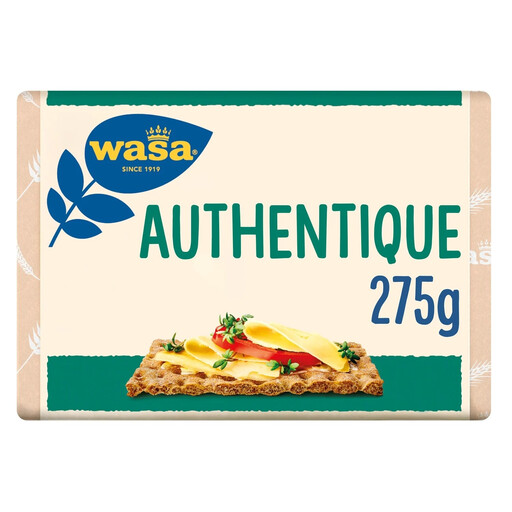 Image unavailable
This crispbread could be served plain or with toppings. The pack contains 275 g. Before choosing it for your canteen, check the recipe and allergens on the product delivered, and make sure the number of portions suits your service.
It works for a sweet break without toppings, but may not serve the same purpose as a base for spreads. Carrefour France’s Digestive Original is a sweet wheat-based biscuit, while Auchan France presents its wheat crispbread as an alternative to bread or crackers.
No. A wheat or rye recipe does not become gluten-free just because it is wholemeal. If you need a gluten-free option, choose a product explicitly labelled “gluten-free” and check the batch delivered.
Check the product name, ingredients, allergens and nutritional information for the product you have chosen. For prepacked food in France, the DGCCRF states that allergenic ingredients must be highlighted. Mandatory information must remain visible and legible.
Make sure allergen information is accessible in a way that suits how the food is displayed at the buffet. French rules distinguish between prepacked and non-prepacked food, so have the serving procedure approved before removing products from their packaging or decanting them.
No. For Gerblé Happy Digest biscuits listed by Auchan France, the product information also mentions a facility that handles nuts, egg, milk proteins, sesame and soya, among other ingredients. Check the information on the product you buy, and avoid mixing crumbs or utensils at the buffet.