What should you look for before buying?
First, choose a base to suit your planned toppings, then compare the labels of products that serve the same purpose. A ‘wholegrain’ or ‘with seeds’ label is no substitute for checking the ingredients.
| What to consider |
What to check |
Who might find this useful? |
| How well it goes with savoury toppings |
The product description and whether sugar or syrup appears in the ingredients. |
If you’re serving several savoury spreads, a sweet base could overpower their flavours. Around 36% of consumers make this their top priority. |
| Salt and sugars |
The figures per 100 g for products intended for the same use; Nutri-Score, if shown, can provide an additional guide. |
If your toppings are already salty, you may want to focus on comparing the base’s nutritional content. Around 29% of consumers prioritise this. |
| Allergens |
The ingredients list and any ‘may contain’ warnings on the pack you choose. |
If a guest needs to avoid an ingredient, the product range name alone isn’t enough to help you decide what to serve. Around 21% of consumers put suitability for their group’s dietary restrictions first. |
| Pack size |
The weight and number of slices shown on the pack, based on how many pieces of toast you’re planning to serve. |
For a large gathering, having enough slices matters more than choosing a particular recipe. This is the main priority for around 14% of consumers. |
Two crisp bases on Joybuy
These two products work well with savoury toppings: a plain rusk and a crispbread. Your choice will depend on the flavour you’re after and which ingredients are suitable for your guests.
 Image unavailable
Heudebert Biscot Nat 300 g
A plain rusk to consider if you’re planning to serve several savoury spreads and want a mild-tasting base. The pack weighs 300 g; check the ingredients and allergen warnings if these matter to your guests.
View on Joybuy
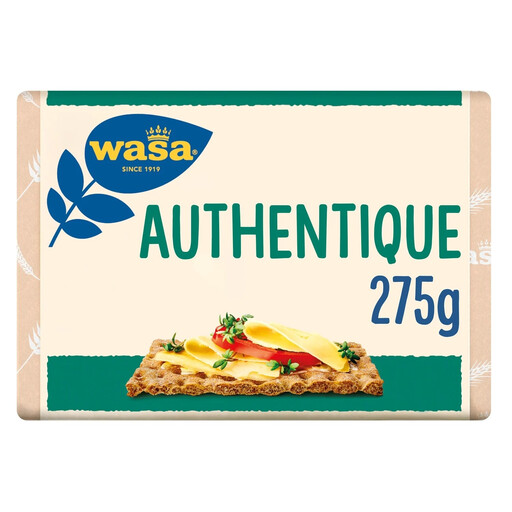 Image unavailable
Wasa Authentic Crispbread 275 g
A crispbread to consider with cheese or spreads if you enjoy a more pronounced rye flavour. The pack weighs 275 g; check the ingredients and allergen warnings for this product before serving it.
View on Joybuy
Frequently asked questions
Does a Digestive biscuit go with savoury spreads?
Taste is a matter of personal preference, but the McVitie’s Digestive featured by Carrefour is a crunchy biscuit whose recipe contains sugar and sugar syrup. If you’re serving several savoury toppings, compare it with a plain rusk, melba toast or crispbread before you choose.
How can you compare two crisp bases?
First compare products intended for the same use, then check their ingredients and nutritional values per 100 g, particularly salt and sugars. Manger Bouger points out that ingredients are listed in descending order by quantity. If shown, Nutri-Score is a useful guide, but it doesn’t replace checking for allergens.
Does a wholegrain rusk go with every topping?
Not necessarily: its flavour and ingredients vary by recipe. If you choose a wholegrain or seeded version, check that it goes with your toppings and read the ingredients and allergen warnings on the exact pack.
How do you keep rusks crisp after opening?
Follow the instructions on the pack and close it carefully after opening. Depending on the product, the storage instructions for the products featured by Auchan advise keeping them in a dry place or away from heat and moisture.
Why check the salt in the base if the toppings are already salty?
Because the base adds to the rest of the platter. Manger Bouger recommends limiting salty foods. Comparing the salt per 100 g in the rusks or melba toast you’re considering helps you take the whole platter into account, without making assumptions about the ingredients of a ‘plain’ recipe.


