For a sweet breakfast, choose a filled biscuit based on what matters most to you: a format that’s easy to take with you, a recipe whose nutritional values you can compare, or a verifiable fibre content. A biscuit called ‘Digestive’ isn’t necessarily filled. In France, Nutri-Score can help you compare products when it’s displayed, but it’s voluntary, as the DGCCRF points out.
Who is this choice for?
People comparing recipes
You want to compare the sugar, fat and salt content of similar biscuits, as well as fibre where it’s listed. For prepacked foods, the nutrition declaration gives you a basis for comparison per 100 g. Nutri-Score is an additional guide when it appears on the product, according to the DGCCRF.
People taking breakfast with them
You’re looking for biscuits that are easy to carry or portion out. Some filled biscuits come in individual sachets, although the packaging alone doesn’t tell you anything about their ingredients or nutritional content.
People looking for fibre
You’re using the word ‘Digestive’ to find a cereal-based recipe or a specific fibre content. Check the value shown for the product you choose: its name alone doesn’t confirm its fibre content or that it’s filled.
What should you look for?
| Criteria |
What to check |
Who is it for? |
| Nutritional content |
Compare sugars, saturated fatty acids and salt per 100 g across similar recipes. Check the Nutri-Score if it’s displayed. |
If I’m comparing several filled biscuits for breakfast, I want to see their values on the same basis. Around 43% of consumers put this comparison first. |
| Fibre and biscuit category |
Check the fibre content and whether the specific product carries a ‘source of fibre’ claim; confirm that it’s filled if that’s one of your criteria. |
I’m interested in the name ‘Digestive’, but above all I’m looking for a verifiable fibre content. This is a priority for around 29% of consumers. |
| Breakfast-friendly format |
Check the net weight, the number of sachets and how much each one contains. |
If I’m taking biscuits with me or portioning them out, the packaging matters more to my choice. Around 28% of consumers prioritise this practical need. |
Common misconceptions to avoid
-
Assuming Nutri-Score must appear on every packet
In France, the DGCCRF distinguishes between Nutri-Score, which is voluntary, and the nutrition declaration, which is mandatory for prepacked foods.
If the logo appears, use it as an additional guide. Also compare the values per 100 g and the ingredients list for the biscuit you choose.
-
Assuming ‘Digestive’ or ‘cereal’ means ‘source of fibre’
A ‘Digestive’ biscuit may belong to a different category from filled biscuits. Under European Union Regulation (EC) No 1924/2006, a ‘source of fibre’ claim requires at least 3 g of fibre per 100 g or 1.5 g per 100 kcal.
Check the biscuit category, its fibre content and any claims on the packaging separately.
-
Relying on a different recipe for allergen information
Ingredients vary between filled biscuits. Recipes featured by Carrefour France include wheat and dairy products, while some warn that other allergens may be present in traces.
If you have an allergy, read the ingredients list and allergen information on the packet of the variant you receive.
Brands and ranges to know
LU
The range includes BelVita filled breakfast biscuits and PÉPITO Croc Sablé chocolate-filled biscuits.
- Carrefour France lists the BelVita chocolate and hazelnut-filled variety in individual packs.
- For this recipe, check the allergens and nutritional values of the variant you choose.
BN
BN offers chocolate-filled biscuits, including classic formats.
- The chocolate varieties let you compare formats based on how you plan to enjoy them.
- Fibre content and nutritional values need to be checked for each recipe, not assumed across the brand.
Oreo
Oreo Original is a vanilla-filled biscuit. Carrefour France lists a box of ten sachets, with a total weight of 220 g.
- Sachets can make it easier to portion out the pack.
- This format doesn’t tell you the product’s fibre content or nutritional values.
Carrefour Bio
The range includes chocolate-filled biscuits, including a dark chocolate recipe described by Carrefour France.
- The ingredients list for this recipe states that it contains 15% wholemeal wheat flour.
- The presence of wholemeal flour and the ‘Bio’ label don’t establish the fibre content; this recipe also contains wheat and butter.
McVitie's
Carrefour France lists a McVitie's ‘Digestive’ cereal biscuit among its crunchy biscuits.
- It helps you identify what a ‘Digestive’ product refers to when you’re browsing.
- It won’t meet a search for filled biscuits on its own; check the fibre content of the specific product.
Filled biscuits available on Joybuy
These two chocolate-filled biscuits suit a search for a sweet breakfast: one is LU Prince Whole Wheat and the other is GRANOLA Kango. Compare their labels if fibre or other nutritional values are important to your choice.
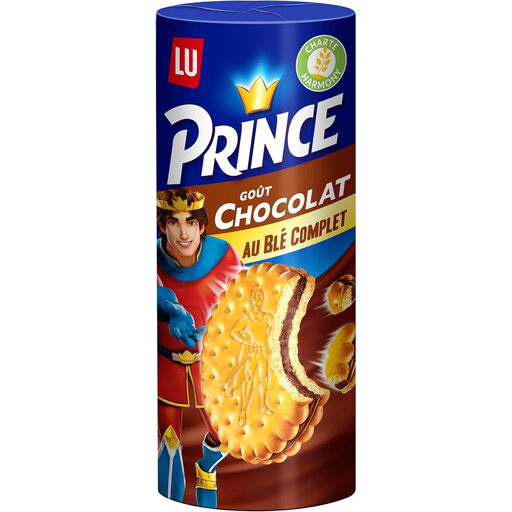 Image unavailable
LU Prince Whole Wheat chocolate-filled biscuits, 300 g
A chocolate-filled biscuit to consider for a sweet breakfast. The 300 g pack is labelled Whole Wheat. If fibre content or Nutri-Score matters to you, check these details on the exact packaging.
The listing for this product mentions wheat, milk and soya, and possible traces of egg. Check the packet you receive.
View on Joybuy
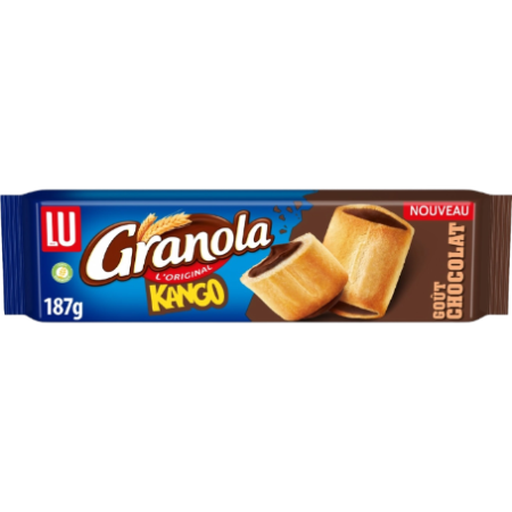 Image unavailable
GRANOLA Kango chocolate-filled biscuits, 187 g
This 187 g pack is a good option if you’re looking for chocolate-filled biscuits for breakfast. If fibre or Nutri-Score will influence your decision, check the packaging for this variant before comparing.
The listing mentions wheat, milk, eggs and soya, with possible traces of sesame. Check the information on the packet you receive.
View on Joybuy
Frequently asked questions
Is Nutri-Score mandatory on filled biscuits in France?
No. The DGCCRF says that Nutri-Score is voluntary, while a nutrition declaration is mandatory for prepacked foods. To compare two recipes, look at their values per 100 g, whether or not the logo is displayed.
Is a ‘Digestive’ biscuit necessarily filled or a ‘source of fibre’?
No. The name doesn’t confirm either a filling or a nutrition claim. Check the product category and fibre content. Under European Union Regulation (EC) No 1924/2006, a ‘source of fibre’ claim requires at least 3 g of fibre per 100 g or 1.5 g per 100 kcal.
How can I check the allergens in a filled biscuit?
Read the ingredients list and allergen information on the packet of the variant you choose. The recipes featured by Carrefour France aren’t all the same: some contain wheat and dairy products, while others warn that traces of soya, eggs or nuts may be present.


