Who are these options for?

Fans of classic Digestives

You’re looking for the flavour and crunchy texture of a traditional Digestive biscuit, with no particular dietary restrictions. It’s still worth checking the ingredients: the biscuit’s name alone won’t tell you what’s in it.

Shoppers keeping an eye on fibre and portion size

You’re comparing oat or wholegrain biscuits and want to distinguish the values per 100 g from the amount you’ll actually eat. An individually wrapped pack can make the portion easier to judge, but it doesn’t replace checking the nutrition information.

People avoiding gluten and lactose

You need clear claims that meet your dietary requirements. Check the ingredients and any potential traces on the pack of the product you choose: one biscuit’s characteristics don’t necessarily apply to other products from the same brand.

What should you look at first?

For a late-night snack, start with what matters most to you, then compare biscuits in the same category by checking their labels.

Criteria What to check Who is it for?
Fibre Compare the fibre per 100 g, then consider how many biscuits you plan to eat. For a late-night snack, I want to compare the fibre content rather than rely on the biscuit’s name; around 33% of consumers put this first.
Classic Digestive Check the ingredients and nutrition information per 100 g, paying particular attention to whether it contains wheat. If I’m after the flavour and texture of a traditional Digestive, I start by identifying this recipe; around 25% of consumers make this their top priority.
Gluten- and lactose-free Look for both claims on the product you choose, then check its ingredients and any potential traces on the packaging. If I need to avoid gluten and lactose, whether the recipe is suitable matters more than its style or format; around 25% of consumers prioritise this requirement.
Portion size and labelling Decide how much you’ll serve and compare it with the values per 100 g. If Nutri-Score appears on the pack, use it to compare similar products. When I’m in front of a screen, I’d rather decide how many biscuits to have than eat straight from the pack; around 17% of consumers put portion control and checking the label first.

Common mistakes to avoid

  • Confusing Nutri-Score with nutrition information

    In France, the Ministry of the Economy states that displaying Nutri-Score is voluntary. The DGCCRF distinguishes this logo from the nutrition declaration required for most prepacked foods.

    Don’t rule out a biscuit simply because it doesn’t display the logo. Compare the nutrition information per 100 g and, if Nutri-Score is shown, use it as an additional guide when comparing similar products.

  • Assuming the word Digestive tells you about the nutritional profile

    Carrefour France’s product listing for McVitie’s Digestive Original includes wheat flour, palm oil, sugar and salt. The recipe name is no substitute for checking its ingredients.

    Compare the ingredients, as well as the sugar, fat and salt per 100 g, with those of other biscuits in the same category.

  • Focusing only on gluten-free and lactose-free claims

    These claims address specific dietary requirements, but don’t tell you everything about a product’s nutritional values. Auchan France’s listing for Gerblé Happy Digest Céréales gives, per 100 g, 460 kcal, 20 g of fat and 18 g of sugars.

    Check for claims that meet your dietary requirements, then read the ingredients, any potential traces and the nutrition information for the product you’ve chosen.

  • Taking biscuits straight from the packet

    It then becomes harder to compare how much you’ve eaten with the values given per 100 g. Individually wrapped portions show you how much you’re having, but don’t tell you about the biscuit’s ingredients.

    Serve the amount you want before settling down, and check the weight of a portion if it’s shown on the pack.

Brands to consider, depending on the product

McVitie’s

Carrefour France’s product listing describes Digestive Original as a classic option in a 360 g pack.

  • The listing provides the ingredients and nutrition information, which are useful when comparing this recipe.
  • This product contains wheat, so it isn’t suitable if you need to avoid gluten.

Gerblé

Auchan France’s product listing describes Happy Digest Céréales as a gluten-free and lactose-free biscuit.

  • It states that the product contains 12 g of fibre per 100 g, a value to consider alongside your portion size.
  • The dietary claims and nutrition information apply to Happy Digest Céréales, not to every Gerblé biscuit.

Auchan Bio

Auchan France’s product listing describes whole-oat biscuits in individual sachets, with a Nutri-Score B displayed.

  • It states that the biscuits contain 7.9 g of fibre per 100 g and that there are 12 portions per pack.
  • This recipe contains wheat, oats and egg, among other ingredients. Check for any potential traces too, if relevant to you.

Carrefour

Carrefour France offers biscuits in several categories, including breakfast, snack-time and cereal biscuits.

  • This range makes it possible to compare recipes and formats from the same retailer.
  • Check each product individually: a wide range doesn’t mean they all share the same ingredients or nutrition values.

St Michel

St Michel is a familiar name for traditional biscuits, though that doesn’t point to a specific Digestive recipe.

  • St Michel says allergens in its recipes are shown in bold in the ingredients list, with any cross-contamination risks noted at the end.
  • Check the label of the product you choose before deciding that it belongs to a particular biscuit category or meets a dietary requirement.

Cereal biscuits available on Joybuy

These two cereal biscuits could be considered for a late-night snack. They’re different from a classic Digestive and from a product explicitly labelled gluten-free and lactose-free.
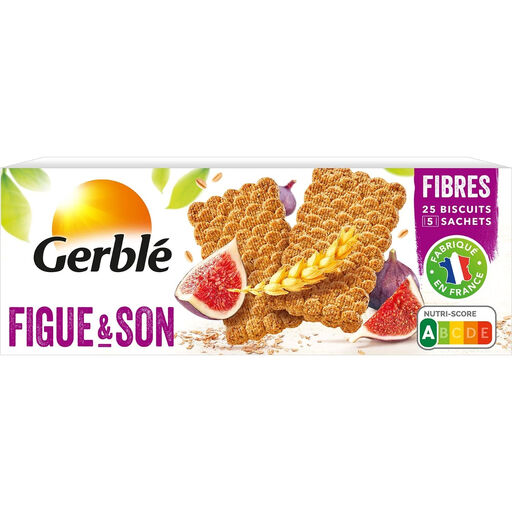
GERBLE Fig & Bran biscuits, 210 g pack

GERBLE Fig & Bran, biscuits 210 g

If you’re after a cereal biscuit rather than a classic Digestive, this 210 g pack is worth a look. If you avoid wheat, check the ingredients list. Compare the fibre per 100 g with the amount you plan to serve, too.

View on Joybuy
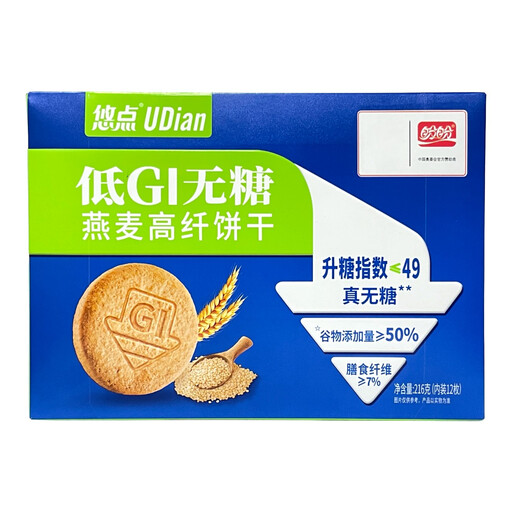
Panpan oat biscuits, 216 g pack

Panpan, oat biscuits 216 g

If you’re looking for an oat biscuit to enjoy as a snack, compare this 216 g pack with the amount you’d like to eat. Check the ingredients if you need to avoid wheat, soya or egg, and look at the fibre per 100 g rather than assuming it from the product description.

View on Joybuy

Frequently asked questions

Is Nutri-Score compulsory on biscuits in France?

No. The Ministry of the Economy states that displaying it is voluntary. However, the DGCCRF says that most prepacked foods must include a nutrition declaration, expressed per 100 g or 100 ml. Check this table even if no Nutri-Score is shown.

How should you compare two biscuits for a late-night snack?

First, compare biscuits in the same category using the values per 100 g, then take into account how much you’ll eat. Look in particular at sugars, fat, fibre and salt. If both products display a Nutri-Score, it can help with your comparison, but it doesn’t replace checking the ingredients.

Which allergens should you check on a packet of biscuits?

Read the ingredients list and any warnings about potential traces for the specific product you’re considering. The recipes mentioned here may contain wheat, oats or egg, among other ingredients. Don’t assume claims on one product apply to another, even if they’re from the same brand.

Are Digestive biscuits always gluten-free?

No. The McVitie’s Digestive Original listed by Carrefour France contains wheat. If you need to avoid gluten, look for an explicit claim on the product you choose and check its final label, rather than relying on the word Digestive alone.