Manager of a traditional hotel buffet
You want to offer a recognisable Digestive biscuit to go with breakfast drinks. The product name, ingredients, allergens and pack size matter more than a range name that simply suggests it aids digestion.


For a buffet that promises classic Digestive biscuits, choose a product clearly identified as such and check its ingredients: the McVitie's Digestive Original listed by Carrefour contains wheat. If you need to offer a gluten-free or lactose-free option, check those claims on the variant you buy, and don’t assume that this means it is free from other allergens. Before choosing a biscuit to serve, compare the nutritional values per 100 g and the pack size too.
You want to offer a recognisable Digestive biscuit to go with breakfast drinks. The product name, ingredients, allergens and pack size matter more than a range name that simply suggests it aids digestion.
You need to distinguish a gluten-free product from one also labelled lactose-free, then check the other allergen information for the variant you plan to serve.
You want to look at fibre, sugars, fat and salt rather than judging a biscuit by the word ‘digestive’ alone. To compare packs of different sizes, start with the values per 100 g.
First decide whether your buffet needs a classic Digestive, an option for a dietary restriction or another type of biscuit. Topped toast is a different choice altogether: it isn’t a substitute for a packaged Digestive biscuit.
| Criterion | What to check | Which customers is this for? |
|---|---|---|
| Digestive identity | The product name, ingredients and format of the variant you order. | If the buffet promises a Digestive, I want to serve a biscuit that’s recognisable by that name, rather than another range with a similar-sounding name. Around 31% of consumers prioritise this. |
| Dietary restrictions | Any required gluten-free or lactose-free claims, followed by the other allergen information. | To cater for someone with a specific dietary restriction, I need to identify the variant that meets their needs without assuming it’s suitable for every allergy. This is the top priority for around 23% of consumers. |
| Nutritional composition | Values per 100 g, particularly fibre, sugars, fat and salt. | When several biscuits could work on the buffet, I want to compare their labels on the same basis before choosing. Around 31% of consumers prioritise this nutritional comparison. |
| Buffet service | Pack size, local availability and access to allergen information once the packaging is removed. | For regular service, I want to be able to source the chosen format and provide customers with information when the biscuits are presented outside their pack. Buffet management comes first for around 15% of consumers. |
Carrefour describes McVitie's Digestive Original as a biscuit containing wheat, while Auchan lists Gerblé Happy Digest Céréales as gluten-free and lactose-free. Despite their similar names, these are not the same type of product.
Decide what you’ll call the biscuits on your buffet, then check the product name and ingredients on the pack you actually order.
Auchan’s listing for Gerblé Happy Digest Céréales says it is made in a facility that also handles, among other things, nuts, egg, milk proteins, sesame and soya. So a gluten-free claim alone doesn’t answer every allergen question.
Keep information for the variant you serve readily available. In France, the DGCCRF reminds businesses that allergen information is mandatory for non-prepacked foods.
The word ‘digestive’ alone doesn’t tell you how much fibre, sugar or fat a biscuit contains. The DGCCRF states that nutritional information given per 100 g allows you to compare pre-packed products.
Read the ingredients list and compare the nutritional information per 100 g against the criteria that matter for your buffet.
A pack that’s convenient to buy won’t necessarily tell you how many portions you can put out on the buffet or how customers can access the pack information once it’s opened.
Check the pack size and the information you’ll need to keep at the serving point before making this a regular option.
Carrefour lists Digestive Original in a 360 g pack.
Carrefour lists Schär Digestive biscuits in a 150 g pack, labelled gluten-free.
Auchan describes Happy Digest Céréales as gluten-free and lactose-free.
The organic P'tit nature biscuits listed by Carrefour are a different type of breakfast biscuit, not a classic Digestive.
Bridor offers a breakfast recipe for topped toast, which is different from a Digestive biscuit.
These two products are worth considering for a buffet that also offers other biscuits or crunchy snacks. They shouldn’t be presented as classic Digestive biscuits.
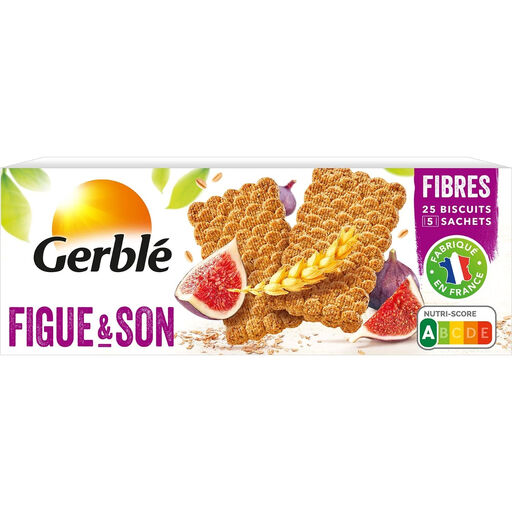 Image unavailable
Consider this if your buffet can include a fig and bran biscuit rather than a classic Digestive. The pack is listed as 210 g; before serving, check the allergens on the variant you receive and how many portions it will provide.
 Image unavailable
Consider this if you’re looking for a crunchy crispbread-style product rather than a Digestive biscuit. The pack is listed as 425 g; check the number of portions, ingredients and allergen information for the variant you buy before serving it.
Start with the product name, ingredients and allergens, then compare the nutritional values per 100 g. The DGCCRF says that showing values per 100 g makes it easier to compare pre-packed products in different sizes; also check the pack format you’ll actually serve.
Not on the basis of a gluten-free claim alone. Auchan lists Gerblé Happy Digest Céréales as both gluten-free and lactose-free, but also notes that it’s made in a facility that handles, among other things, nuts, egg, milk proteins, sesame and soya. Check the label on the variant you buy to meet the customer’s specific needs.
Keep accurate, up-to-date allergen information for the biscuits you serve. In France, the DGCCRF reminds businesses that this information is mandatory for non-prepacked foods: displaying only the product’s commercial name on the buffet isn’t enough.
No. You need to read the ingredients and nutritional values for the specific product. To compare fibre, sugars, fat and salt across two packs, use the information per 100 g rather than relying on the name or pack size.