What should you look for first?
When comparing packs of different sizes, start with the values per 100 g, then look at the recipe and how much you’ll eat. The DGCCRF states that nutritional information is given per 100 g or 100 ml to make comparisons easier.
| Criteria |
What to check |
Who is this for? |
| Nutritional profile |
Compare sugar, fat and salt in particular per 100 g, then consider how much you’ll eat. |
If I regularly have several biscuits with my coffee, I want to be able to compare recipes without relying on pack size. Around 36% of consumers put the overall nutritional profile first. |
| Fibre and recipe |
Check the fibre per 100 g and read the ingredients for the specific biscuit. |
When I’m looking for more fibre, the word “Digestive” alone doesn’t tell me how much there is to compare. This is the main consideration for around 29% of consumers. |
| Dietary exclusions and allergens |
Check for the gluten-free or lactose-free claims you’re looking for, as well as allergens and manufacturing information on the pack. |
If I need to avoid an ingredient, the composition of the batch I buy comes before taste or format. Around 14% of consumers prioritise this check. |
| Texture and convenience |
Check how many biscuits are in each pack and choose a format to suit your coffee break. |
For a coffee break on the go, I want to know exactly what’s in a pack; at home, I might prefer a biscuit to enjoy with my coffee. Format or eating experience comes first for around 21% of consumers. |
Brands to know
These examples showcase specific recipes and formats; their features don’t apply to every product from each brand.
McVitie’s
Digestive Original is a useful benchmark if you’re looking for a wheat-based Digestive-style biscuit to enjoy with your coffee.
- The Carrefour listing gives a pack size of 360 g and says this product contains 16% wholemeal wheat flour.
- It also lists sugar and palm oil, and gives values of 21.3 g of fat and 483 kcal per 100 g.
Gerblé
Happy Digest Céréales is worth a look if you’re searching for a biscuit clearly labelled gluten-free and lactose-free.
- The Auchan listing gives the ingredients as gluten-free whole oat, maize, rice and quinoa flours, and states that the biscuits contain 12 g of fibre per 100 g.
- It lists 18 g of sugar per 100 g and manufacturing information that you should check on the pack in light of any allergens you need to avoid.
Gullón
The fibre biscuit listing offers another recipe to compare if declared sugar and fibre are your main priorities.
- Its Auchan listing gives values of 0.5 g of sugar and 9.3 g of fibre per 100 g.
- The recipe includes wholemeal wheat, maltitol and soya lecithin; it may contain traces of milk.
BelVita
The BelVita Brut breakfast biscuits featured here show how a multipack format differs from a classic Digestive.
- The Auchan listing states that they contain 70.4% cereals and come in eight packs of four biscuits.
- It also gives values of 22 g of sugar and 1.4 g of salt per 100 g; check the allergens in this recipe.
Biscuits available on Joybuy
These two cereal biscuits could be a good option for a morning break. Choose between them based on their recipe and the pack label, rather than assuming they’re classic Digestives.
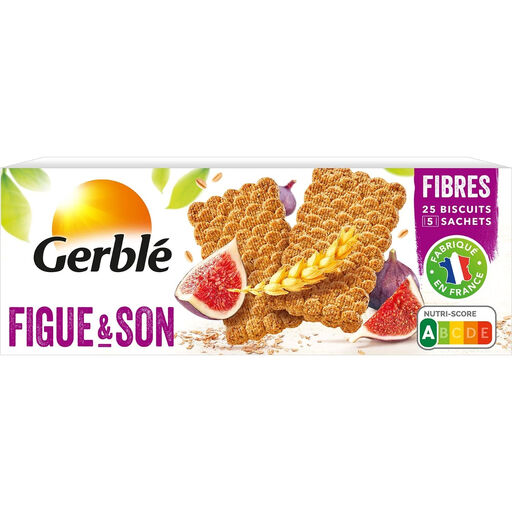 Image unavailable
Gerblé Fig & Bran, 210 g
Worth considering if you’re looking for a cereal biscuit to enjoy during a morning break, rather than a classic Digestive. The listing for this product includes wholemeal wheat flour and bran; it contains wheat. If fibre is a priority, check the amount per 100 g on the packaging.
View on Joybuy
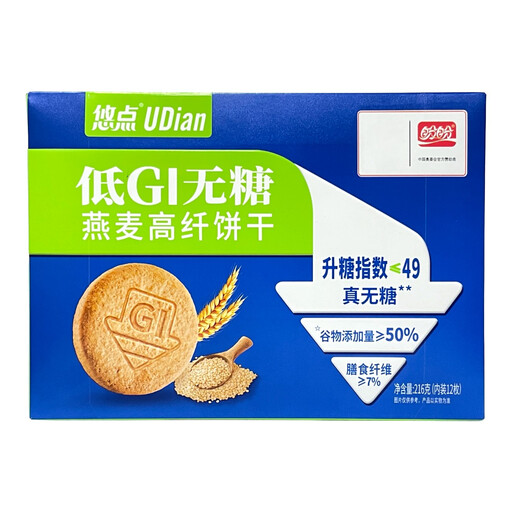 Image unavailable
Panpan oat biscuits, 216 g
Worth a look if you prefer a recipe combining oats, wholemeal wheat and wheat bran for your break. Before choosing based on the “sugar-free” claim in its product description, check the pack: the nutritional table shown in the listing gives 11.7 g of sugar per 100 g. The recipe also includes wheat, soya, oats and eggs.
View on Joybuy
Frequently asked questions
How do I compare two packs of different weights?
Start by comparing their nutritional values per 100 g: according to the DGCCRF, this makes it easier to compare food products. Then check the weight of one biscuit or the contents of a pack so you can relate those values to the amount you’ll eat.
Is the “gluten-free and lactose-free” claim enough if I need to avoid an allergen?
No. Check the ingredients list and manufacturing information on the pack for the batch you buy, too. For example, the Auchan listing for Gerblé Happy Digest Céréales notes that it is made in a facility that also handles nuts, eggs, milk proteins, sesame and soya.
Is a low sugar content all I need to consider when choosing a biscuit?
No, not if other aspects of the recipe matter to you. The Auchan listing for Gullón fibre biscuits gives a sugar content of 0.5 g per 100 g, but also lists maltitol, wholemeal wheat and soya lecithin. Read the full ingredients list and nutritional information.
Can a biscuit with coffee replace breakfast?
A biscuit on its own isn’t the kind of breakfast Manger Bouger recommends for children and teenagers aged 4 to 17: its example includes a cereal product, a dairy product and a piece of fruit or a no-added-sugar fruit purée. This advice is for that specific age group, not all adults.


