
Livraison le jour même ou le lendemain

Qualité garantie

Débloquez vos offres de bienvenue: Livraison GRATUITE | Jusqu'à -80 % | 30 jours d'essai gratuits à JoyPlus
Téléchargez l'application
Buying dietary supplements may seem straightforward… until the labels start to pile up: high dosages, concentrated extracts, “complete” formulas, vegan capsules or promises of an instant energy boost. For adults living in France, the choice should primarily be based on the product’s actual composition, recommended daily intake, usage precautions and suitability for your individual needs.
A particularly high percentage of NRV — nutrient reference value — does not necessarily mean that a product is right for you. Vitamin B12 at 1,000 µg, for example, may meet the needs of some people following a vegan diet, but this dosage is no substitute for medical testing or professional advice if you have any concerns.
The same applies to vitamin C at 1,000 mg or zinc at 15 mg: check the amount per serving, the recommended frequency of use and any other supplements you are taking at the same time.
Claims such as “detox”, “fat burner”, “maximum recovery” or “perfect absorption” should be treated with caution. A dietary supplement is no substitute for a varied diet, medical monitoring or a prescribed treatment.
Claims relating to a vitamin or mineral must comply with the European regulatory framework. Magnesium, for example, contributes to normal muscle function, normal energy-yielding metabolism and the reduction of tiredness and fatigue when the regulatory conditions for use are met. This does not guarantee the same effect for every user.
For vegetarians and vegans, the capsule material matters just as much as the active ingredient itself. The presence of gelatine, lactose, gluten, soy or certain additives may influence your decision. Also check how many tablets you need to take each day: a formula marketed as economical may become inconvenient if the daily serving is high.
Compare the quantity of active ingredient, not just the total weight of the extract. With magnesium, make sure you distinguish between the weight of the citrate or oxide and the quantity of elemental magnesium. WeightWorld Magnesium Citrate provides 222 mg of elemental magnesium per capsule, while Marine Magnesium + B6 provides 360 mg per two capsules.
For botanical extracts, also check the extraction ratio and standardisation. A 20:1 or 40:1 extract cannot be compared directly with a whole-plant powder.
Capsules and tablets are suited to different uses. Small tablets can be convenient for regular use, while a vegan capsule may be preferable for people who avoid animal-derived products. Depending on the formula, taking the product with a meal may also be recommended.
People with sensitivities should consider the presence of caffeine, iodine, iron or certain botanical extracts. If you are pregnant or breastfeeding, taking medication or living with a known health condition, seek advice from a doctor or pharmacist.
Calculate how many days the container will last. A bottle containing 400 tablets, taken at one tablet per day, does not offer the same practical value as a product designed to last 30 days. Check the best-before date, storage conditions and the contact details of the responsible person in the European Union.
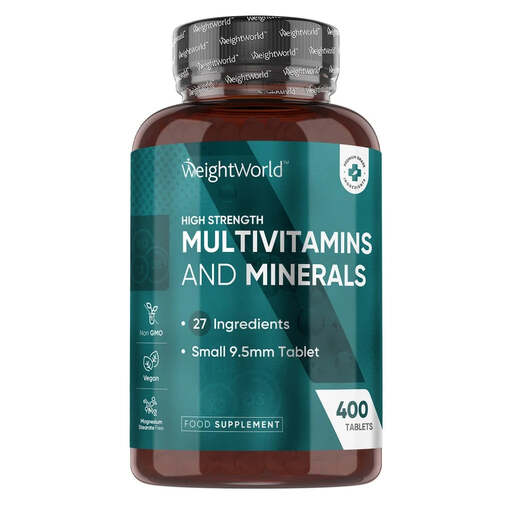
Why this product may be suitable: with one tablet per day and a long-lasting format, this formula is designed for people who want to combine vitamins and minerals in a simple daily routine.
The formula lists 27 vitamins and minerals, with the quantities per tablet and NRV percentages, rather than relying on a vague promise.
400 tablets, a vegan and gluten-free formula, tablets stated to measure 9.5 mm, with vitamin C, magnesium, zinc and B vitamins.
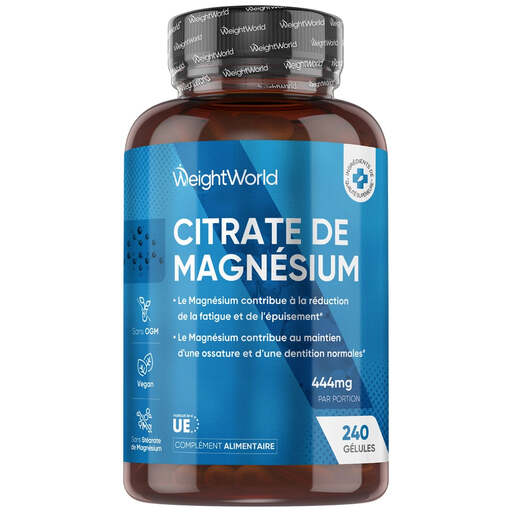
Why this product may be suitable: it is designed for adults specifically looking to increase their magnesium intake rather than take a general multivitamin complex.
The label clearly distinguishes magnesium citrate, listed at 740 mg, from elemental magnesium, listed at 222 mg per capsule.
One capsule per day, 240 capsules, a vegan formula free from gluten and lactose, plus authorised European claims relating to tiredness and muscle function.
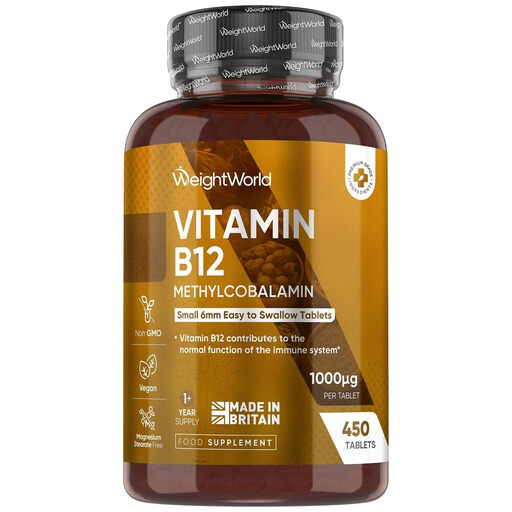
Why this product may be suitable: its vegan format and long-lasting supply can fit easily into a dietary routine that excludes animal-derived products.
The dose is clearly stated for each microtablet. There is no need to combine several sources of vitamin B12 without comparing their labels.
450 6 mm tablets, methylcobalamin, a formula suitable for vegans and a stated daily serving.
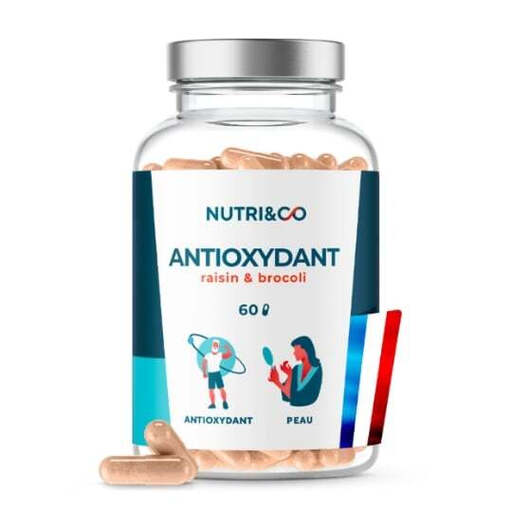
Why this product may be suitable: this formula combines several ingredients for people who want to diversify their daily wellbeing routine.
The quantities are provided for two capsules: 360 mg of grape seed extract, 120 mg of Sulfodyne, 20 mg of coenzyme Q10 and 12 mg of vitamin C.
Vegan HPMC capsules, free from titanium dioxide, with ingredients and quantities clearly detailed for the daily serving.
We have brought together an updated selection of products that meet these selection criteria and the requirements applicable in France and the European Union.
It depends on the formula and recommended dosage. Some bottles cover 30 days, while others last several months. Follow the label instructions, do not exceed the daily dose and regularly reassess whether supplementation remains appropriate. Long-term use at a high dosage should be discussed with a healthcare professional.
This may be possible in some cases, but duplicate ingredients are common across multivitamins, magnesium, zinc and vitamin C products. Before starting, add up the daily intake provided by each product. Take particular care with iron, iodine, vitamin B6, vitamin D and zinc.
No. A plant-based capsule indicates the origin of its shell, but does not guarantee that the product is gluten-free. Look for the explicit “ gluten-free ” statement and check the full list of ingredients. People with allergies or following a strict diet should also check for possible traces and review the information provided by the manufacturer.