Shoppers keeping an eye on sugar
If ‘diet’ means watching your sugar intake, distinguish between ‘no added sugars’ and ‘sugar-free’. The ‘of which sugars’ figure per 100 ml lets you compare products, but the amount you serve matters too.


For a picnic, don’t choose an apple juice based solely on the claim ‘no added sugars’. Check the ‘of which sugars’ figure per 100 ml, then consider how much everyone plans to drink. Next, choose between not-from-concentrate juice and juice from concentrate according to the recipe you’re looking for. Finally, opt for individual portions or a bottle to share, depending on how you’ll serve it and how it needs to be stored.
If ‘diet’ means watching your sugar intake, distinguish between ‘no added sugars’ and ‘sugar-free’. The ‘of which sugars’ figure per 100 ml lets you compare products, but the amount you serve matters too.
If everyone needs their own drink in the park, individual portions can make serving easier. A bottle to share means planning portions and checking how to store it once opened.
If you’re specifically looking for not-from-concentrate juice, juice from concentrate or another category, check the product description and ingredients rather than relying on the word ‘diet’.
When shopping for a picnic, start with what matters most to you: sugar, ease of serving, the recipe, or organic and origin claims. Then compare products on that basis, without assuming their ingredients from the pack size alone.
| Criterion | What to check | Who is it for? |
|---|---|---|
| Sugar | Check the ‘of which sugars’ figure per 100 ml and consider how much you plan to drink. Don’t confuse ‘no added sugars’ with ‘sugar-free’. | If I’m looking to limit the sugar in my drink, the claim on the front of the pack isn’t enough to help me choose a serving size. Around 31% of consumers put this first. |
| Format | Compare the volume per person and how easy it is to serve. For an opened bottle, check the storage instructions. | When everyone needs to be served easily in the park, I prefer to decide in advance between individual portions and a bottle to share. Ease of serving is the top priority for around 25% of consumers. |
| Recipe | Check the product description and ingredients list to distinguish not-from-concentrate juice, juice from concentrate and nectar. | If I’m looking for a specific recipe, I want to know what’s actually in the bottle before choosing its format. For around 25% of consumers, ingredients come before other criteria. |
| Organic and origin | Check the organic claims and origin information on the exact product, separately from its nutritional information. | When the origin of the apples or an organic product guides my choice, I check these details without assuming anything about the sugar content. These features come first for around 19% of consumers. |
Apple juice can contain sugars that occur naturally in apples. Auchan’s product listings for Joker Le Fruit and a Tropicana apple juice state 9.8 g and 10 g of sugars per 100 ml respectively.
Compare the ‘of which sugars’ figure per 100 ml, then relate it to the amount you plan to drink.
A bottle to share means serving several people and following the product’s storage instructions once opened. For the Tropicana juice described by Auchan, the product listing says to keep it chilled at a maximum of 7 °C and consume it within five days of opening.
Make sure you have what you need to serve the drink, and check the instructions on the bottle. If everyone needs their own portion, compare smaller sizes too.
This search term doesn’t tell you whether a product is not-from-concentrate juice, juice from concentrate or nectar. The specific product name and its ingredients are more useful when making that choice.
If you want a recipe made from 100% apples with no added water, look for these details on the exact product. Check its sugars per 100 ml separately.
These examples can help you identify the information to compare on specific products; they don’t describe every drink from each brand or retailer.
Auchan’s product listing describes Le Fruit as apple juice from concentrate, sold in a 1 L bottle.
Carrefour’s range includes, among other options, a pack of 6 × 20 cL and 1 L or 1.5 L bottles.
This retailer’s product listings include information on Joker and Tropicana apple juices.
E.Leclerc stocks a 1 L bottle of Bio Village organic apple juice, not from concentrate.
Carrefour describes a 75 cL bottle of Planet Bio organic apple juice, not from concentrate.
These three 1 L bottles are worth considering for a picnic where the juice will be shared. To compare them, check the product description, ingredients, sugars per 100 ml and storage instructions after opening for each one.
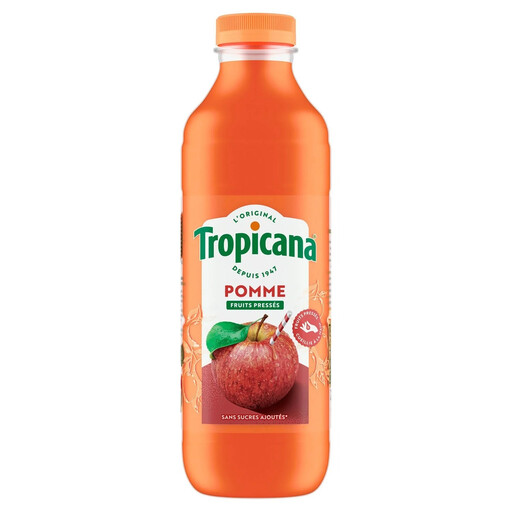 Image unavailable
This 1 L bottle could be a good choice if you’re planning to serve several people. To decide how much to take, check the sugars per 100 ml and the storage instructions for this product.
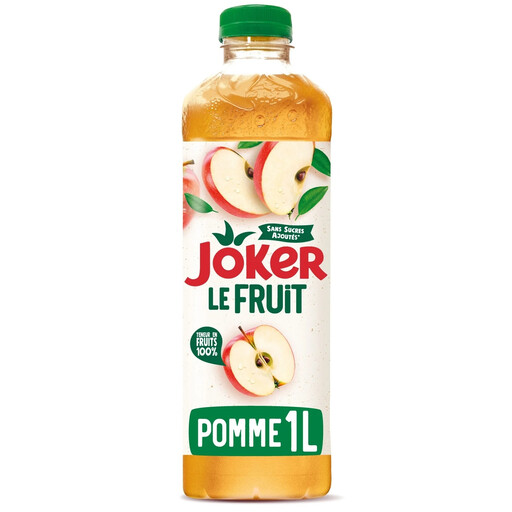 Image unavailable
The 1 L size is suitable for sharing if you’ve planned how to serve it in the park. Don’t assume the name Unsweetened means it contains no sugars: check the ‘of which sugars’ figure and the instructions for after opening on this product.
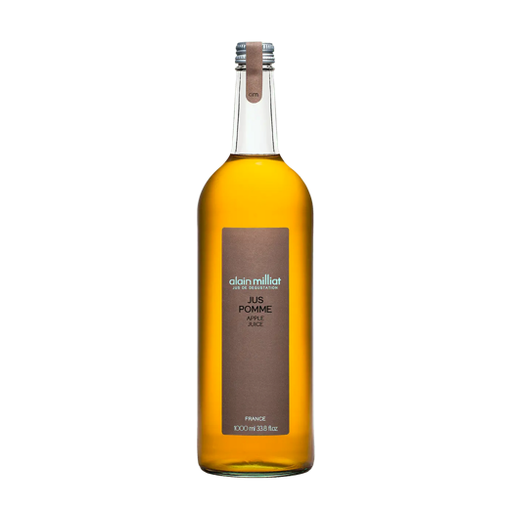 Image unavailable
This 1 L bottle can be shared at a picnic. If it matters to you whether the juice is not from concentrate or made from concentrate, check the product description on the label. Also check the sugars per 100 ml and the instructions for after opening.
No. It can still contain sugars that occur naturally in apples. For example, Auchan’s product listings state that Joker Le Fruit contains 9.8 g of sugars per 100 ml and a Tropicana juice contains 10 g. Compare the ‘of which sugars’ figure and the amount you plan to serve.
Individual portions make serving easier if everyone needs their own drink; a bottle can work well if you’ve planned how to share it. Carrefour stocks, among other options, a pack of 6 × 20 cL apple juices. Whatever the size, check the ingredients of the product you choose.
Follow the instructions on the specific bottle, as these set out how to store it after opening. For example, Auchan’s listing for a 1 L Tropicana juice says to keep it at a maximum of 7 °C and consume it within five days. If these conditions apply to the bottle you’re taking, plan to keep it chilled in transit.
No. The product description tells you what category the juice belongs to; it doesn’t automatically tell you how its sugar content compares. To compare two bottles, check the ‘of which sugars’ figure per 100 ml and consider how much you plan to drink.