
Livraison le jour même ou le lendemain

Qualité garantie

Débloquez vos offres de bienvenue: Livraison GRATUITE | Jusqu'à -80 % | 30 jours d'essai gratuits à JoyPlus
Téléchargez l'application
A diary or planner may seem simple to choose… until it turns out to be too bulky, poorly structured or impractical for everyday use. Between attractive formats, prominently displayed covers and promises of better organisation, some essential details can easily be overlooked.
Joybuy’s product recommendations manager selects products based on practical criteria: format, period covered, readability, paper quality and suitability for your habits. Here are the main pitfalls to avoid before placing your order, along with three options suited to different needs.
A hardback cover or carefully considered design does not guarantee that a diary will be comfortable to carry. A bulky model may fit perfectly on a desk but become cumbersome in a student’s bag or a suitcase.
Check the stated dimensions, the weight when provided, and whether it has an elastic closure or bookmark. An A5 diary, measuring approximately 14.8 × 21 cm, generally offers a good balance between writing space and portability.
A weekly planner is ideal for anyone who wants to view appointments and tasks across the same double-page spread. By contrast, a daily diary provides more room to detail meetings, take notes or track a project’s progress.
The classic mistake? Buying a dated diary packed with daily pages when you mainly plan your week. Conversely, a weekly layout can quickly feel too cramped for a particularly busy schedule.
A dated diary covers a specific period. If you start organising yourself part-way through the year or your habits change, several pages may remain blank. An undated planner lets you start whenever you like and take a break without wasting pages linked to fixed dates.
For use on the go, compare the model’s closed dimensions and thickness. A 15 × 21 cm diary may fit into many bags, but its actual bulk also depends on the cover thickness and type of binding.
A spiral binding opens flat with ease and makes writing more comfortable, while a hardback cover protects the pages better inside a bag. For mainly professional use at a desk, a more structured cover can also provide greater stability.
Paper weight alone is not enough to predict writing comfort, but it is a useful indicator. 100 g/m² paper, such as that specified for some Jubiluu models, is thicker than 70 g/m² paper. It may be better suited to liquid-ink pens, although the result will always depend on the pen you use.
The Moleskine models featured here use 70 g/m² acid-free ivory paper sourced from FSC-certified forests and other controlled sources, according to information supplied by the manufacturer. This statement concerns the declared origin of the paper; it does not constitute a general guarantee covering the entire product.
Before ordering, check that the features you will actually use are included:
For a school diary, also check the period covered, the number of weeks and the space provided for lessons. At work, a well-designed notes section and integrated storage can prove more useful than a multitude of decorative elements.
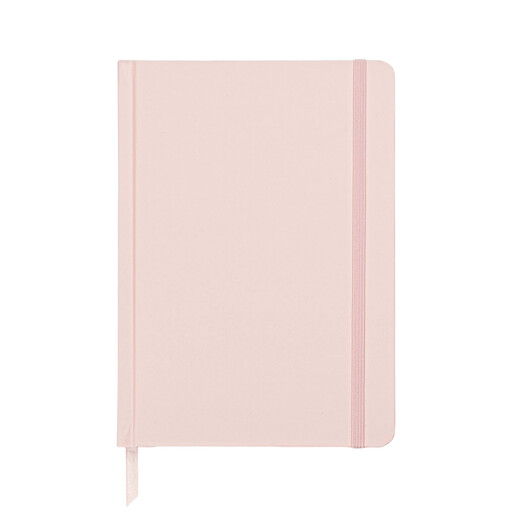
Why this choice suits this profile : its A5 format and undated design let you start gradually, without losing pages if your organisational habits change.
The undated format prevents unused pages and duplication linked to a fixed calendar.
224 pages, 100 g/m² ivory offset paper, hardback cover, elastic closure and bookmark.
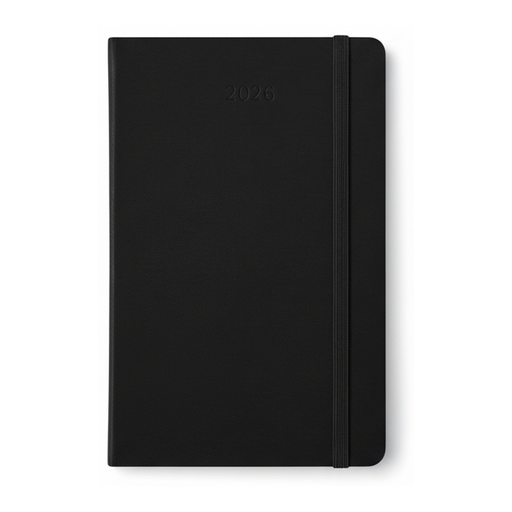
Why this choice suits this profile : its horizontal layout lets you see the whole week at a glance, while retaining separate sections for projects and notes.
The double-page weekly layout prevents information overload and makes it easier to see the bigger picture.
Lays flat at 180°, elastic closure, inside pocket, stickers and 70 g/m² ivory paper.
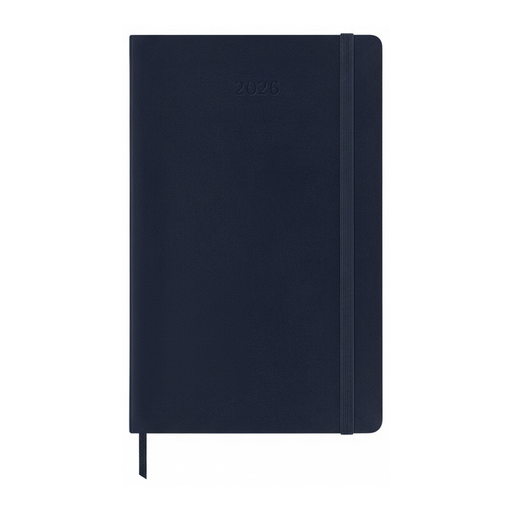
Why this choice suits this profile : one page per day provides all the room you need to detail appointments, to-do lists, journeys and personal notes.
The daily layout prevents you from having to fit several appointments or pieces of information into a space that is too limited.
Sections for travel, goals and ideas, bookmark, inside pocket and binding that allows the diary to lie flat.
A well-designed planner is not always enough to keep your workspace tidy. For post, files and magazines, separate storage prevents upcoming tasks from becoming mixed up with documents that need to be kept.
A desk organiser with several compartments can easily hold pens, scissors, sticky notes and paper clips. For A4 documents, the Senhoglb wall-mounted file holder has a single pocket, an identification plate and vertical mounting. It can free up desk space, provided you choose fixings suited to the type of wall and observe the stated maximum load.
This trio of a diary, office supplies and physical storage can suit remote workers, students and small teams managing both digital tasks and paper documents.
We have put together a complete, real-time updated selection of products that meet these demanding selection criteria and European safety regulations.
A weekly planner generally shows several days across a double-page spread. It is suitable for tracking appointments, lessons and tasks, with an overview of the week. A daily diary provides more space for each date and is designed for users who record a lot of information throughout the day.
It all depends on how often you use it and how many pages are available. A model advertised as lasting 18 months does not necessarily need to be filled in without interruption: its undated format allows you to adapt its lifespan to your routine. Its condition also depends on how it is stored, particularly its exposure to humidity, heat and sunlight.
For school, prioritise a clear weekly view, a format that is easy to carry and a period that corresponds to the academic year. At work, consider the space provided for appointments, notes and projects. In both cases, compare the closed dimensions, type of binding and readability before deciding on the colour or brand.