
Livraison le jour même ou le lendemain

Qualité garantie

Débloquez vos offres de bienvenue: Livraison GRATUITE | Jusqu'à -80 % | 30 jours d'essai gratuits à JoyPlus
Téléchargez l'application
A diary or notebook can serve all sorts of purposes in everyday life: jotting down an appointment, revising for an exam, putting an idea on paper during your commute or keeping a personal journal. With so many models available, choosing the right one isn’t always straightforward. A pretty cover doesn’t guarantee an enjoyable writing experience, while a compact format can soon feel too small when you’re planning your work.
Before you place your order, focus on three things: the period it covers, how much writing space you need and how durable the materials are.
A colourful or textured cover may catch your eye, but it won’t tell you how comfortable the diary is to use. A daily diary has more pages and is thicker than a weekly one. On the other hand, a pocket notebook is easy to carry, but may not have enough room for planning a project in detail.
Always check the product’s actual dimensions, page layout and weight before you order.
A 2026 diary, or any other dated model, is ideal if you plan your day regularly. But blank pages can quickly go to waste if your schedule comes in fits and starts. In that case, an undated planner or an 18-month planner lets you start whenever you like and skip the quieter weeks.
Paper weight affects how comfortable it is to write and how much ink shows through. A hard cover offers better protection in your bag, while a soft cover is usually lighter and less bulky. The binding is worth considering too: if your notebook won’t stay open, it can quickly become awkward to use in meetings, lessons or when you’re drawing.
The A5 format, measuring around 14.8 × 21 cm, is a good balance between readability and portability. It’s suitable for work planning, studying and keeping track of your goals. More compact, an A6 notebook measuring around 10.5 × 14.8 cm slips easily into a small bag or coat pocket.
For a school planner or use at work, a larger format, such as 21 × 27 cm, gives you more room for timetables, homework and to-do lists.
Take a look at any additional pages too, such as an annual calendar, goal tracker, travel pages, notes section or inside pocket. These sections could save you from having to carry several notebooks.
A hard cover offers better protection when you’re carrying your diary around. Faux leather, PVC and coloured card all have a different feel and level of durability. Whatever you choose, check the care instructions and avoid exposing your notebook to excessive moisture.
Accessories are most useful when they meet a specific need: an elastic closure keeps your notebook shut, a bookmark helps you find your place quickly, and a pen loop means you won’t have to search for something to write with. But they can’t make up for a layout that doesn’t suit you.
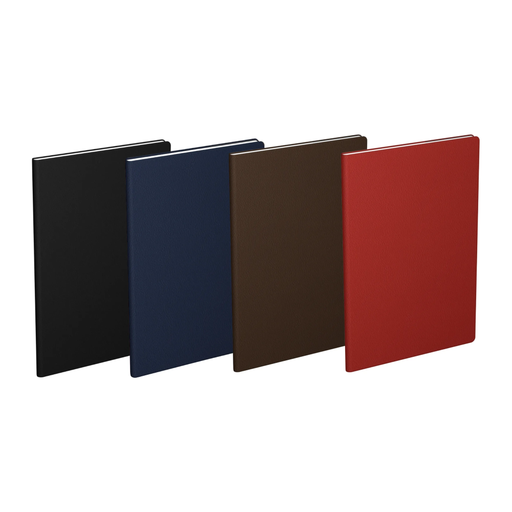
Why it suits this type of user: At 21 × 27 cm, this model gives you plenty of room for lessons, appointments and tasks, while remaining light enough for school or work.
The weekly layout makes it easy to see how busy the coming days will be, while the PVC cover protects the pages from everyday wear and tear.
A roomy format, a PVC cover and a layout covering 26 to 27 weeks.
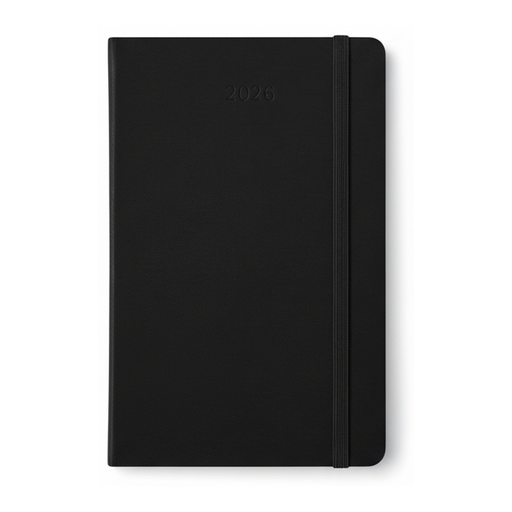
Why it suits this type of user: This model combines a horizontal weekly layout with dedicated pages for travel, goals and ideas, all in a cover with a faux-leather feel.
The double-page weekly spread includes a clearly marked space for notes, so appointments, ideas and tasks stay separate.
It opens flat to 180 degrees and has an elastic closure, a bookmark and an expandable inside pocket.

Why it suits this type of user: Its A5 format, undated monthly and weekly pages, and 112 sheets make it a great companion for long-term projects, studying and tracking goals.
The undated layout means you won’t waste pages during quieter periods, and you can start at any time.
A hard cover, 100 g offset paper, a bookmark and an elastic closure.
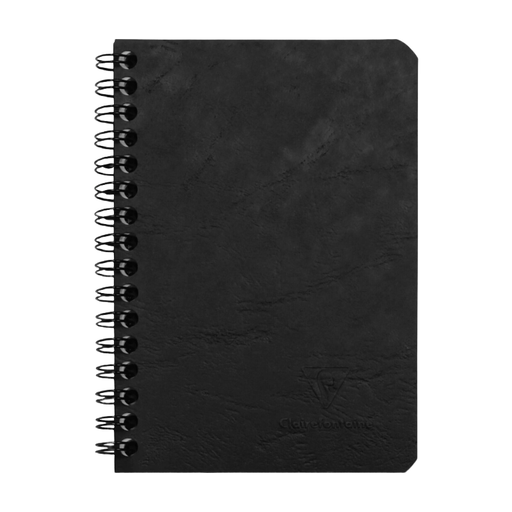
Why it suits this type of user: This 9 × 14 cm notebook is easy to carry and works just as well for travel notes and sketches as it does for journalling.
The binding opens flat, making it more comfortable to write on both sides, even when you’re on the move.
100 pages, Clairefontaine Vélin Velouté 90 g paper and a 5 × 5 grid ruling.
We’ve put together a comprehensive selection, updated in real time, of products that meet these exacting criteria and European safety standards.
A5 is usually a good fit for meetings, to-do lists and weekly planning. If you need to record lots of appointments or keep documents in your diary, a larger model gives you more room to work with.
It depends on how often you write in it, the paper weight and how sturdy the cover is. A 160-page A6 notebook could last several months if you only make occasional notes, while a daily diary is designed to cover a specific period. To keep it in good condition, protect it from moisture and direct sunlight.
Yes, especially if your schedule changes regularly or you switch between studying, travelling and working on projects. You can start using it straight away, skip weeks when you have nothing planned and organise your work or personal life around your priorities.