
Livraison le jour même ou le lendemain

Qualité garantie

Débloquez vos offres de bienvenue: Livraison GRATUITE | Jusqu'à -80 % | 30 jours d'essai gratuits à JoyPlus
Téléchargez l'application
The check engine light comes on, and a flood of questions follows. Is it a minor alert or the prelude to a hefty garage bill? A diagnostic tool promises to give you the verdict directly, letting you skip the trip to the mechanic. The problem? The market is flooded with devices that make tempting promises but often turn out to be costly disappointments. As a product expert for Joybuy, I'm here to demystify this market and guide you toward the right choice.
Before you dive in, watch out for these two common pitfalls:
To avoid throwing your money away, here are the three technical points you need to scrutinize.
All cars since 2004 (petrol) and 2007 (diesel) are equipped with an OBD2 port, but the communication protocols themselves have evolved significantly. A good car diagnostic tool must be compatible with current standards.
Verifying support for these protocols is your guarantee of a future-proof investment and long-term compatibility.
There is a fundamental difference between a simple fault code reader and a full-featured diagnostic scanner.
A tool with bidirectional control elevates you from a passive observer to an active participant in the diagnostic process.
A good OBD2 scanner does more than just read faults; it assists with routine maintenance. Make sure the functions you need are included and that your access to them is sustainable.
Rather than an endless list, we've selected three models that each meet a specific need.
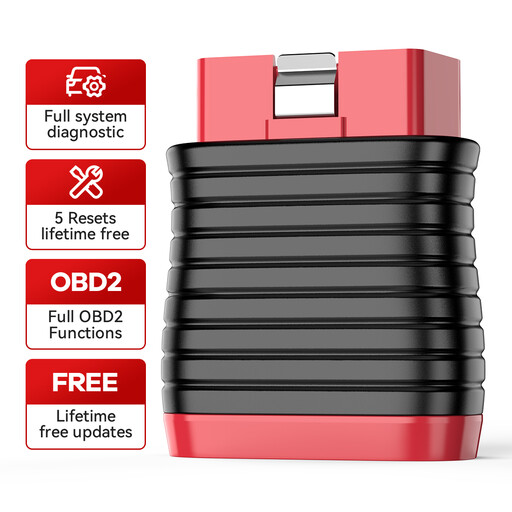
Why we chose it: Ideal for quick diagnostics and basic maintenance tasks. It turns your smartphone into an effective diagnostic tool, without needing a dedicated device. Perfect for identifying the cause of a check engine light or performing routine maintenance on the family car.
It includes 5 essential reset functions (oil, brakes, ABS, etc.) with a lifetime guarantee. This covers the basics without hidden fees.
Its ultra-compact Bluetooth dongle format enables all-system diagnostics via an intuitive mobile app (iOS & Android).
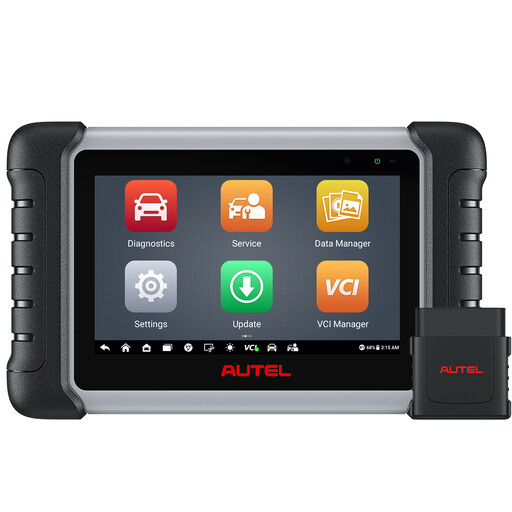
Why we chose it: For those who want to go beyond simple code reading. This tool allows for in-depth diagnostics and lets you take control of components, making it perfect for advanced maintenance or hunting down complex faults.
It offers true bidirectional control, a feature usually reserved for professional-grade tools. No more being a spectator: you can actively query and test every component.
The Bluetooth connection offers excellent freedom of movement. Its responsive tablet and 38+ service functions make it a versatile and powerful ally.
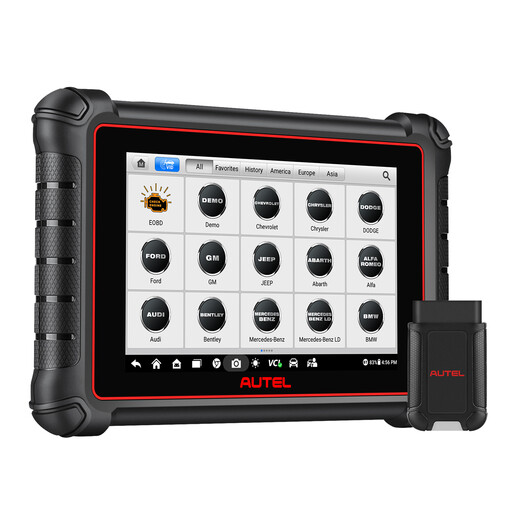
Why we chose it: Designed for pros or expert mechanics who work on a wide variety of vehicles, including the very latest models. It offers OE-level (Original Equipment) diagnostic capabilities and the essential protocols for modern cars.
It natively integrates CAN FD and DoIP protocols, ensuring maximum compatibility with recent vehicles that are inaccessible to simpler tools. This is a future-proof investment.
All-system diagnostics, advanced bidirectional control, and over 40 services. Its large 8-inch touchscreen and wireless interface provide a professional user experience.
We have compiled a complete list of products that meet our strict selection criteria and the demands of today's market.
No, and this is a crucial point. While most tools are compatible with the OBD2 standard (mandatory on petrol vehicles since 2004 and diesel since 2007 in Europe), access to advanced functions (bidirectional control, services) and the systems of very recent vehicles depends on the brand coverage and support for protocols like CAN FD and DoIP. It is therefore imperative to check compatibility with your specific vehicle(s) before purchasing.
It depends on the model and the depth of its functions. Entry-level scanners often include basic OBD2 functions for free, for life. However, more comprehensive scanners frequently require an annual subscription to receive updates (new vehicles, new functions). Fortunately, many models include one or more years of updates with the initial purchase.
A simple code reader is unidirectional: it only reads the error codes stored by the ECU and clears them. A scanner with bidirectional control, on the other hand, has a two-way conversation with the car. It can send commands to activate specific components (for example, forcing the fuel pump to turn on to test its operation). This interaction allows you to isolate a fault much faster and with greater precision, often without having to take a single part off.