
Livraison le jour même ou le lendemain

Qualité garantie

Débloquez vos offres de bienvenue: Livraison GRATUITE | Jusqu'à -80 % | 30 jours d'essai gratuits à JoyPlus
Téléchargez l'application
Whether you're a DIY mechanic or an automotive professional, you know that a good diagnostic scanner is an investment that quickly pays for itself, potentially saving you hundreds, if not thousands, of dollars in garage fees. The problem? The market is a jungle of often misleading marketing promises. Between hidden subscriptions and overrated features, it's easy to make the wrong choice.
Our mission? To help you cut through the noise. To guide you, we've broken down the most common pitfalls and the essential criteria for choosing an automotive diagnostic tool that truly fits your needs.
To make the right choice, forget the marketing hype and focus on what really matters. Here are three non-negotiable technical points.
A basic OBD2 scanner merely reads and clears fault codes. A true diagnostic tool, however, incorporates bi-directional control (or active tests): it communicates with the vehicle by sending commands to its ECUs.
In plain terms, you can manually actuate components to test them without taking anything apart. For example, you can force the fan to activate, test the power windows, or check the fuel pump, all from your scanner's screen. This is a phenomenal time-saver for pinpointing the exact source of a failure and avoiding replacing parts by guesswork.
Service functions (or "resets") are crucial for routine maintenance. Make sure the tool covers the operations you actually need:
Therefore, scrutinise the update policy. A model offering genuine free lifetime updates on all its functions is a much more profitable investment than a device that traps you with a costly annual subscription to maintain its advanced capabilities.
Automotive electronics are evolving at a breakneck pace. The CAN FD (Flexible Data-Rate) and DoIP (Diagnostics over Internet Protocol) protocols enable much faster and more secure communication with the ECUs of recent vehicles.
Ignoring these protocols guarantees you'll buy a tool that can't communicate with the cars of tomorrow (and even some of today's).
Instead of an endless list, here are three models that check all the boxes on the objective criteria we've just covered, each tailored to a specific user profile.
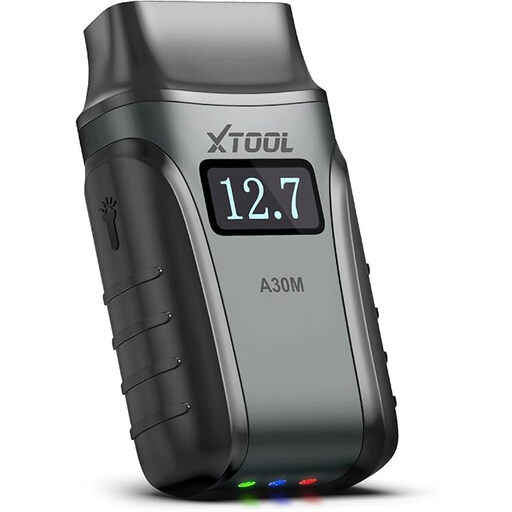
Why we chose it: This clever adapter transforms any smartphone (iOS/Android) into a powerful diagnostic scanner. It's the ideal solution for the DIY mechanic who wants more than a simple code reader without the bulk of a dedicated tablet. Its OBD2 Bluetooth connection makes it incredibly convenient to use and store.
It offers TRUE free lifetime updates on all 26 of its service functions and full diagnostics, with no hidden subscriptions. The icing on the cake: it's CAN FD compatible.
It features full bi-directional control, a function almost unheard of in this price range. It allows you to actuate components for quick and error-free diagnosis.
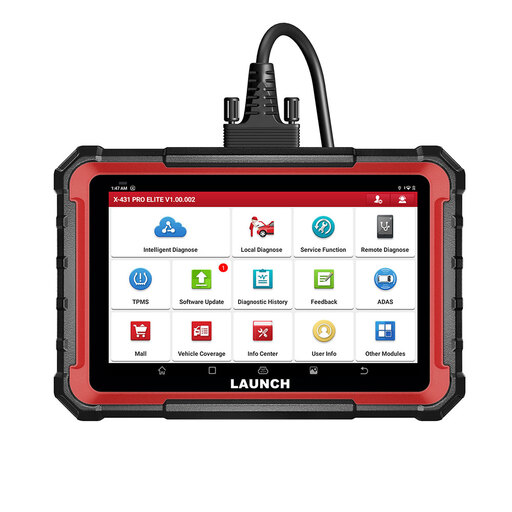
Why we chose it: This is the perfect tool for anyone who juggles cars for family and friends, or who is dabbling in semi-professional work. Its 8-inch tablet, impressive coverage of over 150 brands, and advanced functions make it a formidable Swiss Army knife.
Here, the multi-brand promise isn't just hot air: the coverage is OE-level (Original Equipment) on almost all ECUs. It is, of course, compatible with CAN FD and DoIP, ensuring its longevity.
It offers pro-level features, such as online ECU coding and more than 32 service functions. The 2 years of included updates provide an excellent starting point.
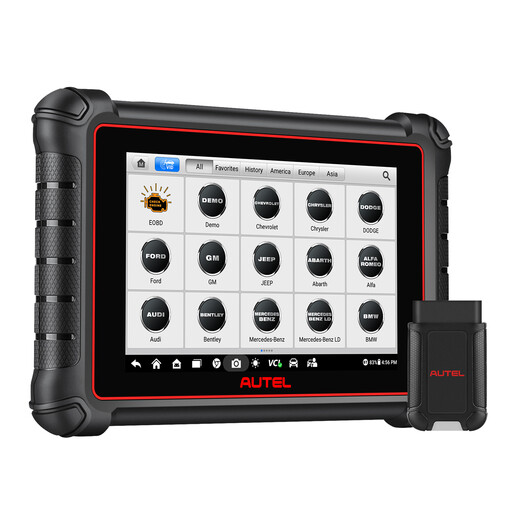
Why we chose it: Built for the daily grind of the workshop, this tool is a powerhouse of reliability and speed. Its fluid Android 11 interface, wireless VCI, and suite of over 40 service functions make it an indispensable ally for any pro looking to boost efficiency.
No unpleasant surprises: it checks all the boxes. The bi-directional control is comprehensive, the coverage is OE-level, and DoIP/CAN FD compatibility is native. Its price is justified by its no-compromise performance.
Its wireless connection via the VCI is a model of stability, offering complete freedom of movement around the vehicle. It's also expandable with optional modules (battery tester, endoscope), allowing you to build a custom diagnostic ecosystem.
Discover our full selection of tools that meet our quality charter and the essential criteria of this guide.
It all depends on the brand. Reputable manufacturers, like those in our selection, guarantee that all functions are free. Others, more cunningly, limit this to basic functions and force you to subscribe to maintain access to advanced services after a year or two. Always read the fine print!
For simply reading and clearing a check engine light, no. But if you want to find the cause of a fault without dismantling everything (a clicking injector? a faulty sensor?), then yes, it's indispensable. It's what separates a simple "code reader" from a true diagnostic tool.
The key is to check for compatibility with the CAN FD and DoIP protocols. This is your ticket to communicating with the majority of vehicles released after 2020, especially from European and American manufacturers. Without it, your scanner will be useless on many modern cars. It's the number one criterion for a future-proof purchase.