What should you compare in store?
First, check the size of one lolly, then work out the nutritional values for that amount. French National Health Insurance (Assurance Maladie) recommends relating the values shown to the amount actually eaten.
| Criteria |
What to check |
Who might find this useful? |
| Carbohydrates per lolly |
Check the carbohydrate content for the portion. If the label only gives values per 100 g or 100 ml, check the weight or volume of one lolly before calculating the amount. |
When I count carbohydrates, I need to know how much is in the lolly I’m going to eat, not just what’s in the box. Around 50% of shoppers would put calculating this per item first. |
| Portion size and nutritional content |
Compare the size of each lolly, as well as the corresponding sugars and saturated fat. Don’t confuse values per portion with those per 100 g. |
For an occasional dessert, I want an easy-to-spot portion without losing sight of what it contains. This would be the main concern for around 30% of shoppers. |
| Ingredients and allergens |
Check the ingredients list and any warnings about traces for the exact flavour and size. |
If I need to avoid an ingredient, a fruity or creamy appearance isn’t enough to decide without reading the packaging. Around 20% of shoppers would make this their priority. |
Brands to consider
These products show different formats and labels to compare; the brand alone won’t tell you the nutritional values of an individual lolly.
Magnum
The range includes creamy chocolate-coated lollies, such as the 55 ml Mini Classic portions described by Magnum France.
- For the Mini Classic, Magnum France lists carbohydrates, sugars and saturated fat per portion, so you can check the values for one lolly.
- That portion contains 13 g of carbohydrates, including 12 g of sugars, and 6 g of saturated fat. Check the ingredients and allergen information on the pack you choose too.
Carrefour Extra
Carrefour offers an assortment of eight mini lollies, each weighing 32 g. This format may be worth considering if the size of each lolly matters to you.
- Knowing the weight of each lolly makes it possible to work out the nutritional values per item from the information given per 100 g.
- The size alone won’t tell you how many carbohydrates are in each lolly. Check the full nutritional information and allergen details on the assortment you buy.
Auchan
Auchan’s fruit ice lollies offer a recipe to compare with creamy, chocolate-coated lollies.
- Per 100 g, the product information lists less than 0.5 g of fat and 18 g of carbohydrates, including 18 g of sugars. You can check these values separately.
- A fruity appearance doesn’t mean it’s low in carbohydrates per lolly. Check the pack for warnings about traces too.
SMICY
E.Leclerc’s SMICY vanilla lollies come in a box of twelve.
- E.Leclerc’s product information lists 31 g of carbohydrates per 100 g, including 25 g of sugars, and 15 g of saturated fat.
- Before working out the values for one lolly, check the pack you buy to find out how much each one weighs.
Individual ice lollies on Joybuy
These two options suit different tastes: fruit ice lollies to freeze at home and mini vanilla ice cream lollies coated in chocolate. For both, check the label on the pack you choose against your dietary needs.
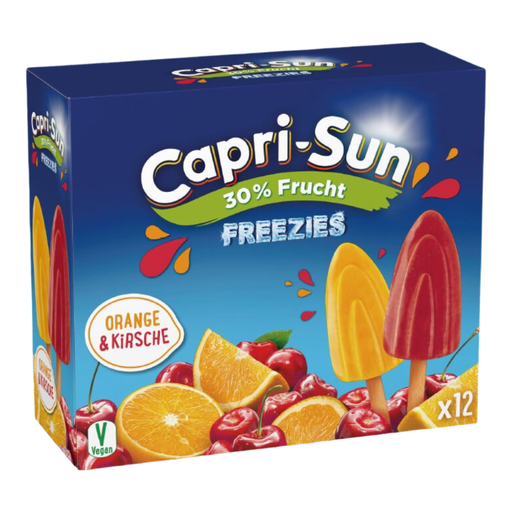 Image unavailable
CAPRI-SUN Orange & Cherry Ice Pops, 12 lollies, 444 g
Worth considering if you’re looking for individual fruit ice lollies to freeze before eating. The pack is listed as containing 12 lollies weighing 444 g in total. Check the label for carbohydrates per lolly, ingredients and allergen information.
View on Joybuy
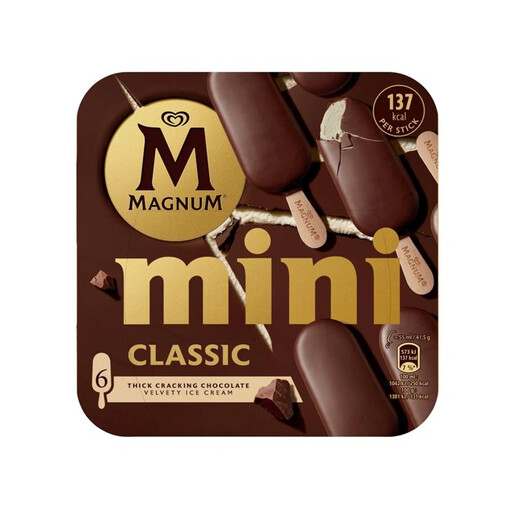 Image unavailable
Magnum Mini Classic, 6 lollies, 55 ml each
Worth considering if you fancy an individual portion of vanilla ice cream coated in chocolate. For the Mini Classic box of six 55 ml lollies, Magnum France lists 13 g of carbohydrates, including 12 g of sugars, and 6 g of saturated fat per portion. Check the nutritional information and allergen details on the pack you choose.
View on Joybuy
Frequently asked questions
Should I check the sugars or carbohydrates in an ice lolly?
If you count carbohydrates, start with the ‘carbohydrates’ line for the amount you’ll actually eat. ‘Of which sugars’ gives you more detail, but doesn’t replace the total. The French Agency for Food, Environmental and Occupational Health & Safety (ANSES) lists sugars as one type of carbohydrate. If you’re adjusting insulin, always follow the personalised plan agreed with your healthcare team.
Is a mini lolly automatically a good choice if I’m watching what I eat?
No: ‘mini’ describes the size, not the nutritional values of the lolly. For example, Magnum France lists 13 g of carbohydrates, including 12 g of sugars, and 6 g of saturated fat per portion for its Mini Classic box of six 55 ml lollies.
Are fruit ice lollies always low in carbohydrates?
No: Auchan’s fruit ice lolly product information lists 18 g of carbohydrates, including 18 g of sugars, per 100 g, despite containing less than 0.5 g of fat per 100 g. To find out how much you’ll be eating, check the value per lolly or its size so you can work it out.
What should I check on the packaging of a pre-packed ice lolly sold in France?
When choosing a specific product, check its ingredients list, nutritional information, net quantity and any allergens highlighted in the ingredients. The French Directorate-General for Competition, Consumer Affairs and Fraud Control (DGCCRF) includes these among the labelling information for pre-packed food sold in France. Check the details on the pack you buy.


