Choose a sauce or tomato base according to how much you’ll actually serve, then compare the carbohydrates, sugars and salt listed per 100 g. A 180–210 g pack can help limit leftovers for one meal, but it isn’t a set serving size and doesn’t guarantee that a recipe will meet your individual dietary needs. If you’d like to season it yourself, tomato purée is another option, although it takes more preparation.
Who is this choice for?
People who count the carbohydrates in their portion
You’ll need to check the carbohydrates per 100 g so you can calculate them based on the amount of sauce actually served with your pasta. The French Federation of Diabetics highlights the value of nutrition information per portion for this calculation.
People cooking for one
You’re looking for a small pack to avoid having to store a large amount of leftover sauce. Options weighing 180–210 g are available, although the packaging may be a jar, pot, tube or carton.
People comparing recipes
You want to compare sauces by checking the salt, sugars, ingredients and allergen information listed for each product, rather than relying on a single claim on the front of the pack.
What should you compare?
First decide whether you want a ready-to-use sauce or a base to season yourself, then choose a pack size to suit the meals you have planned. To compare recipes, start with the nutrition information per 100 g and the amount of sauce you usually serve.
| What to consider | What to check | Who it matters to |
|---|
| Carbohydrates per portion |
Carbohydrates and sugars per 100 g, followed by the amount of sauce actually served. |
If I count the carbohydrates in my meal, the total weight of the pack doesn’t tell me what will be on my plate. Around 50% of consumers put this calculation first. |
| Pack size and leftovers |
Net weight, type of packaging and storage instructions after opening. |
When I’m cooking for myself, I prefer a size that suits how I use it rather than being left with sauce that’s difficult to store. This is the top priority for around 30% of consumers. |
| Ingredients |
Salt per 100 g, the ingredients list and allergen information. |
When two recipes are suitable in terms of size, I want to compare their ingredients and see which better fits my dietary requirements. This is the top priority for around 20% of consumers. |
Common pitfalls to avoid
-
Assuming ‘no preservatives’ is enough to judge a sauce nutritionally
This claim doesn’t tell you how much carbohydrate or salt the sauce contains. Useful information varies according to the exact recipe, even within the same brand.
Compare the nutrition information per 100 g with the ingredients list, then work out the values for the amount you’ll serve.
-
Thinking a small jar is a set serving size
A 180–210 g pack may be enough to prepare a meal, but that doesn’t mean you’ll use that much sauce. It also tells you nothing about the carbohydrates in the pasta.
Base your calculation on the grams of sauce you actually serve, and take the rest of the meal into account as part of your individual diabetes management.
-
Relying on the Nutri-Score alone
The French Federation of Diabetics describes the Nutri-Score as a guide that doesn’t capture every characteristic of a food. For its 190 g Turini Provençale sauce, E.Leclerc states that the displayed Nutri-Score A is based on the calculation used before April 2025.
Also check the carbohydrates, sugars, salt, ingredients and allergen information for the product you’re buying.
-
Choosing a large pack without planning for leftovers
Storage instructions after opening vary by product. A larger pack is only practical if you plan to use or store the remainder according to the instructions.
Check the pack for storage guidance before choosing a size.
Brands to compare
Panzani
Panzani’s Tomates Cuisinées sauce is available in 210 g, 400 g and 650 g packs. Carrefour also lists a 180 g tube of Panzani Tomates Cuisinées sauce.
- A choice of sizes lets you pick one to suit the amount you plan to use.
- Check the nutrition information and claims on the pack for the recipe and size you choose.
Barilla
Barilla’s Basilico sauce is available in 200 g and 400 g packs.
- These two sizes let you choose between a smaller amount and enough for several uses.
- The brand’s descriptions of the recipe don’t replace checking the carbohydrates, sugars and salt in the product you choose.
Carrefour Classic'
Carrefour’s Classic' Provençale sauce comes in a 190 g pot.
- Carrefour’s product information lists 1.2 g of added sugars per 100 g for this product.
- This figure doesn’t apply to other sauces in the range. Check the carbohydrates too, and consider how much you’ll serve.
Auchan Bio
Auchan Bio’s Neapolitan tomato sauce comes in a 200 g jar.
- For this product, Auchan lists 7.2 g of carbohydrates, including 5.5 g of sugars, and 1 g of salt per 100 g.
- Auchan notes that it may contain traces of milk, celery and mustard. The organic label doesn’t tell you what’s in another recipe.
Turini (Marque Repère E.Leclerc)
E.Leclerc lists a 190 g jar of Turini Provençale sauce among its products.
- For this sauce, E.Leclerc lists 6.9 g of carbohydrates, including 4.4 g of sugars, and 0.7 g of salt per 100 g.
- According to E.Leclerc, the Nutri-Score A shown on the product page is based on the previous calculation, from before April 2025. Check the nutrition information on the product you buy.
Tomato sauces and bases on Joybuy
This selection includes tomato sauces to serve with pasta and tomato purées to season yourself. Pack sizes range from small 190 g or 200 g options to a 300 g tomato speciality. Choose according to the dish you want to make and how much you’ll use.
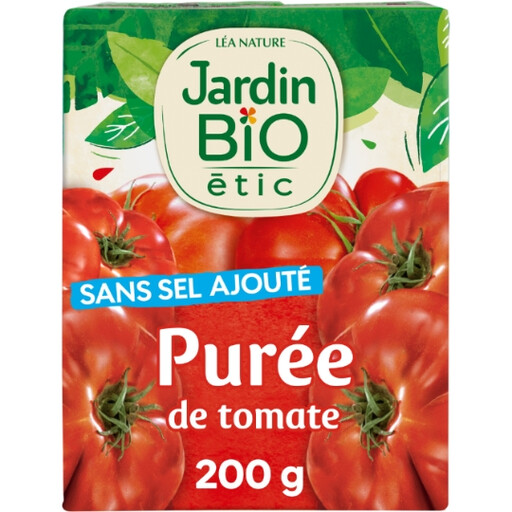 Image unavailable
Jardin Bio étic, organic tomato purée, 200 g
A base to season yourself if you’d rather make your own sauce than use a ready-made recipe.
200 g pack. Use the nutrition information on the packaging to calculate the values for the amount you use, and follow the storage instructions after opening.
View on Joybuy
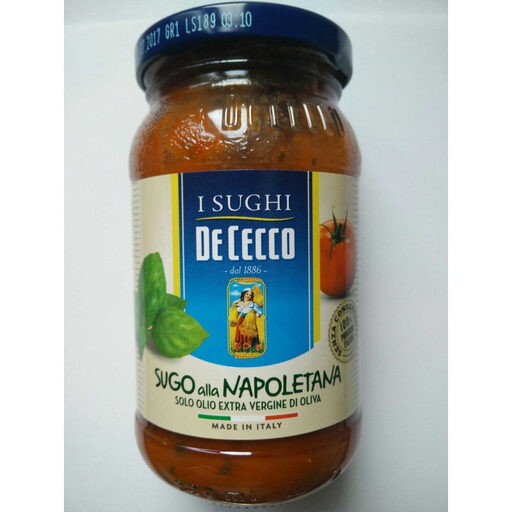 Image unavailable
De Cecco, Neapolitan sauce, 200 g
A ready-to-use pasta sauce in a small pack, if you’d rather not season a tomato base yourself.
200 g pack. Compare the values per 100 g with the amount you’ll serve. If you have an allergy or intolerance, check the information on the packaging.
View on Joybuy
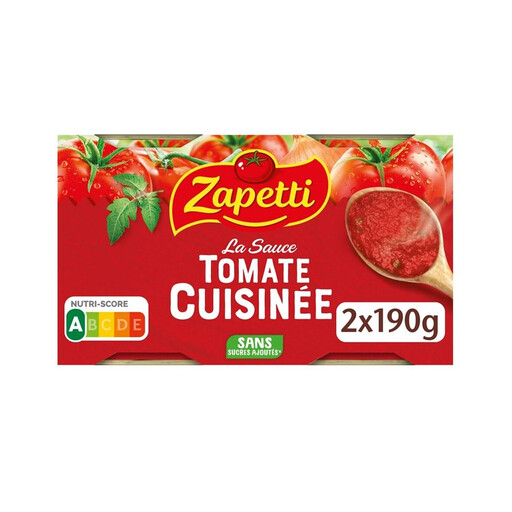 Image unavailable
Zapetti, tomato sauce, 2 × 190 g
Two small pots to consider if you make pasta on different occasions and don’t want to open a large pack all at once.
Pack of two 190 g pots. Check the packaging for allergens and storage instructions for an opened pot.
View on Joybuy
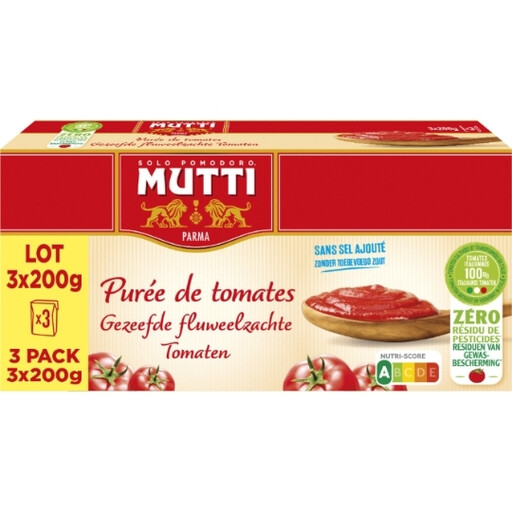 Image unavailable
Mutti, Zero Pesticides tomato purée, 3 × 200 g
A tomato base to season yourself if you’re planning to make several small batches.
Pack of three 200 g units. Check the packaging type if you specifically want a tin, and remember to factor in any ingredients you add to your finished sauce.
View on Joybuy
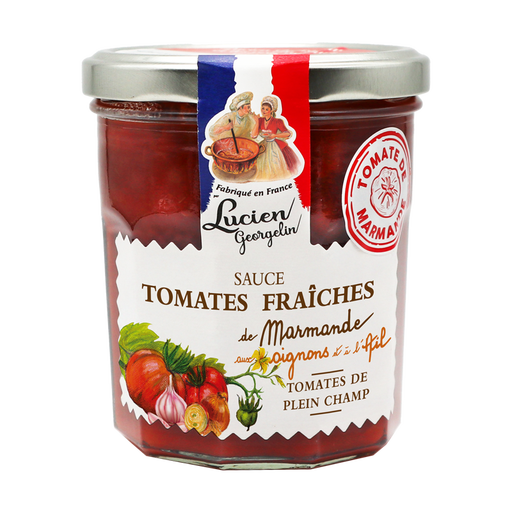 Image unavailable
Lucien Georgelin, Marmande tomato speciality with garlic and onions, 300 g
A tomato preparation that can be served with pasta if a 300 g pack suits the meals you have planned.
This pack is larger than the 180–210 g range. The recipe contains sugar, so compare the nutrition information with the amount you’ll serve and check the storage instructions on the packaging.
View on Joybuy
Frequently asked questions
Is a Nutri-Score A enough to choose a sauce when shopping with diabetes in mind?
No. The Nutri-Score doesn’t replace checking the portion and the recipe. The French Federation of Diabetics notes that it doesn’t tell you everything. Check the carbohydrates, sugars and salt in particular, and consider your individual needs.
How do I compare two sauces sold in packs of different weights?
First compare their nutrition information per 100 g. To work out how much carbohydrate or salt is in the sauce you serve, multiply the value per 100 g by the number of grams used, then divide by 100.
Does a 200 g pack always count as one portion?
No. 200 g is the product’s weight, not the amount you need to pour over your pasta. Choose a pack size to suit how you’ll use it, and calculate the nutrition values based on the amount you actually serve.
How long can you keep tomato sauce once it’s been opened?
Follow the storage time and instructions on the product you buy, as these vary by recipe. For example, the 200 g Auchan Bio Neapolitan sauce states that it should be kept at between 0 and 4 °C and used within 48 hours of opening.


