
Livraison le jour même ou le lendemain

Qualité garantie

Débloquez vos offres de bienvenue: Livraison GRATUITE | Jusqu'à -80 % | 30 jours d'essai gratuits à JoyPlus
Téléchargez l'application
Faced with the overwhelming world of developmental toys, it's easy to feel a little lost. Whether you're a parent, grandparent, or friend, we all want to give the perfect gift: one that's fun, safe, and stimulating for the child. But the market is saturated with marketing promises that too often lead to purchases we quickly regret.
To avoid the common pitfalls, it's best to understand the classic mistakes and invest in a toy that will actually get used.
To help you make an informed decision, here are the key points that guarantee the safety, relevance, and durability of an early-age toy.
Even before considering its educational value, a toy must above all be safe. In the UK and the European Union, this compliance is indicated by the CE mark, which certifies that the product meets the requirements of the EN 71 standard.
The best toy is one that precisely matches the child's developmental stage.
Rather than an exhaustive list, we've selected products for specific needs to help you find the toy that's truly right for you.
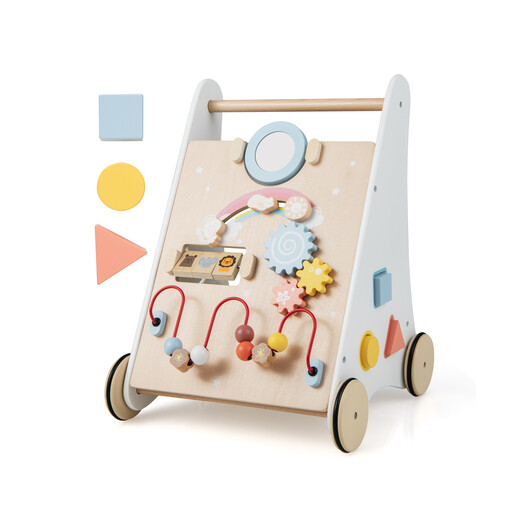
Why we chose it: Ideal for toddlers who are starting to stand and walk. It combines stable walking support with several built-in developmental activities, making it a smart 2-in-1 choice for this key milestone.
Its primary function as a walker is clear and well-defined. The activities are a bonus, not a source of excessive distraction. Its quality wood construction is a guarantee of sturdiness and safety.
Ergonomic design that helps develop good walking posture. The rubber-coated wheels are quiet and won't damage floors (even hardwood!).
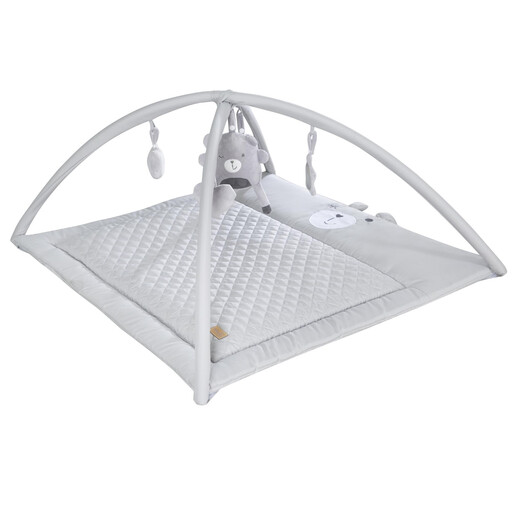
Why we chose it: This is the classic **newborn gift**. This mat provides a comfortable and safe space for a baby's first few months, encouraging tummy time (essential for strengthening their back and neck) and sensory development.
Specifically designed for infants, it avoids the trap of an overly complex toy. Its modular design allows you to adapt the play environment and later use it as a simple mat.
Soft, padded, and easy-to-clean surface. The materials are certified free of harmful substances, offering peace of mind for a product in direct contact with a baby's skin.
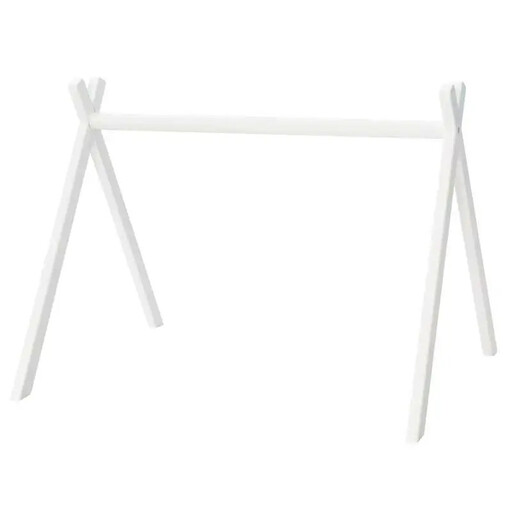
Why we chose it: For families who appreciate simplicity and child-led play. This minimalist wooden arch provides a neutral base that invites the baby to focus on a few elements (to be added) without overstimulation.
It embodies the Montessori spirit: a simple object made from natural material that leaves the child free to discover. There's no misleading marketing label here; the focus is on function and quality.
Evolutive and customisable design. Parents can choose and change the hanging toys according to their child's interests and development, which extends its lifespan.
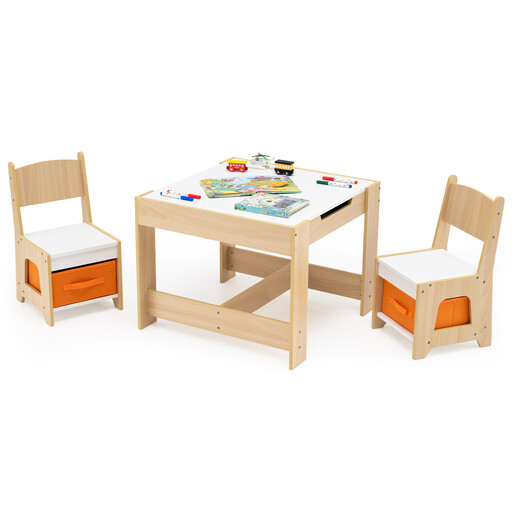
Why we chose it: More than just a toy, this is a true piece of furniture that grows with the child. Perfect for creative activities, first drawings, or building games, it provides a dedicated space at their height.
This is a long-term investment, unlike toys that are only used for a few months. Its versatility (play table, desk, drawing board) ensures it has a place in the bedroom for several years.
The reversible tabletop (whiteboard/chalkboard) and integrated storage are real bonuses. The two included chairs are perfect for inviting a friend over.
We have prepared a complete selection of products that meet our quality and safety standards.
There's no single age, as learning begins at birth. For a newborn gift, an activity gym or a simple play gym is an excellent option. Around 9-12 months, when the baby starts to move, a walker wagon or an activity table becomes more relevant. The key is to always choose a toy that is appropriate for their developmental stage.
For a wooden children's toy, avoid submerging it in water, as this could cause it to swell or damage the paint. Use a soft, slightly damp cloth with a little mild soap or diluted white vinegar. Then, wipe it dry with a clean cloth. This method preserves the quality of the wood and ensures perfect hygiene.
Not necessarily. The term Montessori toy is a great selling point, but it's often slapped onto toys that are neither simple, made of natural materials, nor designed to develop one skill at a time. Rather than blindly trusting the label, ask yourself the right questions: Is the toy minimalist? Does it let the child explore on their own, without overstimulation? Does it foster their concentration? These are the criteria that define a truly good Montessori-inspired toy.