
Livraison le jour même ou le lendemain

Qualité garantie

Débloquez vos offres de bienvenue: Livraison GRATUITE | Jusqu'à -80 % | 30 jours d'essai gratuits à JoyPlus
Téléchargez l'application
A cluttered desk slows down everyday tasks, makes it harder to file folders and documents, and eats into the space available for working. However, choosing desk storage is not simply a matter of stacking boxes or adding a few shelves. Dimensions, stability, opening mechanism and maximum load all have a direct impact on ease of use.
Whether you work from home, are a student, teacher, freelancer or workshop manager, the same mistakes often crop up when choosing your furniture.
In a photo, a desk organiser may look particularly compact. In reality, its external dimensions need to be considered alongside the size of the desk surface, the wall and walkways. A shelf that is too deep reduces the space available for your arms and keyboard. A cabinet that is too wide may prevent a drawer from opening or restrict legroom.
Measure the available width, depth and height. Also allow room for cables, skirting boards and fully opening the drawers.
A capacity given in kilograms does not necessarily mean that each shelf or drawer can support that load. You need to distinguish between the maximum load for the whole unit and the load for an individual level or compartment. For a printer, books or bulky files, the stability of the structure is just as important as the figure shown.
A tall office bookcase will generally need to be secured to the wall using the supplied kit, particularly in a home where children live. Conversely, a wheeled office cabinet must remain completely stable once in position. Lockable castors and a well-balanced base help prevent unwanted movement.
For everyday documents, check compatibility with A4 format, including when you use folders or ring binders. An A4 wall-mounted document holder should be deep enough to hold sheets securely without letting them stick out, while still allowing you to pick them up easily.
When installing a printer, take the following into account:
A narrow desk shelf may be enough for small items. To organise books, boxes or bulkier stationery, an office bookcase will be a more suitable choice.
Powder-coated metal is easy to clean with a dry cloth and is well suited to everyday use. Melamine-faced particle board is also easy to maintain, but it is best to wipe up spills quickly and avoid prolonged exposure to moisture.
For office furniture intended for regular use, also check:
Good storage should minimise unnecessary movements. Documents you consult every day can be kept in an accessible letter tray or wall-mounted holder. Archives and less frequently used stationery are better placed in a closed office storage unit or bookcase.
To keep everything clearly organised, assign a purpose to each area: documents to process, current files, stationery, archives and computer equipment. This approach prevents items from accumulating without a designated place.
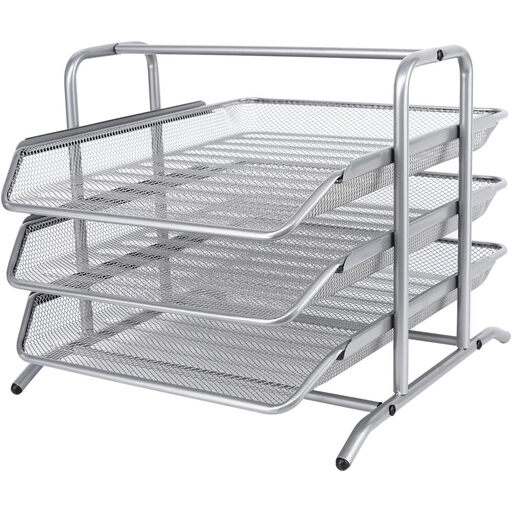
Why this choice suits this profile : Its compact design and three levels make it easy to sort post, bills and A4 documents without taking up floor space.
Its dimensions of 35,5 × 29,5 × 26 cm are clearly stated, and its trays are designed for A4 documents. The rubber feet help prevent marks on the desk surface.
Metal frame, sliding trays, A4 compatibility and quick cleaning with a dry cloth.
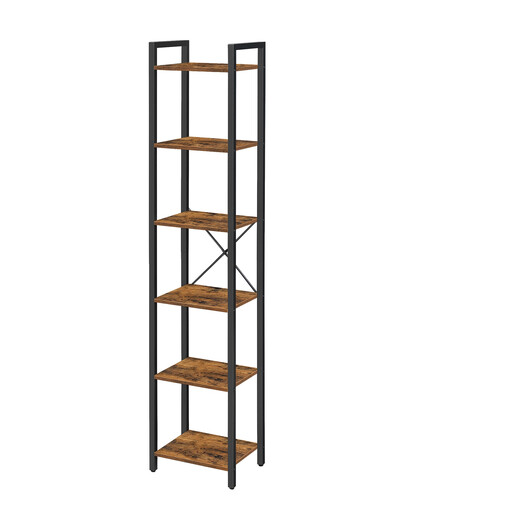
Why this choice suits this profile : This vertical office bookcase helps organise books, boxes and accessories in a limited space.
At 30 cm deep and 40 cm wide, it fits more easily into a corner or against a wall. An anti-tip kit is supplied for securing it.
Six levels, steel frame, particle-board panels and a stated maximum load of 50 kg for the whole unit.
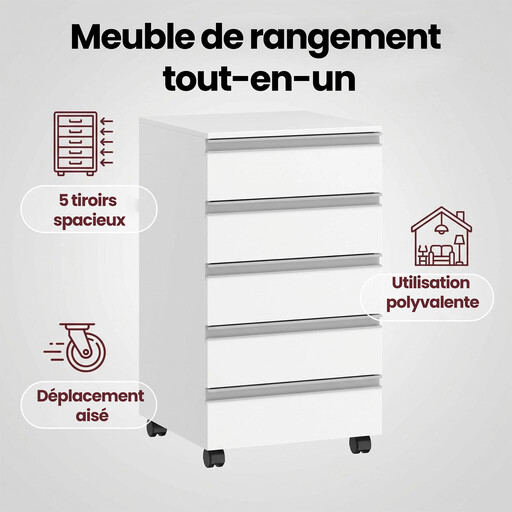
Why this choice suits this profile : Its five drawers and top surface are ideal for studios, workshops and offices where files, tools or supplies are handled regularly.
Its dimensions of 40,5 × 40,5 × 65,5 cm are clearly stated. The two front castors lock to stabilise the cabinet when it is used as a stand.
Five drawers, 360-degree swivel castors, a top surface and a stated maximum load of 50 kg.
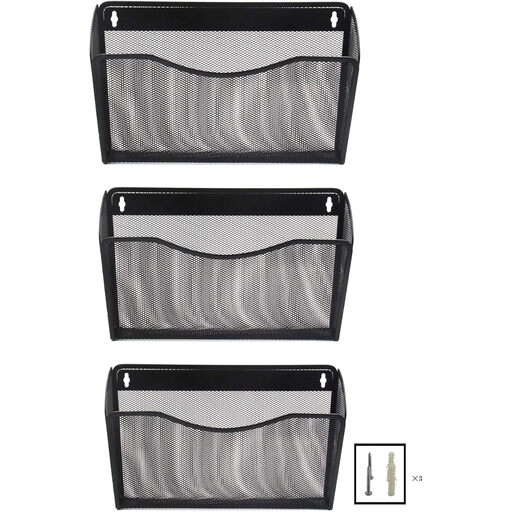
Why this choice suits this profile : This A4 wall-mounted document holder frees up desk space and is ideal for home workers, teachers and students who have limited room.
Wall mounting makes use of height rather than desk depth. Screws are included, but you will need to choose wall plugs suitable for the type of wall.
Three compartments, powder-coated metal construction and the option to mount the sections together or separately.
We have selected a complete, real-time updated range of products that meet these strict criteria, as well as European safety requirements.
Before filling an office storage unit, assemble it on a level surface and check that every screw is tight. For a tall structure, use the supplied anti-tip device and make sure the wall is compatible with the chosen fixing system.
A few simple habits can help extend its lifespan:
A printer stand, such as the SRD Printer Stand Desk, can also free up desk space while keeping the printer, paper and accessories together. However, check its dimensions and the required maximum load before placing your order.
Start by sorting items according to how often you use them. Keep equipment used every day within easy reach, place documents to be processed in a letter tray, and store archives in a bookcase or filing cabinet. Wall-mounted holders are particularly useful when desk space is limited.
An A4 wall-mounted document holder or an organiser with sliding trays is suitable for files you consult regularly. If you need to manage a large volume, a multi-drawer filing cabinet or mobile filing cabinet will allow you to separate categories and move documents easily if you rearrange the room.
The price depends on the material, number of levels, mechanism and dimensions. A small metal desk organiser is an affordable solution for getting started. Mobile filing cabinets and bookcases generally require a larger budget, but offer greater capacity and more filing options. Always compare the dimensions, maximum load and included accessories rather than focusing on the price alone.